
Nobody noticed yet… but they will.
We just reached the end of an economic age.
Something that usually takes decades, even centuries, to play out just happened in what seems like a blink of an eye.
Unless you understand the magnitude of what just happened, you could risk losing everything you’ve worked so hard to achieve because this collapse is only just getting started.
You see, for our entire life, the story arc has been clean: it was the relentless rise, in both wealth and status, of a broad social class of professionals but that rainbow is now at an end.
Because for the first time ever, capital can now compound without additional labor.
The centuries-old relationship where job creation and GDP rose together has snapped and the economy can now scale without bringing workers along for the ride.
And this “snap” is about to change everything.
This is one of those moments in which I believe vast fortunes will be made and lost. I’m talking about a generational transfer of wealth… the type that can either enrich you or potentially impoverish you, based on the decisions you make.
Because history shows us that while these shifts always lead to catastrophic losses for those who refuse to prepare… they also unleash unprecedented wealth building potential for those who understand, and harness, the forces at work.
And this isn’t a prediction. It’s happening right now.
It’s why, although we’re seeing massive headline economic growth, the average American is being left behind.
AI Engels’ Pause
They don’t teach you this in school, but they should.
During the Industrial Revolution, Friedrich Engels noticed that although the revolution was making Britain incredibly rich when measured via GDP… the vast majority of British people were living in hell.
Between 1790 and 1840 Britain’s GDP exploded. The steam engine created massive efficiency gains, corporate profits doubled, and the stock market soared.
But for the average worker, real wages remained flat or fell… the average life expectancy in some industrial cities collapsed to just 35 years…
It was as though someone had pressed a giant “Pause” button on quality of life for the working class.
Of course, the wealth did eventually trickle down but it was half a century later and during that half century, the societal devastation was dire. It took two full generations for the labor market to adjust.
And the weavers who lost their jobs to power looms, they didn't become "machine repairmen."
They starved. They rioted. They were shot by the military or shipped to penal colonies. And it was Engels’ Pause that gave birth to Marxism.
And we’re seeing this again with AI.
The only difference is, this time it won’t take decades to play out. It took the radio 38 years to reach 50 million users. Television took 13. The internet took 4. But ChatGPT hit 100 million users in two months.
We are effectively speed-running the 19th century. We’re compressing 50 years of displacement into less than a decade… and this time the disruption isn’t coming for the illiterate farmhand…
It’s coming for the accountant. It’s coming for the lawyer. It’s coming for you and me.
Right now, knowledge work makes up roughly 50% of America’s GDP and much of that is at risk of automation in the next handful of years.
We’re talking about 5 million white-collar jobs — the bedrock of the American tax base – facing extinction over the next few years. Just take a look at the most recent cuts:
- U.S. Government: 307,000 employees
- UPS: 78,000 employees
- Amazon: 30,000 employees
- Intel: 25,000 employees
- Nissan: 20,000 employees
- Nestle: 16,000 employees
- Microsoft: 15,000 employees
- Bosch: 13,000 employees
- Dell: 12,000 employees
- Verizon: 13,000 employees
- Accenture: 11,000 employees
- Ford: 11,000 employees
- Novo Nordisk: 9,000 employees
- Microsoft: 7,000 employees
- PwC: 5,600 employees
- Salesforce: 4,000 employees
- IBM: 2,700 employees
- American Airlines: 2,700 employees
- Paramount: 2,000 employees
- Target: 1,800 employees
- General Motors: 1,500 employees
- Applied Materials: 1,444 employees
- Kroger: 1,000 employees
- Meta: 1,000 employees
It’s why AI is not just a productivity or efficiency tool, like everyone thinks, it’s a Labor Replacement Engine. And it’s why there’s such a gaping disconnect between the “real” economy and the stock market.
It’s why all the President’s claims of a “booming” economy don’t feel real for the tens of millions of people who don’t own assets.
It’s why, even though markets are hitting all-time highs, households are falling further and further behind. And this wealth divide is only going to be amplified as AI is integrated into every aspect of the economy.
IMF Managing Director Kristalina Georgieva just warned that artificial intelligence will hit the labor market like a “tsunami.”
The changes this will bring to the economy, stock market, and financial system are unprecedented. Which is why it’s critical that you watch my interview with Luke Lango.
We explain how all of these forces are converging to trigger an economic “reset” the likes of which we haven’t seen in 250 years – one that could trigger the greatest transfer of wealth in American history.
Both for the good and the bad.
Young or old. Rich or poor. Left wing or right… there is no escaping what’s coming. And yet, despite this inevitability, I promise you, you’ve never heard a whisper about this story before now.
Almost nobody… not the legacy financial media, political commentators, even the top analysts on Wall Street have connected these dots. But now, we’re sharing the full story with you.

The stocks to buy… the stocks to sell… and the three money moves our research indicates you should make to ensure you and your loved ones end up on the winning side of this new economic reality.
Because as you’ll discover today…
If you understand the new rules of this system…
You won't just survive the chaos, you’ll own the assets that could potentially make you a fortune as the American economy is reshaped from the ground up.
Good investing,
Porter Stansberry
3 Energy Stocks to Buy as AI Power Demand Surges—and 2 to Avoid
Authored by Bridget Bennett. Originally Published: 4/5/2026.
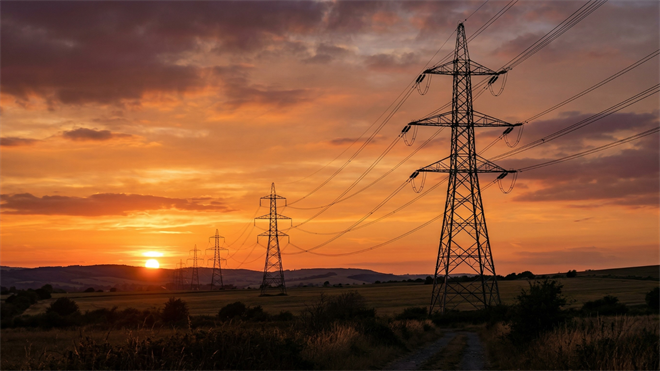
Key Points
- Mastec, Regal Rexnord, and EQT are positioned to benefit from a multi-year AI and energy infrastructure buildout that analysts say is only in its early innings
- Coreweave and Oklo face serious profitability concerns under uniform accounting analysis, with market expectations far exceeding what their business models can deliver
- Natural gas remains the most viable near-term power source for data centers, while small modular nuclear reactors are still five-plus years from commercial viability in the United States
- Special Report: Elon Musk: This Could Turn $100 into $100,000
The biggest names in energy and technology are all in the same room this week—and the conversation isn't about oil prices. It's about electricity. That distinction matters.
Often dubbed the "Super Bowl of energy," CERAWeek is the world’s premier annual energy conference, where executives and policymakers convene in Houston to discuss global energy markets, geopolitics, and technology.
Elon Musk already made me a “wealthy man” (Ad)
I Met Elon Musk "Face-to-Face"
During a private gathering of Wall Street elites, I was one of two people selected to speak with Elon personally.
As a result, my research now leads me to believe Elon will announce the SpaceX IPO on this date:
April 20, 2026. Circle it on your calendar.
I'm sharing an "access code" that lets anyone grab a pre-IPO stake before it happens. This is your invitation to the biggest wealth-building event of the decade.
Click Here to See how to Get Your "SpaceX Access Code"This year, speakers from Amazon Web Services (NASDAQ: AMZN), Alphabet's Google (NASDAQ: GOOGL), Microsoft (NASDAQ: MSFT), NVIDIA (NASDAQ: NVDA), and Meta (NASDAQ: META) are sharing the stage with legacy energy producers, and the dominant theme is power demand.
Altimetry Research’s Joel Litman and Rob Spivey highlight a major takeaway from the conference: the United States is not energy-independent when it comes to electricity, and the AI-driven buildout could take five to ten years. That creates a clear, investable opportunity—and a few traps worth avoiding.
U.S. Electricity Demand Is Outpacing the Grid
For roughly 15 years, U.S. electricity consumption barely moved, even as GDP grew. That trend changed around 2022.
Even before the latest geopolitical concerns in the Middle East, power demand was already rising. Reindustrialization, the proliferation of data centers, and the growth of AI computing have pushed electricity use sharply higher. Data-center demand alone could account for as much as 10% of total U.S. usage, and the infrastructure to support it largely doesn't exist yet.
That's the tension at CERAWeek. Energy producers and AI hyperscalers are negotiating who builds what—and who pays for it. Residential electricity rates still exceed commercial rates on a per-kilowatt-hour basis, a dynamic that could become politically sensitive ahead of November's elections. Companies that need reliable power may be forced to source it at market prices or go off-grid entirely, which would only accelerate total demand.
3 Stocks Positioned to Profit From the AI Power Buildout
1. MasTec: The Builder Behind the Buildout
MasTec (NYSE: MTZ) is the engineering, procurement, and construction firm that physically builds power plants, lays fiber-optic cable, and constructs data centers. Its client list reads like a who's who of the energy-AI convergence: Kinder Morgan (NYSE: KMI), Duke Energy (NYSE: DUK), AT&T (NYSE: T), IBM (NYSE: IBM), and Microsoft.
What makes the case compelling is what standard financial reporting can miss. According to Altimetry, MasTec is roughly twice as profitable as reported metrics suggest. The company carries an approximately $19 billion backlog—a figure that gives it years of revenue visibility.
Management guided for $17 billion in 2026 revenue, representing 19% growth, and adjusted earnings per share (EPS) of $8.40. The record $18.96 billion 18-month backlog lends credibility to that guidance.
The market, however, is pricing MasTec for a normal economic cycle rather than a multi-year infrastructure supercycle. That disconnect is the opportunity.
Altimetry's "doubles that double again" research found that in the middle of a bull market, stocks that have already doubled carry roughly a 50% chance of doubling again, and certain accounting adjustments can push that probability closer to 60%.
2. Regal Rexnord: Solving the Power Problem Inside the Data Center
Regal Rexnord (NYSE: RRX) tells a different story. This legacy industrial company—historically known for motors, machine parts, and HVAC components—has moved up the value chain into data-center power management, and the market hasn't fully recognized the shift.
The key product is the E‑Pod, a modular, plug-and-play power-management system roughly the size of a shipping container. It steps down and manages the electrical load coming into a data center so high-value chips from NVIDIA and Micron (NASDAQ: MU) operate safely.
In Q4 2025, the company secured orders worth approximately $735 million for multiple E‑Pod projects. The broader data-center business could reach $1 billion in revenue over the next two years, up from roughly $120 million today.
Regal Rexnord's return on assets has climbed by about a third as it shifted toward higher-margin solutions. Reported metrics may not fully capture this transformation. Recent stock volatility—driven partly by geopolitical jitters and periodic "AI spending is over" scares—may offer an attractive entry point.
Altimetry emphasizes that the current AI investment cycle is unlike the dot-com bubble. In 1998 and 1999, capital flowed to companies with little or no revenue. Today, spending is coming from cash-rich hyperscalers with demand they can't yet fulfill. Microsoft CEO Satya Nadella has said Azure would generate more revenue if the company simply had more power and more data centers.
3. EQT: The Natural Gas Bridge That Funds the Future
EQT (NYSE: EQT) is the largest natural gas exploration and production company in the United States, and Altimetry calls it an essential near-term cog in the AI-power story.
The logic is straightforward: while nuclear and renewables are important long-term solutions, natural gas is the only viable baseload source that can be deployed at scale within the next five years.
Solar doesn't generate at night. Wind can't operate when it's too calm or too windy. Battery storage extends capacity for a few hours, far short of overnight demand. If the U.S. needs to rapidly build new power plants for data centers, many of those plants will run on natural gas.
EQT holds nine years of reserves without drilling a single new well and 12 years of proven reserves if it ramps up. Its vertical integration makes it one of the country's lowest-cost gas producers at about $2 per MMBtu.
Management guided for 2026 adjusted EBITDA of roughly $6.5 billion and free cash flow of $3.5 billion. The company is also completely unhedged for 2026—a deliberate bet by management that natural gas prices will move higher.
The dual catalysts are domestic power demand and LNG exports. Geopolitical disruption in the Middle East reinforces the case for U.S. energy exports, giving EQT upside on both fronts. Stock volatility reflects short-term geopolitical skittishness, not a fundamental problem, and could represent a buying opportunity.
2 AI Power Plays That Look More Like Hype Than Opportunity
1. CoreWeave: The WeWork of AI?
Now for names to avoid. The first is CoreWeave (NASDAQ: CRWV). Altimetry's comparison is blunt: CoreWeave looks to be the WeWork of the AI boom.
The pitch sounds compelling: CoreWeave builds and operates data centers for AI workloads. But Altimetry argues the company functions like a data-center REIT with a slicker brand and has never produced meaningful profitability. The company reported a negative 22.74% profit margin and a negative 50.27% return on equity.
Yet the market is pricing CoreWeave for return on assets north of 25%, roughly five times what comparable operators typically achieve. The company carries about $29.8 billion in debt with a 0.46 current ratio and 16.5% short interest. Even as revenue surges, capital expenditures are expected to more than double in 2026, which will constrain any path to near-term profitability.
Altimetry believes that while surface metrics may try to suggest profitability, the underlying economics tell a different story. CoreWeave's economic profit has been negative since its IPO, and Altimetry doesn't see a reason for that to change soon.
2. Oklo: A Cool Idea Still Years Away From Reality
Altimetry's critique isn't of nuclear power broadly—it's of Oklo (NYSE: OKLO) specifically. The small modular reactor company captured investor imagination with a partnership with Meta and backing from Sam Altman, but it trails at least two competitors (NuScale (NYSE: SMR) and BWXT (NYSE: BWXT)) on the technology curve. More importantly, its business model is misunderstood: Oklo doesn't plan to sell reactors outright. It plans to build them and lease the power, making it fundamentally a leasing business with cost-of-capital-level returns.
The math is challenging at current pricing. New-build nuclear power costs roughly $200 to $250 per megawatt-hour, while hyperscalers are currently contracting power in the mid-hundreds per megawatt-hour.
The market, meanwhile, is pricing Oklo for $400 to $500 million in earnings when the company is currently losing about $100 million per year. Oklo has roughly $1.2 billion in cash and marketable securities, which provides runway, but a cash cushion doesn't change the economics of a leasing model that may never deliver the returns investors are currently pricing in.
If the SMR thesis does play out, Altimetry suggests watching BWXT. The company already manufactures key components for the U.S. Navy's nuclear reactors, is generating revenue today, and carries less speculative premium.
Where Power Meets Profit
The common thread across all five names is the same: the AI power buildout is real, it's massive, and it's early.
But not every company riding the narrative deserves investor capital. Companies with proven demand, deep backlogs, and underappreciated profitability—MasTec, Regal Rexnord, and EQT—look positioned to capture years of growth. The companies trading on hype and venture-capital packaging—CoreWeave and Oklo—could leave investors holding expensive lessons.
The real signal from CERAWeek isn't about any single stock. It's that the convergence of energy and AI is now the defining investment theme of this cycle, and the companies that physically build, power, and fuel that infrastructure may be the clearest way to play it.
The Often-Missed Corner of Healthcare That Wall Street Is Loving
Authored by Nathan Reiff. Originally Published: 3/29/2026.

Key Points
- Numerous lab equipment stocks are down in the high-teens so far this year, but seemingly modest sales growth may hide fundamental strengths.
- These companies can present a more secure approach to the healthcare industry than some higher-risk alternatives.
- Still, headwinds including tariff impacts and inflation remain a concern.
- Special Report: Elon Musk: This Could Turn $100 into $100,000
The healthcare industry is notoriously volatile—company fortunes can be made or broken by a single product or the results of a clinical trial—and it's not uncommon for stocks in this sector to post some of the market's wildest spikes and drops. Investors who want exposure to the healthcare space but are wary of that turbulence may prefer a "picks and shovels" approach that focuses on companies supplying essential equipment and services, rather than higher-risk pharmaceuticals names.
Lab equipment stocks are often overlooked, even though several companies in this subindustry rank among healthcare's largest players. With a number of external forces that could shape healthcare in 2026—shifting subsidies, an aging population, inflation, and the growing role of AI, among others—core lab-equipment names may be more attractive than usual. Below are some major players worth a closer look.
A Recent Dip Masks Thermo Fisher's Long-Term Strengths
Elon Musk already made me a “wealthy man” (Ad)
I Met Elon Musk "Face-to-Face"
During a private gathering of Wall Street elites, I was one of two people selected to speak with Elon personally.
As a result, my research now leads me to believe Elon will announce the SpaceX IPO on this date:
April 20, 2026. Circle it on your calendar.
I'm sharing an "access code" that lets anyone grab a pre-IPO stake before it happens. This is your invitation to the biggest wealth-building event of the decade.
Click Here to See how to Get Your "SpaceX Access Code"$182 billion life sciences solutions, diagnostics, and analytical instruments company Thermo Fisher Scientific (NYSE: TMO) has had a difficult start to 2026, with shares down more than 15% year-to-date (YTD) after the stock slipped into TradeSmith's red zone for financial health. Much of the recent weakness appears tied to tariffs and foreign exchange (FX) volatility, which together shaved more than 100 basis points off margins in 2025.
There are, however, several bright spots in Thermo Fisher's recent performance.
In Q4 2025, revenue of $12.2 billion rose 7% year-over-year (YOY), beating analyst estimates by about $250 million. Adjusted earnings per share (EPS) also topped forecasts at $6.57.
That momentum may reflect a string of product launches, including the Orbitrap Astral Zoom mass spectrometer and new bioreactor offerings.
Thermo Fisher's broad business model and diversified product mix could help it absorb external pressures. Even if 2026 guidance is modest—revenue is expected to rise 4% to 6%—improving EBITDA margins and steady end-customer demand are constructive trends. That may explain why, despite the recent selloff, analysts remain largely positive: 17 of 19 rate the company a Buy or equivalent, and consensus estimates imply roughly 29% upside.
Danaher's Business May Be Improving, Even as Guidance Remains Modest
Danaher Corp. (NYSE: DHR) shares are off nearly 20% YTD as the instruments, consumables, and reagents firm sits in a similar position to Thermo Fisher. While 2026 guidance points to modest core revenue growth of 3% to 6% YOY, the most recent quarter delivered solid results, including beats on both the top and bottom line and $5.3 billion in free cash flow for 2025.
Two bright spots for 2026 are Danaher's bioprocessing business—expected to post high-single-digit revenue growth driven by strong monoclonal antibody demand—and its diagnostics segment.
Diagnostics should benefit from FDA clearances, and equipment orders have begun to recover after a prolonged weak period, which could further support sales.
Analysts are reasonably upbeat on DHR, projecting about 12.3% earnings growth over the next year and roughly 35% potential upside in the share price.
That sentiment is reflected in ratings: 19 of 22 analysts currently have Buy recommendations on Danaher.
Agilent's Biocare Purchase Could Be a Catalyst
Agilent Technologies (NYSE: A) lagged the peers above in its latest results, with revenue up a tepid 4.4% YOY and marginal misses on both revenue and earnings versus expectations.
Still, Agilent may have a growth lever in its recent acquisition of Biocare Medical, which strengthens its position in cancer diagnostics.
Even though the deal cost nearly $1 billion, Biocare should add recurring revenue in a high-growth, high-demand area.
Cancer diagnostics can also command higher margins than some of Agilent's existing lines, which could help boost operating margins (Agilent's operating margin was 24.6% in the most recent quarter).
Despite a YTD decline of about 17%, analysts see substantial upside for Agilent—roughly 42%—and Wall Street classifies the stock as a Moderate Buy, with 13 of 16 ratings at Buy or similar.
This email is a sponsored email for Porter & Company, a third-party advertiser of MarketBeat. Why did I get this email?.
If you have questions or concerns about your subscription, feel free to email our U.S. based support team at contact@marketbeat.com.
If you would no longer like to receive promotional emails from MarketBeat advertisers, you can unsubscribe or manage your mailing preferences here.
Copyright 2006-2026 MarketBeat Media, LLC.
345 N Reid Pl. #620, Sioux Falls, SD 57103-7078. United States of America..