Tonight is likely to be a very lively TNB livestream. JVL will be joined by Amanda Carpenter and Bill Kristol to talk about [gestures broadly] all of this. Thursday, March 22, at 8pm in the East. Only for members of Bulwark+.
** A few BFD’s to keep an eye on today:
But let’s get back to Hamilton, and what’s happening in my home state. As you may have heard by now, in Wisconsin supreme court justices are neither appointed nor have lifetime tenure. We elect them, which increasingly seems like a very, very bad idea. Hamilton emphasized the importance of the “independent spirit” of the judiciary in safeguarding the Constitution and the Republic, but as the most expensive, partisan (and incredibly bitter) judicial campaign in history goes into its final days, there is little of that independence in evidence. Perhaps we ought to be concerned about that. Let me stipulate that no one seems to care about this, because the stakes right now are so high in what has been described as “the most important election in America this year.” Politico described it as “The most important election nobody’s ever heard of.” The Wapo’s Greg Sargent called it the “sleeper race that could wreck MAGA’s 2024 dreams.” The New York Times declared that the election “carries bigger policy stakes than any other contest in America in 2023.” Here’s the Guardian: “‘Stakes are monstrous’: Wisconsin judicial race is 2023’s key election.” None of this is hype. With the state’s political establishment gridlocked (a Republican legislature and Democratic governor) the focus of nearly every major issue — from abortion to redistricting to voting rights and the 2024 election — now turns to the narrowly divided high court. And everybody understands that, including the candidates who have made it clear how they would rule on a host of hot button issues that are likely to come before the court. Technically the race is “non-partisan,” but the contest between conservative Dan Kelly and liberal Janet Protasiewicz (pronounced “pro-tuh-SAY-witz”) is anything but non-partisan. Both parties have fully mobilized. Outside money is pouring in. Just yesterday, I got a fundraising mailing from Senator Ron Johnson, declaring this “the most important Wisconsin Supreme Court race in history.” “Liberals are desperate to ‘flip’ the court,” Johnson wrote, urging me to write a check to Dan Kelly for $50, $100, $250, $500, $1,000, $2500, or more. “This is the moment of truth.” Democrats are equally engaged. The chairman of the state Democratic Party, Ben Wikler, warns that the race “has implications that will affect national politics for years to come, really at every level of government.”  🧵Early Vote starts TODAY in the Apr 4 Wisconsin Supreme Court race. This could be CLOSE—and losing can be disastrous. In 2011, we missed by 7,004 votes, and in 2019 by just 5,981 votes. We can’t afford to repeat history. Chip in to help us flip the court: secure.actblue.com/donate/2weeks_… There is nothing subtle about any of this. ** In particular, there is nothing subtle about the partisan allegiances. State Democrats have transferred millions of dollars to Protasiewicz’s campaign. But that pales next to Kelly’s entanglement. Via the Milwaukee Journal-Sentinel: “Supreme Court candidate Daniel Kelly was paid $120,000 by Republicans to work on 'election integrity,' advise on fake electors.”
** So far the race has been dominated by abortion. Wisconsin has an 1849 law on the books that bans nearly all abortions. Kelley, who has the endorsement of all of the state’s right to life groups, insists that he has not prejudged the case. But no one, and I mean literally no one, has any doubt that he would vote to uphold the law. Nor does anyone have any doubt that Protasiewicz, who proclaims herself a “progressive,” would vote to overturn it. So, since the court now has a narrow 4-3 conservative majority, her election would effectively decide the issue. The election might also decide the fate of the state’s gerrymandered legislative and congressional districts. At a candidate forum in January, Protasiewicz signaled how she would rule:
This week, she suggested that she might also rule against Act 10, which restricted the collective bargaining rights of public employees, and that she would reverse the court’s previous rulings on voting policies like the use of drop boxes. Her comments drew an ethics complaint from state Republicans, who accused her of prejudging cases. But Kelly is hardly less subtle. Bill Lueders reported in the Bulwark:
While he frequently talks about the “rule of law,” Kelly has leaned heavily on his right-wing ideological credentials.
And there’s nothing subtle about this, either: “Dan Kelly appears at event headlined by pastor who advocated for killing abortion providers, compared COVID-19 policies to Holocaust.” ** The race has also shaped up to be a crucial test for election denialism.
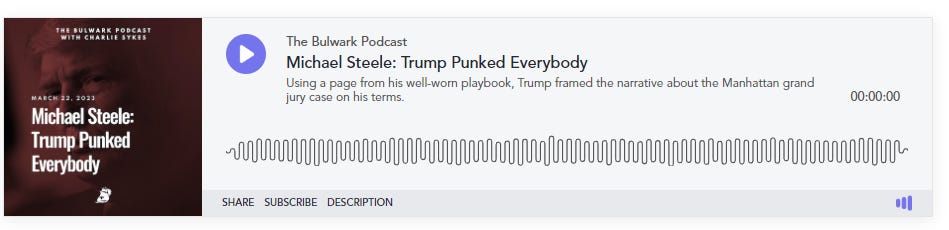
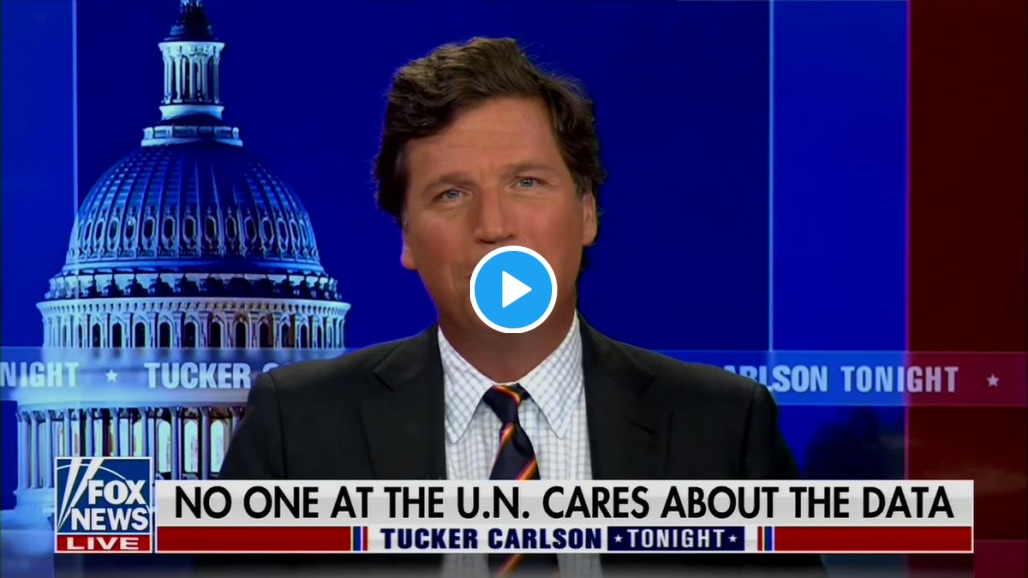
Kelly has been vocally critical of Hagedorn, has apologized for supporting him, and made it clear that he would show no similar flashes of judicial independence. ** Which brings us back to Hamilton. In Federalist 78, Hamilton warned that the judiciary has “neither FORCE nor WILL, but merely judgment,” and that ―”[t]o avoid an arbitrary discretion in the courts, it is indispensable that they should be bound down by strict rules and precedents, which serve to define and point out their duty in every particular case that comes before them.” This, argued Hamilton, is why judicial independence was so important. It was one of the “bulwarks of a limited Constitution against legislative encroachments.” But judicial independence is also essential for the legitimacy of the courts and the rule of law. If judges are merely partisan legislators then what, really, does the “rule of law” mean? If the law changes with every election, is it really the law, or simply politics by other means? Why should the courts and their rulings deserve any more respect or deference than the utterings of any other hack politician who holds temporary office? So while turning the courts into partisan weapons may have its appeal, the politicization of the judiciary also carries long term dangers, as we are about to discover when the former president escalates his attacks on the independence of the juries, judges, and prosecutors. On the podICYMI: Lively conversation with Michael Steele on the way Trump framed the narrative about the Manhattan grand jury case on his terms. Plus, the white boy frat party atmosphere at the Tucker Carlson show.
You can listen to the whole thing here. Quick HitsJim Jordan’s Bogus Justification for Attacking the Manhattan D.A.Congress has no constitutional authority over, or legitimate investigative interest in, the (still only hypothetical) indictment of Donald Trump. Kim Wehle in today’s Bulwark:
Cheap ShotsIrony is ded.
Read Morning Shots in the app Listen to posts, join subscriber chats, and never miss an update from Charlie Sykes.
|