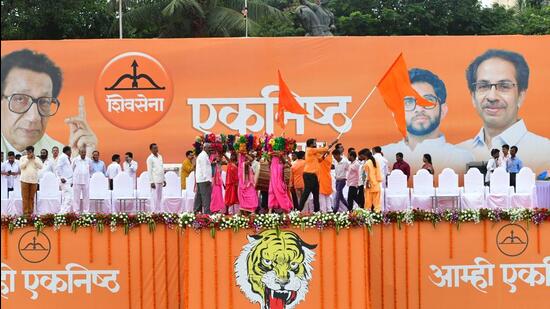
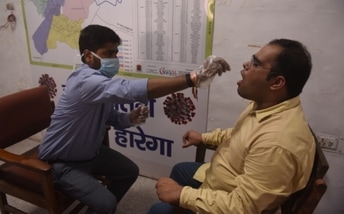
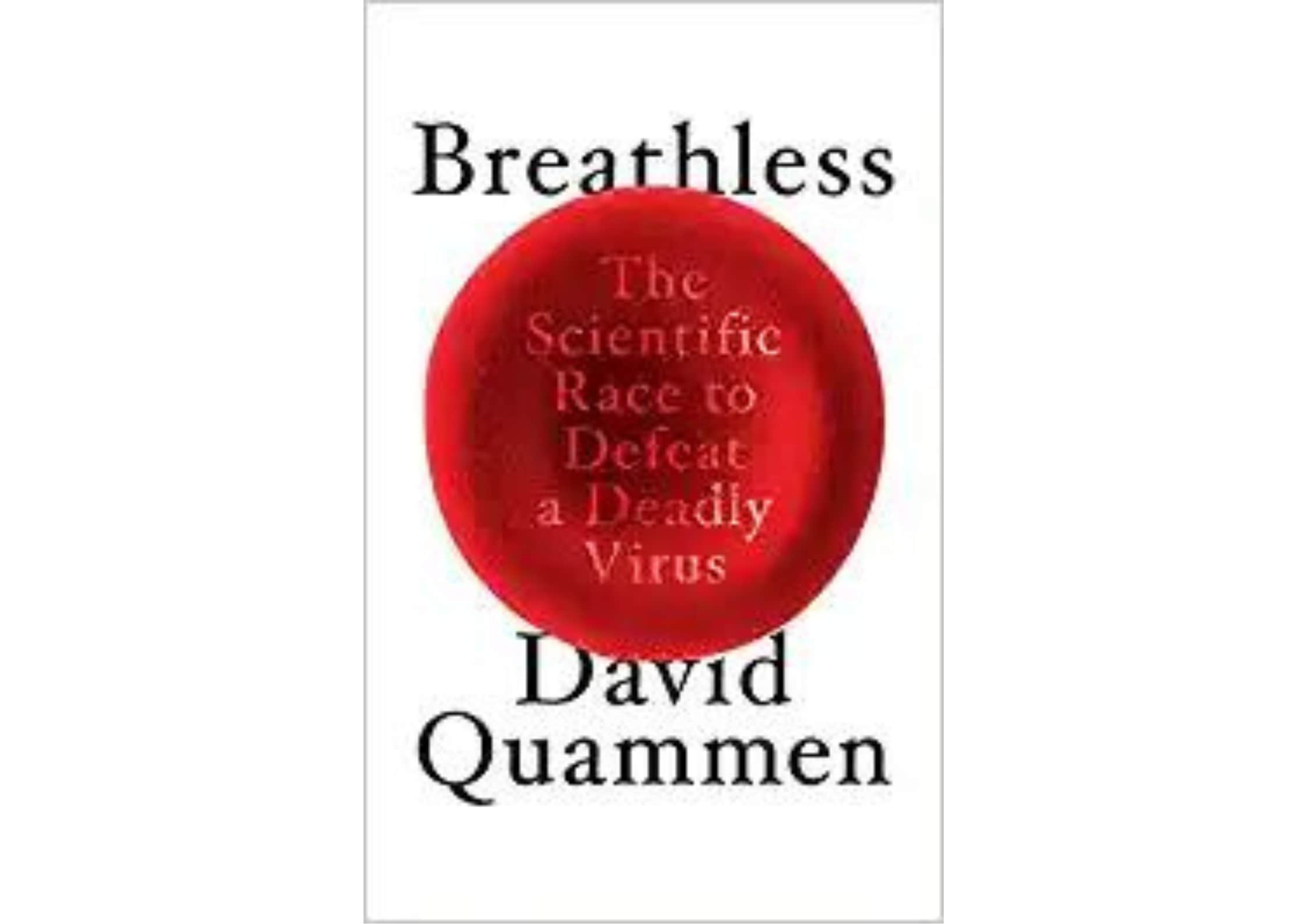
| | | Good morning! | | Indians love technology, but are not comfortable with science. I’ve spoken and written about this so much over the past decade-and-a-half that I could perhaps stake claim to the insight behind the statement — but it isn’t mine. I remember reading this in a column in Mint in its early days, but do not remember the author (neither does anyone else); nor can I find it on the web. But ownership, while important, isn’t as relevant as the import of this statement — because it explains our attitude and behaviour. We love black boxes with silver buttons that we can press to effect some miraculous change — this is sometimes true even of our policymaking — but rarely spend time mapping the tiny cogs and wheels, the intricate circuits, the little pulleys and levers, that define the myriad processes underlying the issue at hand, and which eventually decide whether the intervention (the pressing of the silver button) works or not. This also explains why we need to work on our documentation skills — and as people who know about these things will tell you, documentation is the key to not just research, but also manufacturing processes. This holds true not just when the output is a component that goes into a nuclear reactor, but even (and especially) when it is something as commonplace as a simple drug formulation. The Indian auto component industry’s big quality push in the late 1990s — facilitated by CII, and overseen by two reticent Japanese gentlemen (but that’s a story for another day) — shows that it is possible. And perhaps because we do not see the importance of documentation, we do not comprehend the need for disclosure and transparency. Unfortunately, though, industry’s usual response when these three related issues are raised is to cry “non-tariff barrier” — a claim that usually finds sympathetic echoes in the corridors of power. It is possible to celebrate Indian achievements in science even while expecting a higher level of disclosure and transparency. Doing so would actually enhance the credibility of the achievements. And it is possible to celebrate the Indian pharma industry’s big global push — the country has what it takes to be a pharma hub, not just in terms of manufacturing, but also innovation — while demanding that it meets the most stringent regulations on efficacy and quality. The entire process needs to be driven by science, not faith or nationalism. | | THINK 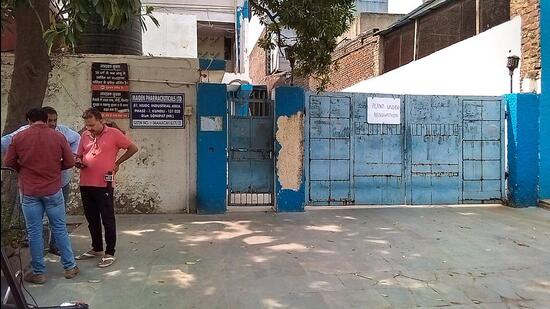 Credit: PTI It could well be that an unscrupulous entrepreneur is behind the recent tragedy in The Gambia, where the death of 66 children has been attributed to cough syrups imported from India. But it could also be that a disregard of good manufacturing practice, or carelessness, led to the tragedy. The cause of the deaths is being attributed to the presence of Diethylene Glycol and Ethylene Glycol, both solvents that are used in industrial chemicals. The company involved, Maiden Pharmaceuticals, told Reuters that it is trying to find out “more about the situation” and that it does not sell the cough syrups in India, and one of its directors alleged, in an interview with Business Today magazine, that what was happening was “defamation”. Irrespective of what the international and local investigations reveal, the episode is a wake-up call for India to ensure good manufacturing practice (GMP) for all pharma companies operating in India, including thousands of small and medium enterprises. That calls for better regulation, monitoring, and information disclosure by the Central Drugs Standard Control Organisation (CDSCO), which has, on occasion, been loath to share information on GMP violations by Indian companies. | | THINK MORE After all that noise — demands from the rival factions for the Shivaji Park venue culminating in a court battle — there was even more noise: the Dusherra rallies of the two Shiv Senas (the one headed by Uddhav Thackeray, and the splinter cell headed by Eknath Shinde that now governs Maharashtra in alliance with the BJP) both attracted huge crowds, and both factions claimed this was proof that voters identified them as the true inheritors of Balasaheb Thackeray’s legacy. But which attracted the bigger crowd? Who delivered the most telling punches, Thackeray, or Shinde? And what does that mean for Maharashtra politics. My colleague Shailesh Gaikwad has some answers. | | KNOW 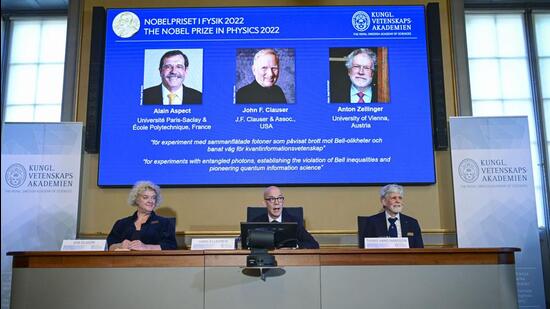 Credit: (Shutterstock) The three science Nobels were announced this week: medicine (for an important strand in evolutionary science), physics (for discoveries that lie behind quantum computing), and chemistry (for discoveries on creating better drug molecules). My colleague Kabir Firaque (have you checked out his Puzzles column Problematics on Mondays explained the import of these discoveries. “What makes human beings human? What makes us different from our closest relatives, the now extinct Neanderthals and Denisovans, and what do we have in common with them? The Nobel Prize in Physiology or Medicine, awarded to Swedish geneticist Svante Pääbo on Monday, recognises work that explored these questions which continue to intrigue scientists,” he wrote on the first. The second one was trickier. As he wrote: “Albert Einstein described the concept as “spooky action at a distance”. And Erwin Schrödinger, known for the cat that is alive and dead at the same time, described quantum entanglement as the most important trait of quantum mechanics. It is for their work on quantum entanglement that Alain Aspect, John Clauser and Anton Zeilinger shared the Nobel Prize in Physics announced on Tuesday. The citation acknowledged them “for experiments with entangled photons, establishing the violation of Bell inequalities and pioneering quantum information science.” He then went on to explain each of these terms. Then came the Chemistry Nobel. “In pharmaceuticals, building new molecules is often key to the development of new drugs. For a chemist, the challenge is not only to construct molecules that carry out useful functions, but also to get there using efficient processes,” Firaque wrote. “The Nobel Prize in Chemistry, awarded on Wednesday, honours three scientists ‘for the development of click chemistry and bio-orthogonal chemistry’.” These innovative chemistries provide efficient ways to build new molecules that have significant uses, particularly in pharmaceuticals. Barry Sharpless of Scripps Research, who had also won the Chemistry Prize in 2001, won his second for his work on getting molecules to bond in a 'click reaction’ – they 'click’ together like Lego pieces. Morten Meldal (University of Copenhagen) discovered a reaction that can be utilised to trigger click reactions between numerous different molecules. And Carolyn R Bertozzi (Stanford University) utilised the breakthroughs to develop ‘bio-orthogonal reactions’. These click reactions work inside a living cell, laying the framework for targeted treatments. | | LEARN As Delhi sees another wet spell — rare for October, but welcome because it could keep pollution levels low — a quick review of the monsoon season, which ended on September 30 is in order. My colleague Abhishek Jha says that it was a “normal” monsoon, but more from the “statistical” perspective. As he points out, one of four days was very dry, and one of three, very wet, with the excess rain largely being accounted for by what the weather office terms “heavy intensity” rain. That unevenness in monsoon rains is not good — not for agriculture; nor for the drainage networks of cities which now have to (if they are scientifically inclined) upgrade these on the basis of entirely different flow rates. | | READ MORE The Central Vista’s Freemason connection What the chess.com report on the Chess cheating scandal claims A heist buff attempts a bank job, and nearly gets away Tragedy at 18,000 ft. | | OUTSIDE Is there likely to be a Covid-19 surge in the northern hemisphere? Many scientists seem to think so, with the flare-up being driven by new immune-resistant variants, delays in the launch of bivalent vaccines, and the removal of mask and social-distancing mandates in most countries. “Will there be a Covid winter wave?” Nature magazine recently asked, and went on to answer the question in the affirmative. The journal Science was even more definitive: “Big Covid-19 waves may be coming…” it said. Should we worry? | | WHAT I'M READING “Covid-19 won’t be our last pandemic of the 21st century. It probably won’t be our worst.” That’s a line from the latest book of a man who, in 2012, wrote a book called Spillover: Animal Infections and the Next Human Pandemic. The aptly named Breathless (for its subject as well as the pace of the narrative) is David Quammen’s new book, and its subtitle says: The Scientific Race to Beat a Deadly Virus. Through a series of in-depth interviews with experts (conducted over Zoom), Quammen describes the challenge (the virus itself, and its transmission), and the response (the way governments and the scientific community responded to Covid) into a fast-paced, yet detailed look at how we got here (and where we go). | | WHAT I’M LISTENING TO Malian blues, a mix of the distinctive Songhai music of the African nation with the blues, performed by Vieux Farka Touré in the characteristic sparse style made popular by his late father, and perhaps the best guitarist to emerge out of Africa, Ali Farka Touré. The album, Les Racines (The Roots) is both personal (at one level it is about Touré going back to the music he knew as a child) and political (as a lot of African music is). I’d like to think it is also about the blues themselves going back to their roots — as they did in Savane, an album I consider Ali Farka Touré’s best. | Please share your feedback with us What do you think about this newsletter? | | Were you forwarded this email? Did you stumble upon it online? Sign up here. | | | | | | Get the Hindustan Times app and read premium stories | | | | | | View in Browser | Privacy Policy | Contact us You received this email because you signed up for HT Newsletters or because it is included in your subscription. Copyright © HT Digital Streams. All Rights Reserved | | | | |