Unpacking the Past, Present, and Future of Safe Abortions with Dr. Allison Berry🎙 Tune into Art of Citizenry Podcast - Episode 16
Episode 16 of Art of Citizenry Podcast is officially out and I am so incredibly honored to share this powerful conversation with all of you! 🙌🏽
I realize this is one incredibly long email (and rightfully so!). So I want to share a quick guide to help you navigate all the content below.
During this episode, I am joined by Dr. Allison Berry, a family physician, mother, and trained abortion provider. Together, we discuss the nuances of the recent Supreme Court decision to overturn Roe v. Wade, explore the inequities that come from banning safe abortions, and unpack how religion + politics have dictated the physician-patient relationship. As a primary care physician and Public Health expert, Dr. Berry offers her personal experiences caring for patients and humanizes the fight for reproductive justice. Tune In On Your Favorite Listening App📌 For medical providers like Dr. Berry, coming out as an abortion provider is very risky to their safety. I want to thank her for her time, compassion, bravery, and for sharing her expertise with us because it is important that we humanize abortions and give voice to our medical experts. Meet Our Guest —Dr. Allison Berry, MD, MPHHealth Officer for Clallam and Jefferson CountiesDr. Allison Berry is a family physician, mother, and trained abortion provider. She graduated from Johns Hopkins University School of Medicine and received her masters from the Johns Hopkins Bloomberg School of Public Health. She currently serves as a county health officer for Clallam and Jefferson Counties in Washington state. She is also a family physician for the Jamestown Tribe. Dr. Berry’s views expressed during this episode are her own. They have not been vetted by any of the organizations she works for and do not represent an official statement on their behalf. Roe v. Wade: A Brief History —In 1973, the US Supreme Court ruled that the Constitution of the United States protects a pregnant person’s liberty to choose to have an abortion. This landmark ruling challenged the individual abortion laws passed by various states and made abortion legal at the federal level above and beyond the state level. The case of Roe v. Wade was initially brought forth in 1969 by Norma McCorvey, known in the case as “Jane Roe,” a woman who lived in Texas and wanted an abortion, but could not have one because abortions were illegal in Texas unless it was absolutely necessary to save the life of the pregnant person. The lawsuit was filed against her local district attorney, Henry Wade, hence Roe v Wade. Considered one of the most controversial cases in constitutional law, the Supreme Court ruled that criminalizing abortion violated the constitutional right of privacy, balancing abortion rights with regulations. Roe v. Wade articulated that states do not have the right to regulate abortions until approximately the end of the first trimester of pregnancy. The court also identified a fetuses viability, or ability to live outside of the womb, at 24 weeks of pregnancy. Since Roe v. Wade, anti-abortion groups have continually challenged the court, narrowing its scope with cases including Planned Parenthood of Southeastern Pennsylvania v. Casey in 1992 (more on this in the Glossary below). Dobbs v. Jackson Women’s Health Organization —In May of 2021, the Supreme Court agreed to review a lower court’s decision to strike down a 2018 Mississippi state law that banned abortions after 15 weeks, which is well before the 24 week fetal viability measure set forth by Roe v Wade. Though the law was clearly unconstitutional, Mississippi lawmakers passed the measure fully expecting it to be challenged in hopes that the case would be taken on by the 6 to 3 majority conservative Supreme Court, an imbalance that only happened in the last presidential term. As expected, the state law was challenged by the Jackson Women’s Health Organization abortion clinic, the only abortion clinic in the state of Mississippi. At the heart of the most recent case, Dobbs v. Jackson Women’s Health Organization, the single question being answered by the courts was if bans on all pre-viability abortions are unconstitutional. In other words, are states able to ban abortions before the 24 week precedent that Roe v. Wade had set? As you are well aware by now, the court ruled to overturn Roe v Wade and Planned Parenthood v. Casey, stating that pregnant people do not have the constitutional right to an abortion and that abortion laws were up to states to determine, effectively making abortions illegal in multiple states overnight.
A Fight for Bodily Autonomy —Bodily autonomy is the right we hold as individuals to make decisions about our own bodies. DR. ALLISON BERRY, MD, MPH —
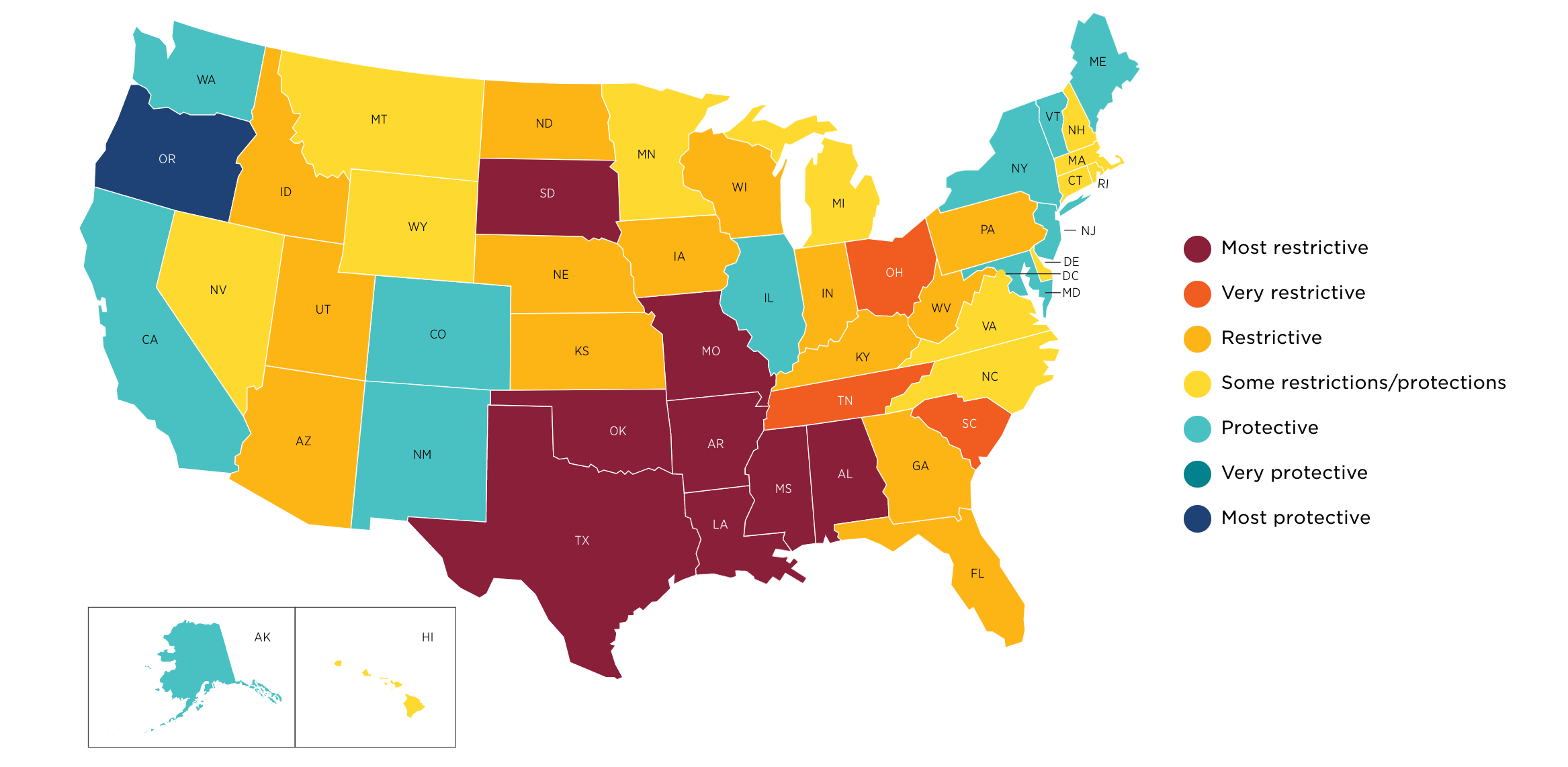
The conversations around abortion rights and United States law are complicated, not because they have to be, but because we live in a society rooted in engrained misogyny that has historically and continues to believe in maintaining control over people’s bodies, and the bodies of pregnant people. Overturning Roe v. Wade is the direct result of a patriarchal worldview that recognizes Christian morality as the only moral compass that is allowed to define social norms. One that denies individuals, particularly pregnant people, autonomy over their own body and their own health. The Supreme Court’s decision to overturn Roe v. Wade will only further exacerbate existing inequities, disproportionately impacting those already marginalized by systems of oppression - people of color, poor people, people residing in rural regions, among others. Even within states where abortions are protected such as Washington, California or New York, equitable access to care, including reproductive care and abortions, is still incredibly difficult. Wealthy, upper middle-class individuals who have the resources and ability to travel to a state where abortion remains legal will remain the only ones who are able to access safe abortions. This is what it means to hold privilege and power within a classist society.
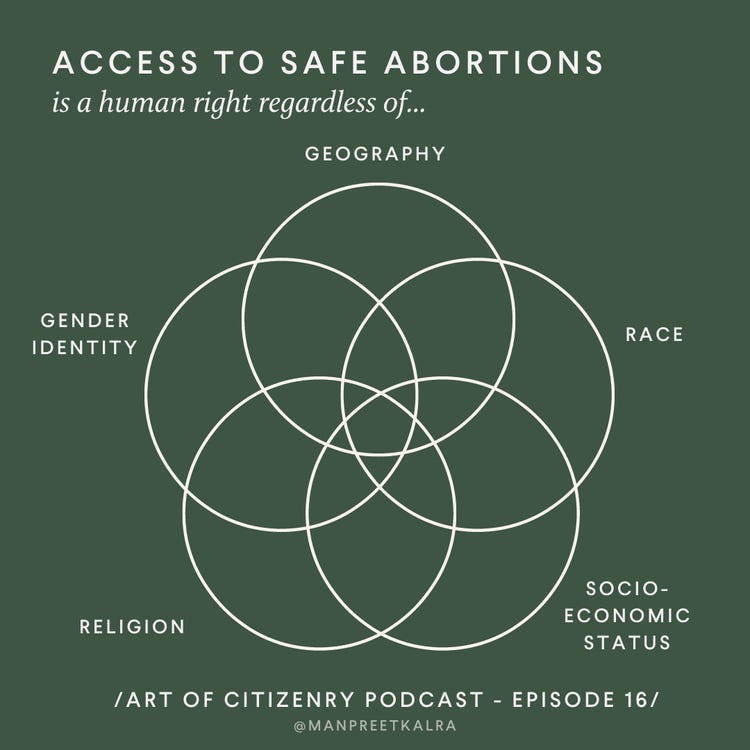
Access to Safe Abortions is a Human Right.Abortions will not stop. Only safe abortions will. And we will see an increase in complications and deaths when physicians are not a part of the process. When alcohol was banned during the Prohibition period, we saw a significant increase in the amount of unsafe alcohol production that poisoned and killed many individuals due to a lack of regulations and oversight. If something is supposedly not happening, you cannot address it. Without protections and regulations in place, we are creating unsafe environments for further harm and inequity to manifest. To truly value life, there needs to be an increase in paid maternity leave, child care assistance, free preschool and everyone needs to have access to safe housing, healthy food, and a strong education. Access to safe abortions is a conversation that requires us to unpack not just the importance of Roe v. Wade, but all the other ways in which the United States of America has chosen to make access to health care more difficult for pregnant people, particularly those who navigate multiple intersections of systemic oppression. Understanding these nuances is important to understanding the reality we are fighting against and the future we are fighting for. This decision is not about protecting lives, it is about control and denying agency for women, for pregnant people, for patients, and for trained medical professionals. Abortions, like any other medical treatment, are part of essential health care. Denying essential health care is unjust and denying safe abortions only puts those most vulnerable at further harm. Reproductive Justice —The Reproductive Justice framework recognizes the need for intersectionality, looking at reproductive health through the lens of social justice and human rights. The concept of “reproductive justice” was coined by a group of Black women in 1994 in recognition that the Women’s Rights Movement, led by and representing white women, lacked a lens that could more equitably fight for the needs of Black, Indigenous, and women of color, and other marginalized people.
Read the statement placed by Women of African Descent for Reproductive Justice in Washington Post in August, 1994. DR. ALLISON BERRY, MD, MPH —
The main goal of the reproductive justice movement is to move beyond the pro-choice movement’s singular focus on abortion. As stated by Kimala Price in their paper “What is Reproductive Justice?: How Women of Color Activists Are Redefining the ProChoice Paradigm” published by Duke University Press:
Asian Communities for Reproductive Justice (ACRJ) states:
What does it mean to decolonize healthcare?During this episode, I asked Dr. Berry what it means to decolonize healthcare and her response was so incredibly powerful. I do highly recommend listening to the words below in her own voice during the episode. DR. ALLISON BERRY, MD, MPH —
Episode Glossary: Legal Frameworks, Concepts + TermsFetal Viability —The point at which a fetus can survive outside the womb. Dobbs v. Jackson Women’s Health Organization —In May of 2021, the Supreme Court agreed to review a lower court’s decision to strike down a 2018 Mississippi state law that banned abortions after 15 weeks, which is well before the 24 week fetal viability measure set forth by Roe v Wade. Though the law was clearly unconstitutional, Mississippi lawmakers passed the measure fully expecting it to be challenged in hopes that the case would be taken on by the 6 to 3 majority conservative Supreme Court. As expected, the state law was in fact challenged by Jackson Women’s Health Organization, the only abortion clinic in Mississippi. The clinic sued Thomas E. Dobbs, state health officer with the Mississippi State Department of Health. At the heart of the case, Dobbs v. Jackson Women’s Health Organization, the question being answered by the courts was if bans on all viability abortions are unconstitutional. On June 24, 2022 the Supreme Court overturned Roe v. Wade and Planned Parenthood v. Casey, stating that pregnant people do not have the constitutional right to an abortion and that abortion rights should be defined at the state level. Roe v. Wade —In 1973, the US Supreme Court ruled that the Constitution of the United States protects a pregnant person’s liberty to choose to have an abortion. This landmark ruling challenged the individual abortion laws passed by various states and made abortion legal at the federal level above and beyond the state level. In this case, the Supreme Court ruled that criminalizing abortion violated the constitutional right of privacy, articulating that states do not have the right to regulate abortions until approximately the end of the first trimester of pregnancy. The court also identified a fetuses viability at 24 weeks of pregnancy. Planned Parenthood of Southeastern Pennsylvania v. Casey —In 1992, the Supreme Court ruled on the case Planned Parenthood v. Casey, which upheld the central ruling of Roe v. Wade: that states could not prohibit abortions before fetal viability. However, disregarded the trimester framework:
This framework was replaced with an “undue burden” test which ultimately allowed for restrictions on abortions. *Reference: NY Times - What did Planned Parenthood v. Casey say? Undue Burden —Undue burden is a standard established by Planned Parenthood v. Casey in 1992 that is used by courts to evaluate whether state laws on abortion are constitutional. “An undue burden arises if the purpose or effect of the state restriction on abortion has placed a substantial obstacle on someone seeking an abortion”* of a fetus pre viability. *Reference: Cornell Legal Information Institute Targeted Regulation of Abortion Providers (TRAP) Laws —TRAP laws are designed to limit abortions by creating regulations that prevent clinics and medical facilities from being able to provide abortions. As defined by Planned Parenthood: TRAP laws are “targeted restrictions on abortion providers designed to close them down rather than to make them safer for women.”* *Reference: Planned Parenthood Hyde Amendment —The Hyde Amendment was passed just a few years after Roe v. Wade and was brought forth by anti-abortion Congressional member Henry J Hyde. Since 1976, the Hyde Amendment has been reenacted every year. It prohibits federal funds from covering abortion services for people enrolled in Medicaid, Medicare and the Children’s Health Insurance Program (CHIP). In addition, it prohibits federally funded clinics, many of which offer care to underserved communities, from offering abortion care. Conscious Clauses / Protections —Referred to as “conscious provisions” in this episode. Legal statutes that permit health care providers to “refuse to perform, accommodate, or assist with certain health care services on religious or moral grounds.”* In some cases, these statutes also permit health care providers from referring patients to alternative providers. These provisions are most commonly seen enacted in connection to abortion care, contraceptives, sex affirming therapy, etc. *Reference: US Department of Health and Human Services Trigger Laws —Laws that are currently not enforceable, but are written to go into effect when an event or circumstantial change occurs. In this context, the term “trigger law” is used to refer to state laws specifically written to prohibit or significantly limit access to abortions in the event that Roe v. Wade is overturned.
*Reference: Definition of Trigger Laws CPC (Crisis Pregnancy Centers) —Crisis Pregnancy Centers, often also referred to as Pregnancy Resource Centers, are clinics or mobile vans that present themselves as women health clinics, but are designed to discourage people from getting abortions by spreading misinformation, emotional manipulation, and other harmful tactics. They are often run by conservative anti-abortion Christian organizations working to dissuade pregnant people from receiving abortion care. Although they are incredibly harmful and misleading, they have received millions of dollars of taxpayer funding as nonprofits. To learn more about Crisis Pregnancy Centers, be sure to check out this brilliant episode by one of my personal favorites, John Oliver! 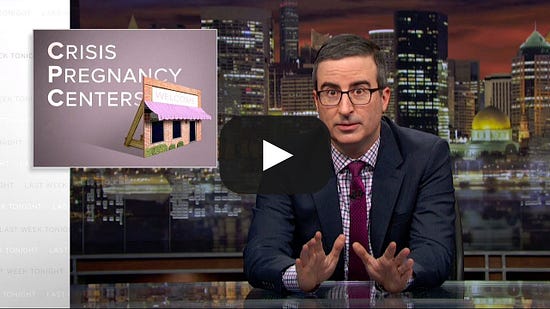 Ectopic Pregnancy —
Embryology —The study of embryos and their development. Embryo —The stage of development that starts at fertilization (joining of an egg and sperm) and lasts up to 8 weeks.** Fetus —The stage of human development beyond 8 completed weeks after fertilization.** Spontaneous Abortion —Another term used for miscarriage, or spontaneous loss of a pregnancy.** Induced Abortion —An intervention to end a pregnancy. **Reference: ACOG - American College of Obstetricians and Gynecologists ResourcesWhat You Can Do —
National Network of Abortion Funds —The National Network of Abortion Funds - Offers financial and logistical support to those seeking abortions. “The National Network of Abortion Funds builds power with members to remove financial and logistical barriers to abortion access by centering people who have abortions and organizing at the intersections of racial, economic, and reproductive justice.”
ineedana.com —Helps individuals find verified abortion providers near them. Our goal is to provide a simple, up-to-date, and localized source of information for people seeking abortions. Plan C —Provides up-to-date information on how people in the U.S. are accessing at-home abortion pill options online. “We envision a world in which the ability to end an early pregnancy is in the hands of those who need it.” National Women’s Health Network —Connecting women with mail order abortion pills while we still can. Repro Legal Helpline —Offering free legal advice for individuals seeking abortions. The Repro Legal Helpline is a free, confidential helpline where you can get legal information or advice about self-managed abortion, young people's access to abortion or judicial bypass, and referrals to local resources. The Miscarriage + Abortion Hotline —If you need support to self-manage your miscarriage or abortion call or text: 833-246-2632 All Options —Judgement-free counseling on all options. Data Privacy —If you are seeking an abortion, online data privacy is incredibly important. Here are some articles to help you navigate your privacy online:
Calls to Action for Businesses —This list is based on one compiled by Planned Parenthood. I made a few adjustments to broaden its scope.
Listen to Art of Citizenry on Your Favorite Listening AppBecome a Podcast PatronArt of Citizenry is a community supported podcast dedicated to decolonizing storytelling. This allows me to have unfiltered and nuanced conversations that challenge how power plays out in conversations about social, economic, climate, and geopolitical justice. We unpack history to really identify ways we can build a more equitable future, one that is restorative and just. Please consider supporting by visiting: patreon.com/manpreetkalra
Rewritten by Manpreet Kalra is a reader-supported newsletter. If you aren’t already, please consider become a paying subscriber! © 2022 Manpreet Kaur Kalra
|