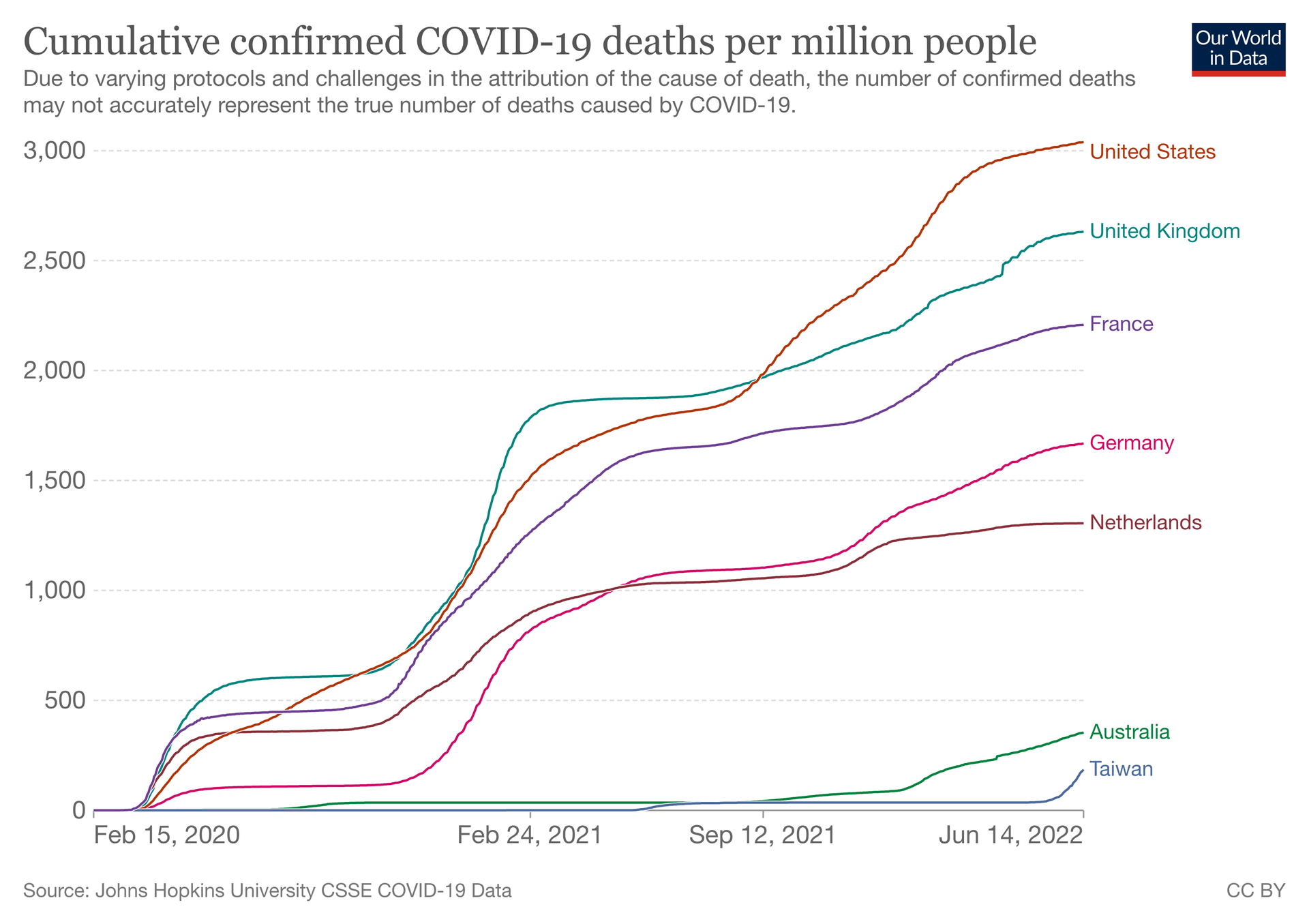
All of these countries do have universal health care, but they do not all have a single-payer system in the vein of Sanders's Medicare-for-all proposal. Taiwan does. But Australia utilizes a hybrid program where some people depend on public health insurance and other people use private plans. The Netherlands and Germany rely on private health insurance, heavily regulated and subsidized by the government. The UK's National Health Service goes beyond single-payer and is fully socialized: The government not only pays for care for everyone but also runs hospitals and employs doctors directly.
Countries with universal health care did outperform the US during the pandemic — that part of the paper's conclusion appears beyond dispute. But they have deployed different programs to achieve that goal. It's not clear to me that Medicare-for-all would necessarily lead to better outcomes than, say, a system modeled on the Australian or Dutch approach.
Other factors might be in play beyond the specific type of health care system. As Damien Cave wrote for the New York Times in Australia, social trust seems to have been a decisive difference between the American and Australian experiences during the pandemic. The two nations share a lot of sociocultural DNA, but Aussies have much deeper trust in people in general, and their health care system specifically, than Americans do, Cave wrote. When I was reporting on South Korea's successful Covid-19 response, Korean sources pointed in part to people there having a generally high level of trust in the government.
This also makes some intuitive sense. It follows that people in societies with more trust would be more likely to wear masks or stay home or get vaccinated not only for their own benefit but for the health of the people around them and society at large.
In a way, social trust and universal health care come down to the same thing: a society's willingness to come together and take care of one another. The US does not have the same culture of collective responsibility that these other wealthy nations do. That lack of social cohesion is reflected both in failures to adhere to public health measures and the failure to build a health care system that takes care of everyone.
Universal health care is a choice, a reflection of a country's values. When reporting the Everybody Covered series, I found this quote from Princeton health care economist Uwe Reinhardt. It was in his most recent book Priced Out, which was published after he died in 2017:
Canada and virtually all European and Asian developed nations have reached, decades ago, a political consensus to treat health care as a social good.
By contrast, we in the United States have never reached a politically dominant consensus on the issue.
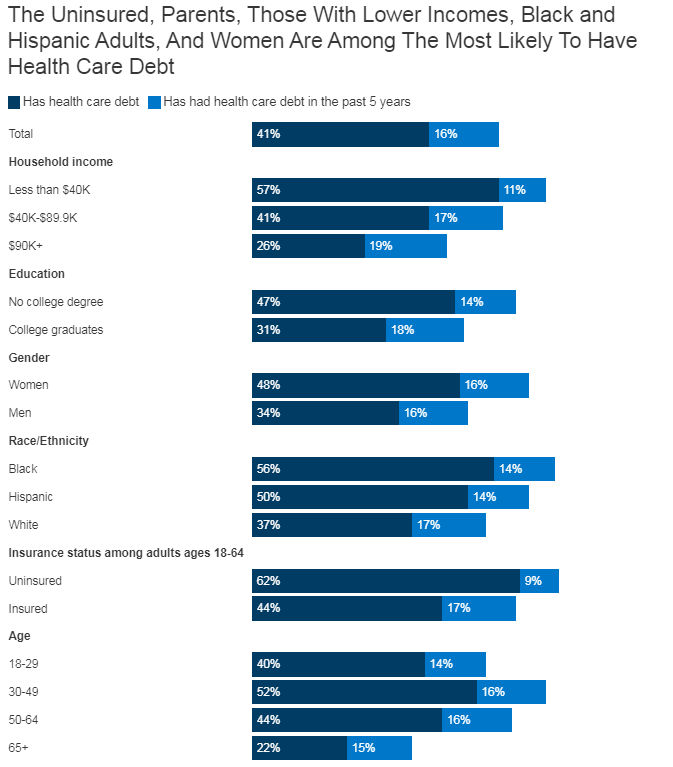
While traveling in Taiwan or the Netherlands, people would ask me about US health care and I would have to tell them that millions of Americans were uninsured and that people could be charged thousands of dollars for medical care. That was unfathomable to the people I met. They lived in a country where people agreed such things should never be allowed to happen.
America has never made that collective commitment to providing everyone with health care. The country paid the price for that shortsightedness during the pandemic, as this new study helps demonstrate. Whatever form it took, a universal health system would have likely prevented tens of thousands of deaths from the novel coronavirus.
Now it's too late.