Stefani Reynolds/Bloomberg via Getty Images
|
|
|
|
In today’s edition, we run down the Pentagon's new plan to test service members' testosterone levels, check in on President Donald Trump's primetime speech, and learn how we can avoid our next meltdown. Have thoughts or feelings on what you read here? You can reach me directly by email. I’m at dylan.scott@vox.com.
|
|
|
|
|
|
Dylan Scott, senior correspondent
|
|
|
|
|
|
Dylan Scott, senior correspondent
|
|
|
|
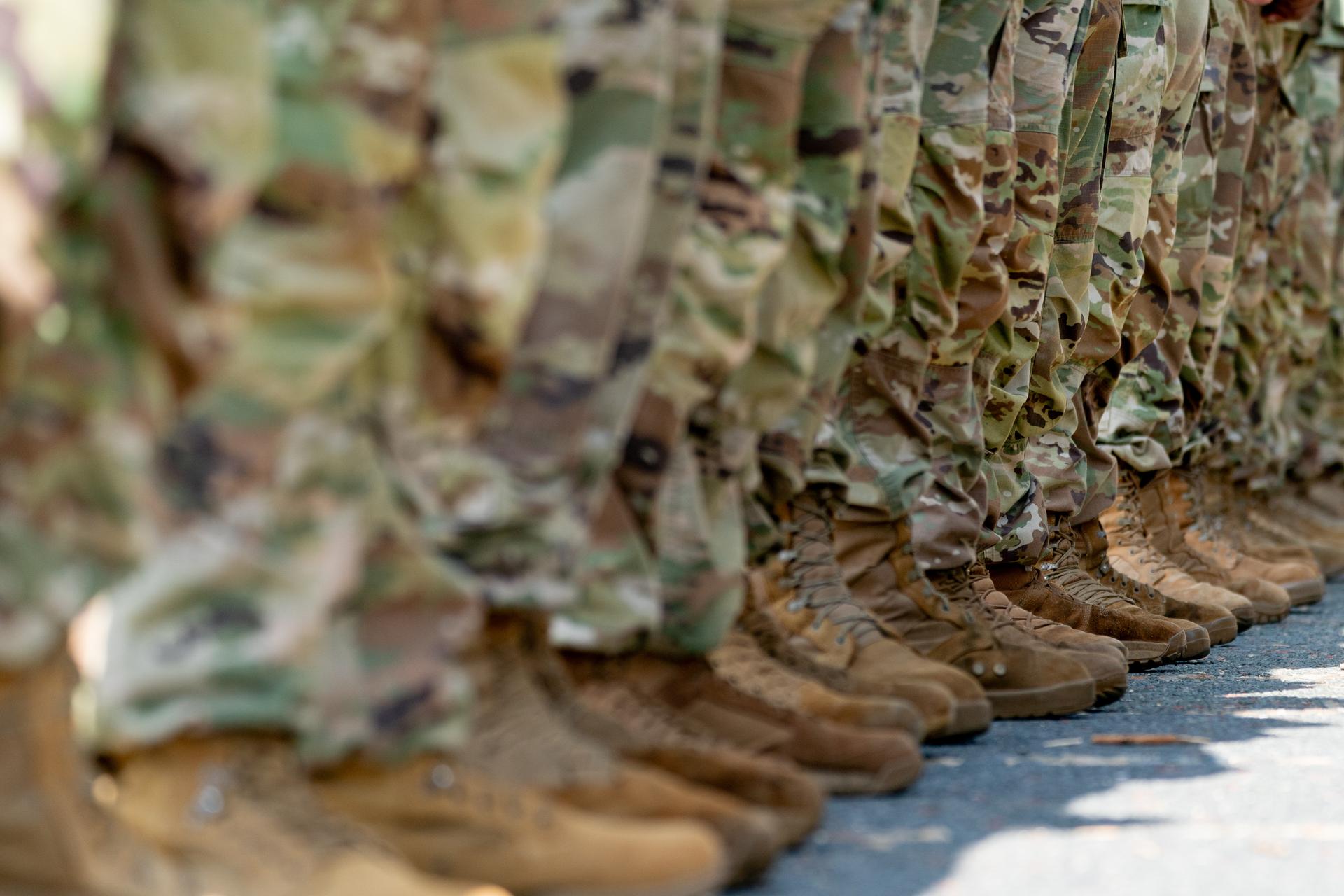
This week, US Defense Secretary Pete Hegseth announced that the Pentagon would begin testing the testosterone levels of all military members over the age of 30 as part of their regular, annual physical exams. And — if their levels are low — service members could choose to receive testosterone replacement therapy.
“It’s not about artificial enhancement. It’s about restoring and optimizing your natural capabilities,” Hegseth said, “protecting your longevity and ensuring you have the biological foundation required to sustain the fight.”
It’s another example of the performative masculinity that has defined Hegseth’s time atop the United States military. He has sought to rebrand the Pentagon as the “War” Department, preached a “warrior” ethos, rolled back DEI initiatives while blocking promotions for women, and taken an unusual interest in the beard-grooming standards of service members.
The testosterone obsession is just one of several ways that the military is having a Make America Healthy Again movement. Hegseth announced this spring that service members would no longer be required to get an annual flu vaccine. (The military later reinstated the mandate for new recruits, after a major flu outbreak at a boot camp.) And also this week, he launched a new investigation into the Defense Department’s decision in 2021 to mandate the Covid-19 vaccine — shades of the efforts being made by Robert F. Kennedy Jr. at the US health department.
|
|
|
Should we really be screening everybody for low T?
|
|
|
|
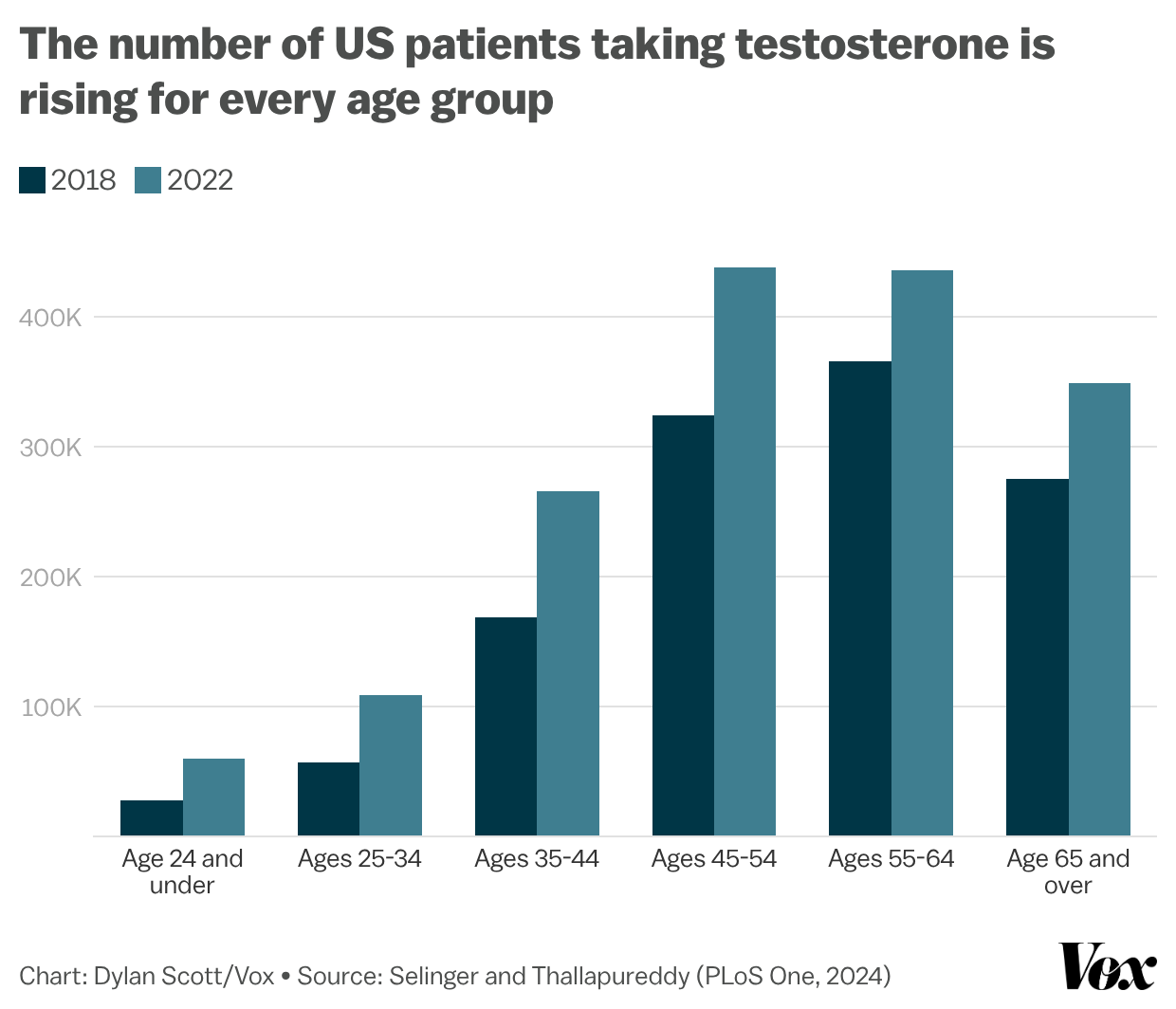
The “T” craze is not just a fixation of RFK Jr., who has said that he takes testosterone supplements, and Pete Hegseth. More Americans of every age group are taking testosterone. By one count, prescriptions grew from 7.3 million in 2019 to more than 11 million in 2024.
|
|
|
So, is getting more people to take supplemental testosterone actually a good idea? Should everybody be screened, as Hegseth is suggesting for service members over 30?
The Endocrine Society said in a statement after Hegseth’s announcement that there was “insufficient evidence” to support testosterone-level screening for asymptomatic Americans. Previous research suggests that, if anything, testosterone is already overprescribed in the US; only 12 percent of men receiving a prescription had received appropriate diagnostic testing.
Testosterone levels indeed fall as men age, and there has been a general decline in testosterone among men today compared to men of the past. But what’s not clear is whether widespread testosterone testing and supplementation is the solution.
For one, distinguishing between a natural decline in testosterone and a decline that warrants clinical intervention is the subject of ongoing debate among doctors. Low T can also be a sign of other chronic health conditions that it would be better to treat. If your T is dropping because of obesity, for example, it would be better to lose weight (or take a GLP-1 drug instead of a testosterone supplement). The evidence is mixed on how much taking T actually improves things like mood, energy, sexual performance — or military effectiveness — and taking too much testosterone could come with its own health risks.
The dialogue around T supplements is still evolving. Doctors used to worry that extra testosterone could cause cardiovascular problems, but more recent research has allayed those fears, leading proponents in the Trump administration to call for more prescribing. But the evidence right now does not appear to support the widespread T testing and supplementation that the military’s new program would suggest.
|
|
|
- Election obsession: Last night, President Donald Trump used a primetime address to allege issues with the security of US elections and push debunked theories about his loss in 2020. He also called for more restrictive voting laws.
- Summer haze: Smoke from Canadian wildfires is drifting into the US, creating hazardous air quality across the Northeast and Midwest through the weekend.
- On the podcast: Cyclospora can cause explosive diarrhea that can last a month. But you don’t need to swear off vegetables. Listen to the whole thing here.
|
|
|
|
➨ How to keep your cool on a bad day. As a parent of three children, I’m always on the lookout for better ways to manage my stress — and took heart in the four strategies suggested by Vox’s Allie Volpe in her piece this week. If we can take the time to acknowledge how we’re feeling and really reflect on what has led us to feel that way, we might be able to avoid a full-blown meltdown. That’s news you can really use.
|
|
|
|
- Did you know: Prediction markets correctly guess the winner of reality TV shows upwards of 90 percent of the time? It’s a trend that raises questions about insiders using insider knowledge to make a buck — and risks ruining the fun of following these shows.
- Today’s trivia: What is a Russian name meaning “holy”? (You can find this and other brain puzzles in Vox’s daily crossword. Look for the answer in Monday’s edition.)
- Yesterday’s trivia: Yesterday, we asked you what animal can be as narrow as a few millimeters or as wide as 13 feet. That would be crabs, the various species of which can range from tiny and adorable to monstrously terrifying.
|
|
|
Today’s edition was produced and edited by me, Dylan Scott. Thanks for reading!
|
|
|
|
Have thoughts or feelings on what you read here? You can reach me directly by email. I’m at dylan.scott@vox.com.
|
|
|
|