A message from our partners at Stansberry Research Dear Reader, A few weeks ago, my name appeared in the Epstein files. I won't dramatize it. I wasn't accused of anything. I wasn't involved. But I did something most people don't do when they see something that doesn't add up. I spoke up. Years ago, when I thought a financial tip might help law enforcement understand how Epstein operated, I shared it. Discreetly. Without expecting anything in return. That instinct... to step forward when something feels wrong... is the same one that led me to warn about the dot‑com bubble... the housing collapse... and several major market dislocations before they became obvious. And it's why I'm speaking up again now. Because something fundamental is shifting in America. The cost of living no longer matches how much money we make... We can't keep our promises to younger generations. And artificial intelligence is accelerating changes most people are not prepared for. One Wall Street strategist recently called what's coming a "violent reset." I agree with the direction, if not the language. There is a line forming between those who understand what's happening... and those who don't. I've laid out what I'm seeing and, more important, what you can do about it, in detail. Click here to read it while you still can. Regards, Whitney Tilson
Editor, Stansberry's Investment Advisory
Additional Reading from MarketBeat Media From Missteps to Momentum: Jack in the Box's Comeback PlanAuthored by Thomas Hughes. Published: 2/21/2026. 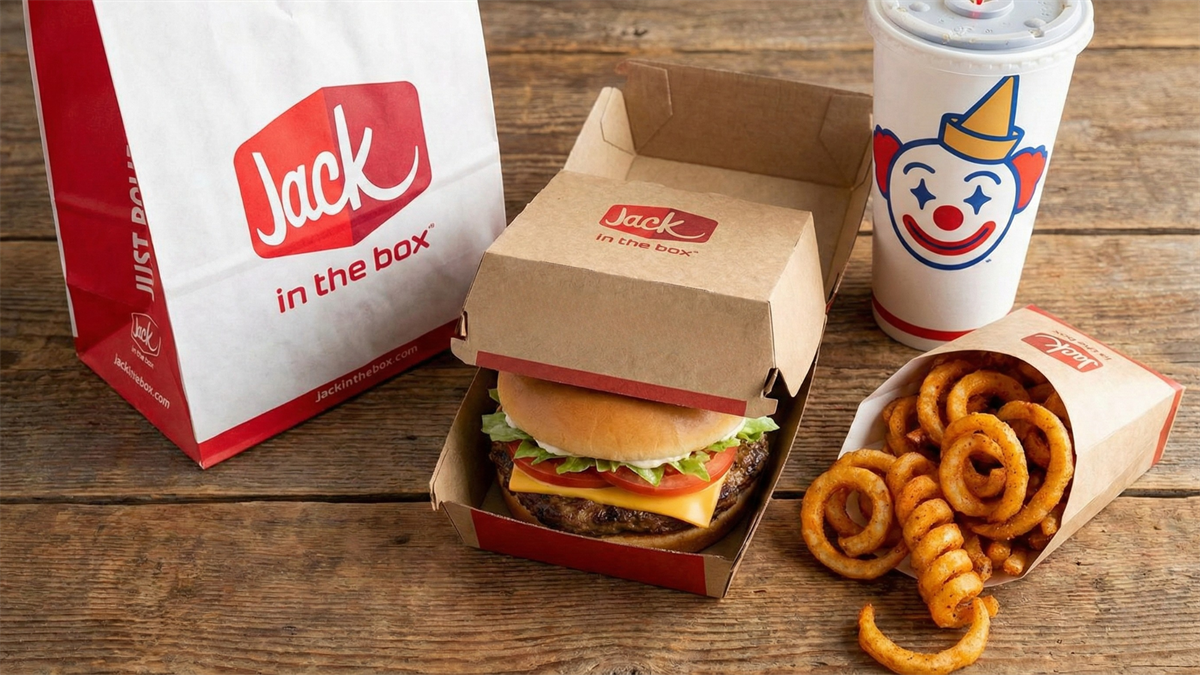
Key Takeaways - Jack in the Box is working through execution and balance-sheet challenges, while McDonald’s highlights what strong operational discipline can deliver.
- Despite weak first-quarter results, analyst targets and ratings suggest continued confidence in a recovery over time.
- Technical support, heavy institutional ownership, and elevated short interest could amplify any upside catalyst.
Comparing Jack in the Box (NASDAQ: JACK) with McDonald’s (NYSE: MCD) may sound like apples-to-oranges, but there is a useful connection. Where McDonald’s executes effectively, leans into digital, and takes share, Jack in the Box endured a series of executive missteps that led to lost market share, reduced shareholder value, higher debt and suspended capital returns. The connection? Jack in the Box's problems are fixable. It won’t match McDonald’s position as the world’s largest restaurant operator, but it can take cues from its more successful competitor, reclaim lost ground and reinvigorate shareholder value. Last year’s CEO change is the first step toward returning this consumer stock to higher — if not record — levels over time. Analysts Remain Optimistic for a JACK Turnaround Although Jack in the Box's fiscal Q1 2026 results were weak, the analyst response shows continued confidence in the turnaround effort. (Note that Jack in the Box's fiscal reporting period does not align with the calendar year.) Sales fell more than expected, partly because store closures are rationalizing the franchise footprint, but analysts remain hopeful. The first revision tracked by MarketBeat reaffirms a Hold-equivalent rating while raising the price target to $23. The $23 target is below the $26 consensus but still signals an expectation of share-price recovery and the potential for a double-digit advance once momentum returns. As it stands, 21 analysts rate the stock a Hold, with a 67% conviction rate, and consensus targets sit more than 40% above the critical support level. The critical support level in February 2026 is the long-term low set during the height of COVID-19 panic. That low represents a likely market floor and a potential turning point. Price action in 2025 suggests a bottom may already be forming and could turn into a reversal if upcoming releases show operational improvement. Following the recent release the stock has declined about 15%—alarming in magnitude but not yet a terminal signal. The pattern generally resembles a Head & Shoulders bottom. 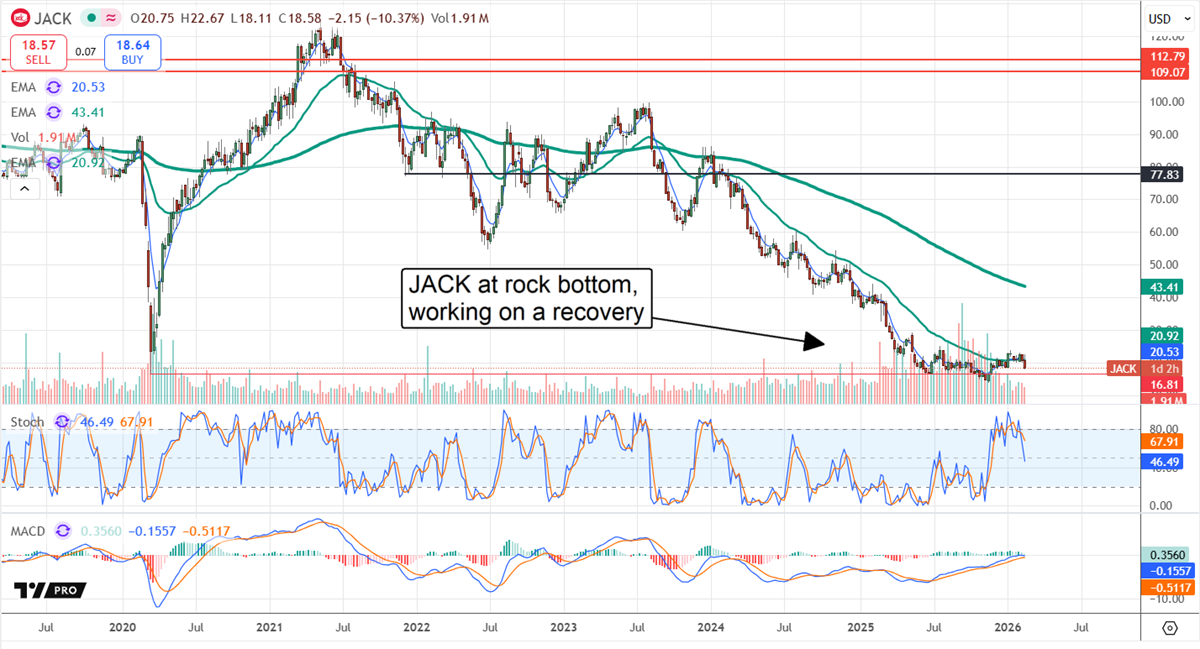
In this scenario, prices could dip in the near term before finding a low. If Jack falls below the support target, the decline could deepen and push JACK into levels not seen in more than two decades—or even into single digits. However, technical indicators and institutional activity suggest the $16.80 floor is a meaningful level of support. Institutions Set Floor: Short-Sellers Provide Potential for Rapid Share Price Increase Institutional holders show strong confidence in the brand and its cash-generating ability. Although selling activity increased in Q4 2025 and Q1 2026, buying outpaced selling, resulting in net accumulation and a solid support base, with the group owning nearly 100% of the stock. The key question is what comes next; one answer is a short-covering rally or a squeeze. Near-term headwinds remain, but store closures, quality improvements and debt reduction position the company for a healthier recovery, including a return to growth and resumed capital returns. With short interest above 26% and roughly 13 days to cover, any catalyst could be potent. A squeeze pushing the stock to the consensus $26 target would likely be a checkpoint on a move higher; technically, a rally into the $30–$40 range and potentially beyond is plausible. Jack in the Box Amid Transformation: Catalysts Ahead Key catalysts include continued debt repayments, which will free up cash flow; asset monetization, which will lighten the balance sheet; portfolio rationalization to optimize the footprint; and clearer capital-allocation plans. Capital returns were suspended to accelerate debt reduction, but that paydown is on track and points to a possible resumption of dividends and/or share repurchases in 2027. Even a dividend reinstated at half the previous level would produce a yield above 1%. At the end of Q1, share count was marginally higher while cash rose roughly 57%, providing room for accelerated debt reduction and a firmer financial footing.
| 

