Thanks for signing up for DividendStocks.com! It's the daily newsletter built for dividend and income investors. Before we can begin sending your daily updates, there’s one quick step left. Please confirm your subscription using the link below so our emails reach your inbox. Click Here to Confirm Your Subscription to DividendStocks.com Here’s a small glimpse of what you’ll get access to: Dividend Stock Ideas — Each newsletter features dividend stocks with high yields, sustainable payouts, and strong growth potential. Ex-Dividend Stocks — Want to capture upcoming dividend payouts? Find out which stocks are going ex-dividend this week. Market News and Events — Stay in the loop on the latest developments impacting popular dividend names like AT&T, Exxon Mobil, IBM, Procter & Gamble, and Verizon. Bonus: As a thank-you for confirming, you’ll also receive a free PDF copy of Automatic Income, our popular guide to building wealth through dividend investing. Let’s get your dividend journey started! Discover Top Income-Generating Stocks Here See you in your inbox soon,
The DividendStocks.com Team P.S. Don’t miss out click here to verify your subscription and secure your daily dividend insights and your free investing guide!
Today's Bonus Content Why Options Traders Are Loading Up on Pure StorageAuthored by Jeffrey Neal Johnson. Publication Date: 1/16/2026. 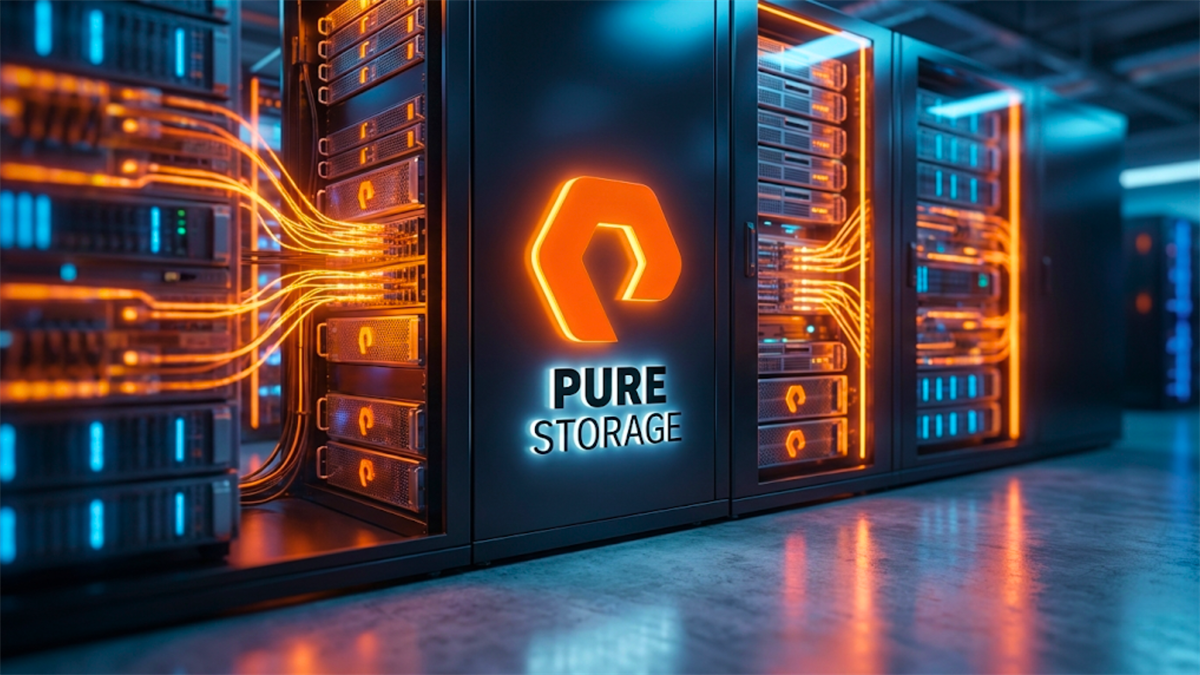
In Brief - Recent trading data reveals a massive surge in bullish call options, suggesting institutional investors are positioning for a potential rebound in share price.
- The company confirmed a landmark design partnership with a top hyperscaler to replace legacy hard drives with its proprietary and efficient flash storage.
- Data center power constraints are driving demand for energy-efficient storage solutions that better manage raw flash memory than traditional solid-state drives.
In the stock market, price action tells you history, but volume often predicts the future. For investors watching the data infrastructure sector, a specific technical signal recently flashed that deserves a closer look. Pure Storage, Inc. (NYSE: PSTG) showed up on the Unusual Call Options list with a noticeable 191% spike in volume. To grasp the significance, it helps to know what a call option represents. A call option is a financial contract that gives an investor the right to buy a stock at a specified price in the future. It's a leveraged bet that lets traders control a large amount of stock with less capital up front. The former CEO of Google calls it the most important thing to happen in 500, maybe 1,000 years of human society. A former U.S. Treasury Secretary says when your great-grandchildren write the history of this period, the political headlines will be the second or third story. The first story is something none of us have seen before. The dot-com collapse, global financial crisis, and COVID-19 pandemic don't compare to what's coming next. We may be entering a period of dramatic, almost unimaginable change. See the full warning and how to prepare now. When volume in these contracts explodes—especially while the underlying stock is falling—it creates a divergence. That pattern is often a footprint of institutional investors, sometimes called smart money. Retail investors often sell when they see a stock chart dropping. Institutions, however, may use such pullbacks to accumulate positions if they believe the fundamentals remain intact. Over the last 30 days, Pure Storage has pulled back roughly 11–12%, trading in the high $60s to mid $70s. The surge in call activity suggests large traders view the sell-off as a buying opportunity. They appear to be betting the market has mispriced the company's role in the next phase of the artificial intelligence (AI) revolution. The timing is notable because it aligns with a growing consensus that the hardware powering AI is poised for a structural shift. Watts per Terabyte: The Only Metric That Matters While the financial headlines focus on the expensive processors used to train AI, a quieter crisis is emerging in data centers. AI models—such as those behind ChatGPT, Alphabet's (NASDAQ: GOOGL) Gemini or Meta Platforms' (NASDAQ: META) Llama—are subject to a principle known as data gravity. They require massive datasets to be fed into processors in real time and as quickly as possible. For decades, the standard solution for storing that data was the hard disk drive (HDD): a mechanical device with spinning magnetic platters. HDDs are cheap to buy, but they're slow, bulky and generate a lot of heat—characteristics that make them energy-intensive. In 2026, the primary constraint for building new AI "factories" is often not land or chips but electricity. Data centers are approaching power limits, and owners are searching for ways to optimize existing power usage. Energy efficiency has therefore become a competitive weapon. This is where Pure Storage claims an advantage with its proprietary DirectFlash technology. To see why, you need to look at how data storage is typically implemented. Competitors such as Dell Technologies (NYSE: DELL) and Hewlett Packard Enterprise (NYSE: HPE) often assemble storage arrays using off-the-shelf solid-state drives (SSDs). Each SSD contains its own controller chip that manages data flow and performs maintenance tasks like garbage collection. In racks with thousands of drives, that amounts to thousands of small controllers consuming power on redundant tasks. Pure Storage takes a different approach. Its software talks directly to raw flash memory modules, removing the middleman. The system manages data globally rather than relying on local management on every drive. By eliminating those inefficiencies, Pure arrays can store more data in less space while using significantly less electricity. The critical metric in 2026 is watts per terabyte. When a hyperscale data center hits its power ceiling, it has two choices: build new power infrastructure (which takes years) or replace inefficient hardware with more efficient equipment. The bullish options activity implies market participants expect operators to choose the latter. Cracking the Code: The End of the Hardware Cycle Technology only generates value if customers buy it. For years, the bear case against Pure Storage was that it couldn't crack the hyperscaler market. Historically, hyperscalers followed a build-versus-buy philosophy: they purchased cheap raw components and assembled custom storage systems rather than paying a premium to vendors like Pure. That narrative appears to be changing. Pure Storage has confirmed design wins with multiple hyperscalers and has expanded its relationship with Meta Platforms. As of early 2026, that relationship has moved from testing into active deployment. This is a watershed moment: Pure's DirectFlash technology is now reportedly efficient enough that it can be cheaper for a tech giant to buy from Pure than to build and operate equivalent systems in-house. That operational progress is showing up in the numbers. In its most recent report for the third quarter of fiscal 2026, the company posted strong results: - Revenue: $964.5 million, a 16% year-over-year increase.
- Profitability: A record non-GAAP operating margin of 20.3%.
Perhaps most importantly, Pure is changing how it sells storage through its Evergreen subscription model. Historically, customers bought storage boxes, used them for five years, then replaced them—creating lumpy revenue cycles. Pure's Evergreen model functions more like a utility. Customers subscribe, and Pure upgrades controllers non-disruptively over time. This shift toward Storage-as-a-Service (STaaS) builds recurring revenue. Wall Street typically assigns higher valuations to companies with predictable, recurring revenue, which helps justify the premium valuation the stock currently commands. The Flash Revolution: Is It Time to Follow the Flow? Despite the bullish signals, investors should remain mindful of the risks. Pure Storage trades at a premium valuation; its price-to-earnings ratio is materially higher than many legacy hardware peers. When a stock is priced for perfection, any slowdown in growth can trigger volatility. Recent insider selling by executives has also drawn negative headlines. While such selling is often part of pre-scheduled plans for liquidity, it can alarm retail investors and be interpreted as a loss of confidence. The company has tools to address those concerns. Management has authorized a $400 million share buyback program, signaling the board believes the stock is undervalued. Repurchases reduce the share count on the market and can help support the share price. The 191% spike in call options suggests some investors are looking past short-term noise and insider headlines to the bigger picture. The shift from spinning hard drives to all-flash data centers looks increasingly inevitable: it is less a question of if than when. As AI models grow larger and power grids become more constrained, the company that can store the most data with the least electricity will have a meaningful advantage. For now, the options market appears to be betting that company is Pure Storage. For investors, the recent pullback may be one of the last opportunities to position ahead of revenue from large hyperscale deals fully flowing onto Pure Storage's balance sheet.
| 
