

Ticker Reports for April 10th

5 Highest-Rated Dividend Stocks According to MarketBeat
MarketBeat has many tools, including the Top Rated Dividend Stocks screener. It ranks the top-100 dividend-paying stocks according to analysts' sentiment, giving a 4.00 to those with 100% Buy ratings and a 1.00 to those with 100% Sell ratings. This list includes five of the seven top-rated stocks, including two infrastructure plays and three REITs, notable because they are “real assets.”
Real assets are an asset class that includes commodities, infrastructure, and real estate. They are investments with intrinsic value whose industries have high barriers to entry, are insulated from interest rates and inflation, and have visible revenue streams guaranteed by long-term contracts. Real assets are critical to investors because they offer diversification from traditional assets, provide cash flow, and can reduce portfolio volatility.
Franklin BSP Realty Trust Is the Top-Ranked Dividend Stock
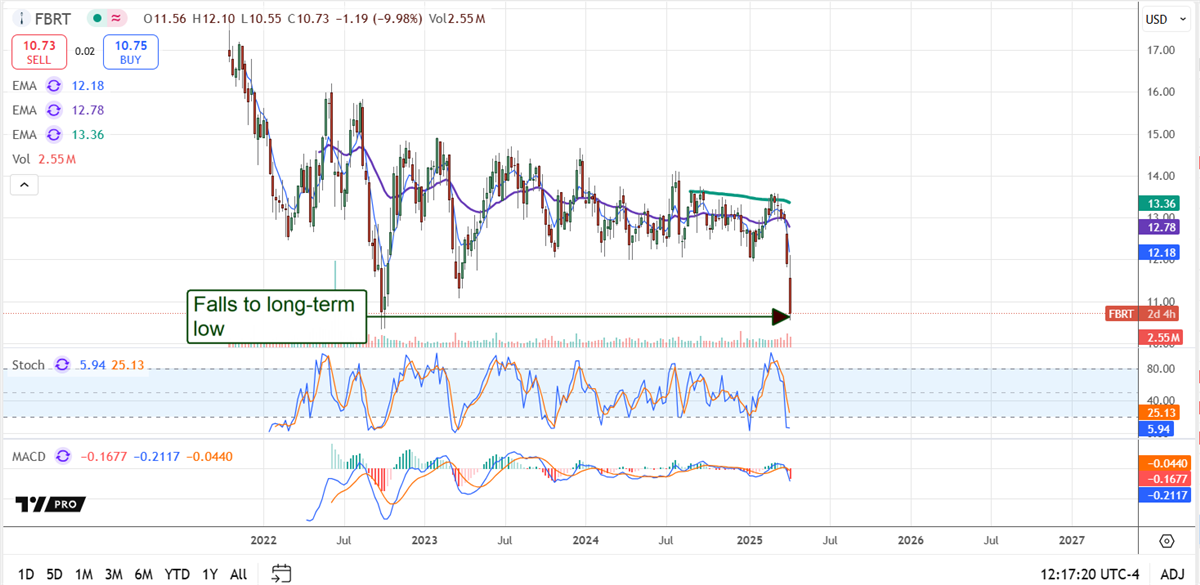
Franklin BSP Realty Trust (NYSE: FBRT) is the top-ranked dividend stock on MarketBeat’s platform.
It has a score of 3.29 based on seven analysts' ratings. They peg the stock at Buy and see it advancing by 40% at the low end of their range and 45% at the consensus.
The consensus rating has a relatively high conviction, with most targets falling within a narrow range, and recent activity is bullish.
Two revisions were issued in early March, reiterating Buy ratings and an expectation for significant upside in 2025. Regarding Franklin BSP’s business, it invests in mortgage-backed securities, primarily variable-rate mortgages, and pays a healthy dividend.
The yield is running above 11%, with shares near long-term lows, but there is a catch. The payout came in well above the 2024 DCF and is in danger of reduction. The offset is that the balance sheet is healthy and well capitalized, and earnings are expected to grow significantly over the next two years.
Brookfield Infrastructure Partners, A Leader in Infrastructure Investment
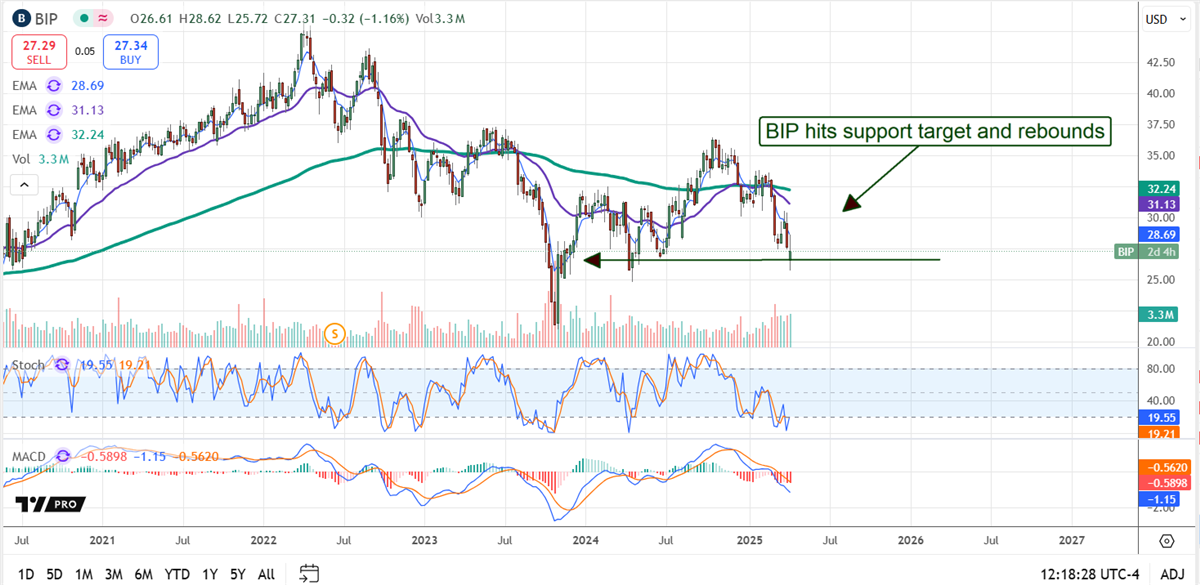
Brookfield Infrastructure Partners (NYSE: BIP) is a leader in infrastructure investment with over 125 years of industry experience.
The limited partnership company owns and operates infrastructure assets in four categories: utilities, transport, midstream, and data businesses. The data businesses segment will be noteworthy in 2025 due to its exposure to data centers and AI.
It is the second-highest-rated dividend stock according to MarketBeat’s data, rated a Buy by seven analysts with a 50% upside potential at the consensus. It yields more than 6% in early Q2 2024, and the distribution tends to increase annually.
Brookfield’s diversified asset base provides a steady stream of cash flow, even during economic downturns. Its growing focus on digital infrastructure, particularly data centers, positions it to benefit from the rising demand driven by AI and cloud computing. Combined with its strong yield and history of consistent distribution growth, BIP offers investors a rare mix of income, stability, and long-term tech-driven upside.
Solaris Energy Infrastructure Has Tailwinds
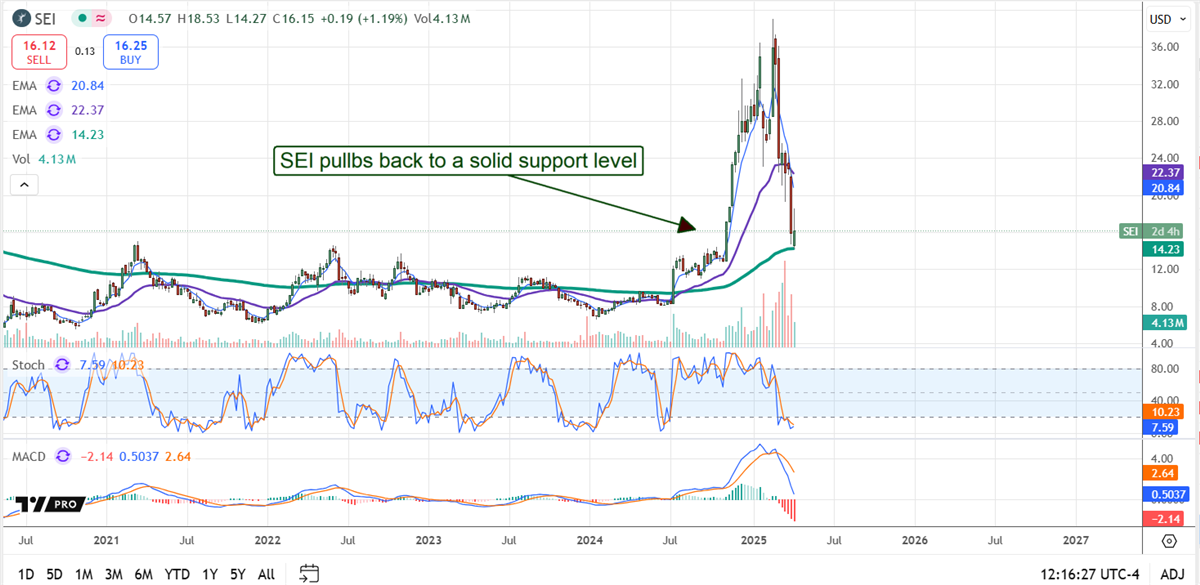
Solaris Energy Infrastructure (NASDAQ: SEI) provides a wide range of products and services in two segments: on-site power generation and oil and gas services.
It is the third highest-ranking dividend stock on the MarketBeat platform and is rated a Buy by six analysts who forecast it to rise by more than 100% at the low end of their range.
Highlights from F2024 include reverting to revenue growth, accelerating revenue growth, and improving guidance, forecasting a solid growth year in 2025.
The company’s strong cash flow generation supports its attractive dividend, adding to its appeal for income-focused investors.
Additionally, Solaris' strategic positioning in two essential industries could help insulate it from broader market volatility, making it a stock to watch heading into the second half of the year.
American Tower Is Central to 5G, Data Centers, and AI
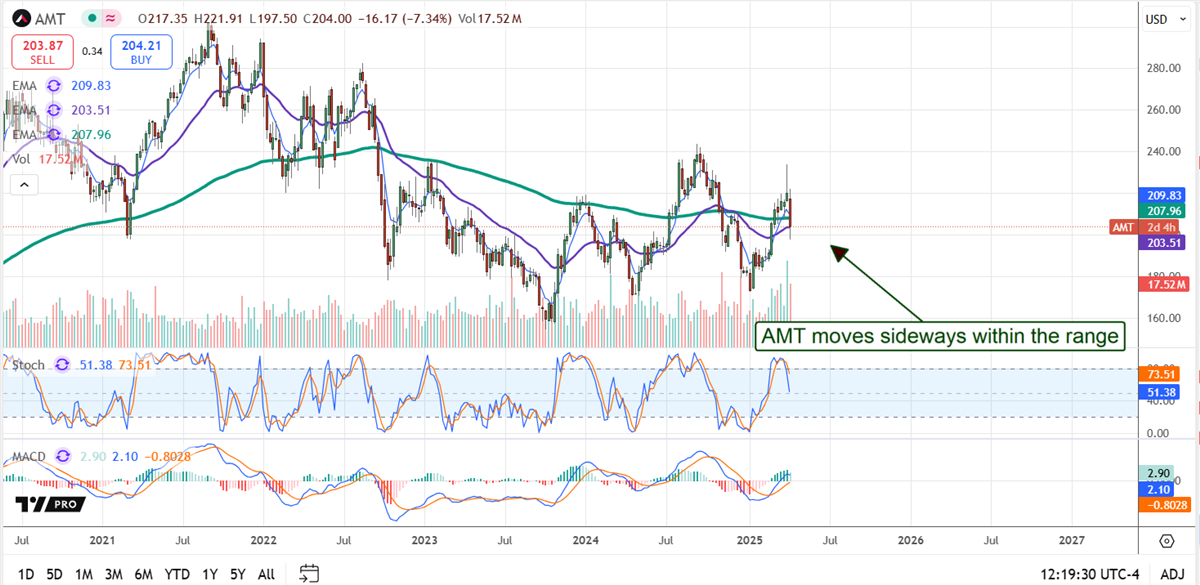
American Tower (NYSE: AMT) is among the largest globally operating REITs, owning a network of multi-tenant communications towers and an interconnected network of U.S. data centers. Its business is insulated from tariffs because it is primarily services-based, using locally situated towers.
It is the 5th top-ranked dividend stock, rated a Buy by 16 analysts. They forecast a 15% upside at the consensus, but a move above it is likely due to the trend.
The last earnings report resulted in increased analyst coverage, firming sentiment, and a rebound in the consensus target. This REIT yields over 3%.
American Tower also benefits from long-term secular trends, including rising global mobile data usage and the ongoing rollout of 5G infrastructure. Its international footprint and mission-critical assets position it well to capture future growth.
With stable cash flows, inflation-linked leases, and a strong balance sheet, AMT remains a compelling option for investors seeking both income and resilience in uncertain markets.
Iron Mountain Transverses Data Management Needs
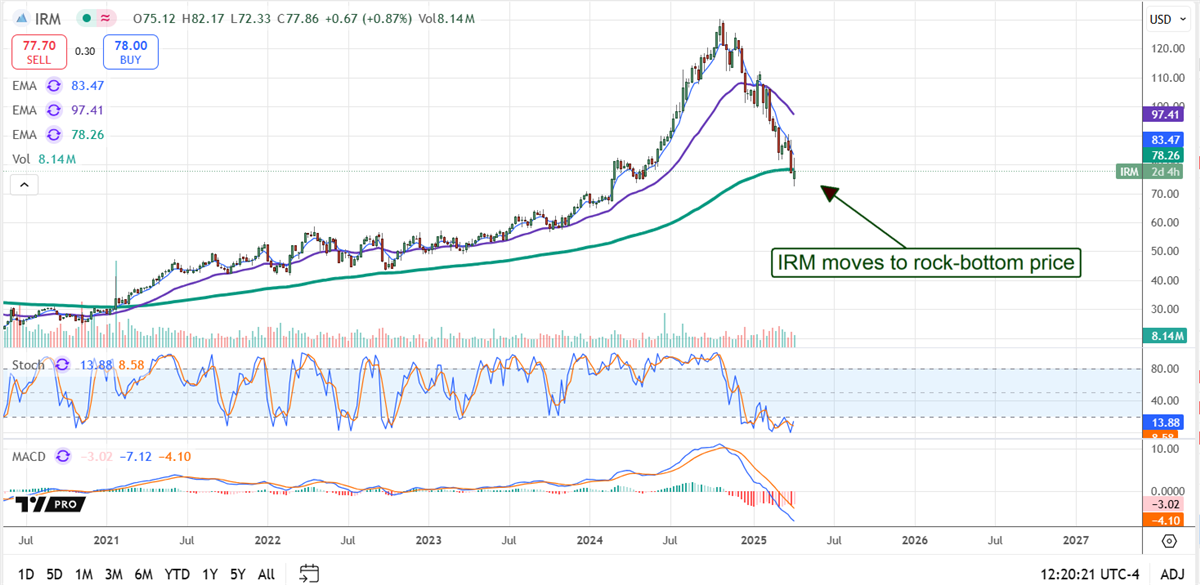
Iron Mountain (NYSE: IRM) is an interesting REIT operating in numerous locations globally. It is focused on data storage and management, not just digital. Its services span traditional physical storage of data and assets to digital, including data centers and AI.
According to MarketBeat, it is the 7th highest-rated dividend stock, rated as a Buy by eight analysts who forecast a consensus 55% upside by year’s end.
Iron Mountain’s diversification across physical and digital storage helps create a stable revenue base, even during periods of economic uncertainty.
Its growing investment in data centers and AI infrastructure positions the company to capitalize on rising global demand for secure information management.
With a strong dividend yield and a focus on high-growth technology verticals, IRM offers investors a unique combination of defensive stability and forward-looking opportunity.

All Signs Point To Collapse - 401(k)s/IRAs /Are Doomed
Retiring? Not so Fast..Hold Onto Your Bootstraps For A Long Road Ahead
Click Here For Your Free Copy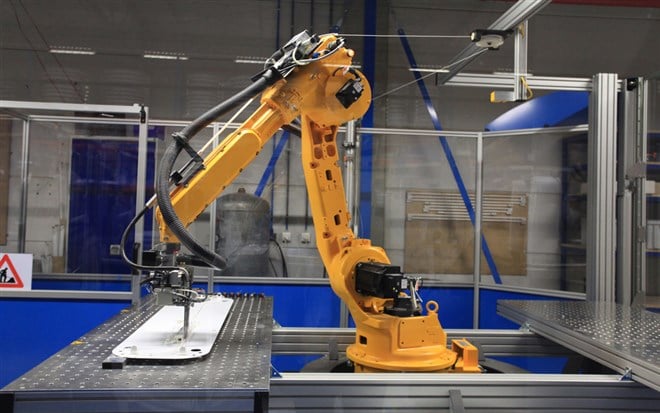
3 Robotics Stocks That Could Benefit From U.S. Manufacturing Boom
With the latest round of tariffs from the Trump administration in early April 2025, investors and business owners alike are reckoning with the idea that the policy is encouraging a repatriation of manufacturing to the U.S. Should American firms that engage other countries to complete crucial manufacturing work offshore instead decide to build up manufacturing infrastructure domestically in order to avoid dealing with high tariffs on global imports, there will undoubtedly be a surge in demand for technologies and tools that make automation more readily achievable.
A number of robotics companies—centered both within the U.S. and abroad—provide software and products that could be crucially important for new U.S.-based manufacturing operations across a host of industries. These companies include Aeva Technologies Inc. (NYSE: AEVA), Zebra Technologies Corp. (NASDAQ: ZBRA), and FANUC Corp. (OTCMKTS: FANUY).
Aeva’s 4D LiDAR Drives 116% Revenue Growth and Expands Automotive Dominance
Aeva develops sensing and perception technology, including LiDAR (light detection and ranging) tools, for applications in the automotive, electronics, and consumer health industries, among others. It has already achieved an increasingly dominant position among passenger vehicle original equipment manufacturers (OEMs), including a new deal with a global top 10 company to develop its next-generation vehicle platform, announced in March 2025.
Aeva's revenue growth has been impressive as well—for the last quarter of 2024, it posted 69% year-over-year (YOY) revenue gains, and for the full year 2024, revenue increased by more than 116% YOY. The company's revenue gains have been driven in part by its advancements in 4D LiDAR technology, including the first-ever behind-windshield integration of one of these systems.
Aeva's technology has most often been used for cutting-edge vehicle designs, though it is possible that it could be redirected for vehicle builds at multiple design levels should manufacturing demand in the U.S. pick up. Regardless, even without a boost from increased manufacturing, Aeva has made a compelling case for its role in the development of sensing technology going forward.
Zebra Drives Manufacturing Growth with RFID and Printing Solutions
Zebra's automatic identification and data capture solutions have become indispensable to various industries. The company's products include printers for various labels, tickets, receipts, plastic cards, and personal identification materials, as well as radio frequency identification device (RFID) printers and related tools. The products made possible by Zebra's offerings have applications throughout manufacturing and could see a surge in demand if production levels rise in the U.S.
One recent example of the broad applicability of Zebra's mobile computing and asset visibility tools is the company's partnership with Merck (NASDAQ: MRK) to produce a handheld reader combined with a product trust solution to verify product authenticity.
Zebra shares fell by about 27% in the year leading to Apr. 8, 2025, bringing the company's price-to-sales ratio to a compelling 2.3. Analysts have set a consensus price target for ZBRA shares of $374.09, nearly 73% above the current level.
FANUC: A Key Player in Factory Automation With Strong Demand for Robotics and Control Equipment
Japanese firm FANUC builds factory automation products, including an open platform widely used across the manufacturing industry. Though the company's revenue has shrunk year over year in recent quarters, strong demand in its factory automation business—responsible for selling control equipment for manufacturing applications, among other things—may be able to turn around top-line performance this year.
The company’s robodrills have become essential for a wide range of milling, drilling, and tapping needs in manufacturing. Demand for these products has grown internationally, and FANUC has increased its exports in response. While U.S. tariffs could present a headwind, the nature of these tools—purchased infrequently and in smaller quantities to support long-term manufacturing operations—means many U.S. manufacturers may still view them as cost-effective, even if prices rise.
FANUC ADRs, available over the counter, had been swinging up and down for most of the last year, although the early April tariff woes in the market sent them plunging. This could present a buying opportunity for investors optimistic that the company's products may still serve an important function if the U.S. increases its own manufacturing capacity going forward. FANUC's fairly attractive price-to-sales ratio of 4.0 sets it apart from some other robotics stocks in terms of its value prospects.
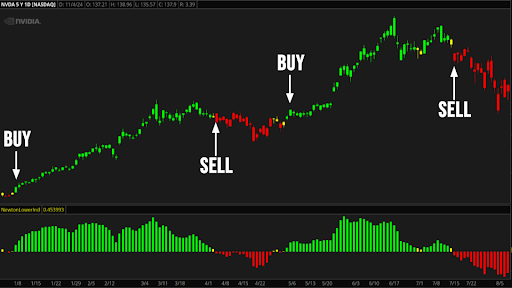
The best trading indicator for NVDA
Rarely would I label something as "the best"
But in this rare instance, I believe this is THE BEST indicator for trading Nvida's stock.
Except, it's not another tech stock like Nvidia.
But rather a stock hiding in broad daylight…
So, if you'd like to see what this stock is…

3 Biopharmaceutical Stocks Bucking the Sell-Off
With tariffs sending markets reeling in the first days of the second quarter—the S&P 500 dropped roughly 10% in the five trading periods through Apr. 7, 2025—investors with cash to spend might be looking for an opportunity. While it's true that some of the biggest firms in the world started April with major share price discounts, investors may want to find companies to target that have been more or less bulletproof in the extreme uncertainty characterizing the market.
Three biopharmaceuticals firms—Alumis (NASDAQ: ALMS), DBV Technologies S.A. (NASDAQ: DBVT), and Corcept Therapeutics Inc. (NASDAQ: CORT)—have staged significant rallies in 2025 that have either been unaffected by the market's recent seesawing or that remain up by a wide margin year-to-date as of Apr. 7. There is, of course, no telling whether these companies will have the momentum to keep these rallies going over the short or long term, but they nonetheless merit additional consideration.
Alumis Shares Surge 64% Ahead of Major Merger
Alumis is a clinical-stage biopharma firm developing treatments for immune-mediated disease. It has achieved success with tyrosine kinase 2 (TYK2) inhibitors such as its ESK-001, which is being commercialized in Japan by Kaken Pharmaceutical Co., Ltd. for dermatology indications. ESK-001 also has potential as a treatment for certain rheumatological and gastrointestinal diseases. Alumis' A-005, another TYK2 inhibitor, has recently shown promise in the treatment of certain neuroinflammatory diseases.
But one of the biggest drivers of Alumis' recent share price success—ALMS shares are up a whopping 64% in the five days of trading leading to Apr. 7, 2025, despite market challenges—is certainly the joint filing of a definitive proxy statement/prospectus for its proposed merger with late-stage clinical biopharma firm Acelyrin Inc. (NASDAQ: SLRN) on Apr. 4.
The combination of Alumis and Acelyrin not only consolidates two strong pipelines but also provides the merged company with a cash runway through 2027, by which time the two separate firms expect to have seen multiple clinical readouts. Should the merger be approved by shareholders in May, it is likely to be a boon for all involved.
DBV's Breakthrough Peanut Allergy Patch Advances With FDA Support and Major Funding
Shares of epicutaneous immunotherapy biopharma company DBV Technologies are up an incredible 129% year-to-date (YTD) as of Apr. 7, and they bucked the broader downturn trend by climbing some 17% in the five days leading to that date as well.
One of DBV's most promising drugs in development is the VIASKIN peanut patch, a product designed to desensitize children to peanut allergies. Given that the landscape of peanut allergy treatments is very small and that DBV's patch utilizes a distinct set of technologies and methods that could minimize the likelihood of an allergic reaction during treatment, it is likely to have a tremendous impact on the millions of people across the U.S. suffering from peanut allergies.
In late March, the FDA confirmed that safety exposure data generated from recent studies would be sufficient for DBV to support a Biologics License Application (BLA) for the peanut patch for children between the ages of four and seven. DBV followed that announcement with news that it had secured nearly $307 million in financing to advance the product's commercial launch if approved. As DBV gets closer to a successful launch, investors have poured money into the stock.
Corcept's Relacorilant Shows Promise in Ovarian Cancer, Possibly Surpassing Competitor's Potential
One of Corcept Therapeutics' key successes is relacorilant, which has been tested in various trials related to the treatment of multiple types of cancers. In late March, a late-stage trial found that relacorilant, in combination with chemotherapy, helped to delay the progression of one type of ovarian cancer in patients resistant to leading types of pre-existing chemotherapy treatments.
One of the closest competitors to relacorilant is AbbVie's (NYSE: ABBV) Elahere, which generated sales of $479 million last year. Analysts have suggested that relacorilant could receive a broader label than AbbVie's product thanks to its ability to block the stress hormone cortisol, known to boost chemotherapy resistance in some kinds of tumors. Shares of CORT spiked in late March on the news, though they've fallen in early April. The price remains up nearly 50% YTD.

MarketBeat Media, LLC dba TickerReport
345 N Reid Place, Suite 620, Sioux Falls, SD 57103.