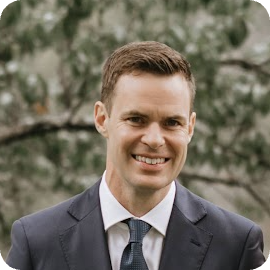
It's no question that we are living in a never-ending, erratic, and overwhelming news cycle that leaves many of us in a helpless, doomscrolling state. I've got "Good News" for you: My colleagues Bryan Walsh and Patrick Reis have recently launched newsletters designed to decrease overwhelm, while still keeping you informed about the news. Patrick's daily newsletter, The Logoff, was designed to keep news fatigue at bay by striking a balance between staying in the know on the most significant political news without it taking over your life. Bryan's newsletter, Good News, gives you a weekly source of positivity filled with scientific innovations, technological breakthroughs, and everyday acts of progress. I'll let them tell you more in their Slack Chat below. —Kelsi Trinidad, community manager |
|
|
A look into the Vox newsroom's DMs
|
|
|
| Bryan Walsh
Patrick, shouldn't you be writing The Logoff right now? |
|
|
| Patrick Reis
Don't tell my editor I'm here instead. On another note, you picked quite a weekend to start a newsletter dedicated to "good news." |
|
|
| Bryan Walsh
Yes, either the worst or the best possible one. I'm betting that the onslaught of bad news will lead some people to look for a haven from that, and that's part of what I'm trying to do with Good News. But — yeah, that's a delicate balance. Of course, I only have to do it once a week, which is like a tropical vacation compared to a daily newsletter like The Logoff. How do you turn the firehose of Trump content into something so digestible on a daily basis? |
|
|
| Patrick Reis
It's not easy! But my editor is really helpful in helping me pick what we think matters most. We try to ask: What of this might matter a month from now? Or a year from now? Take one recent day, for example: Trump said he's setting up a "US Crypto Reserve," but when you break down the details of what's happening, it's not clear that this reserve will ever come to pass. So we try to wait until his words are matched by his administration's concrete actions. |
|
|
| Bryan Walsh
That's smart — if you chased after everything Trump says he might do, you'd never stop working/possibly go insane. It's interesting — I actually try to take a similar view at Good News, trying to identify the trends or stories that really make a difference over the long term. It's easy to forget how much better life has gotten for most of us over the decades, and that's one thing I want to try to remind people of. But I also want to make sure I'm collecting stories that will help people get a more balanced view of an often-confusing news world. It's not all bad … usually. I know you keep The Logoff admirably brief. How do you compress that much, and why? |
|
|
| Patrick Reis
I think a lot of political news is written for political professionals — people whose jobs revolve around knowing every turn of the screw, every player in the action, etc. But I think most people — people who spend their days teaching kids or staffing hospitals or landscaping — are more interested in a basic understanding of What happened? Why does it matter? and How does it affect our lives? That helps as I try to hit my rigid 325-word limit. |
|
|
| Bryan Walsh
Wow, I'm not sure I can clear my throat in 325 words, though I'm working on that. One of the things I love about newsletters is that they are discrete, finished products, whereas everything else on the internet just kind of … goes. People can read them, finish them, and move on. I think the brilliance of The Logoff is that it manages to do that for what, as we all remember from Trump's first term, is a quite literally never-ending show. |
|
|
| Patrick Reis
That's very kind of you. |
|
|
| | Bryan Walsh
By the way Patrick, I just asked ChatGPT how many weekdays are left in Trump's term. Only 1,015 Logoffs to go! |
|
| | Patrick Reis
BRB, requesting a two-month vacation. I remember waking up on November 8, 2016, thinking, Today might be the last day I ever have to think about Donald Trump's tweets. That sounds partisan, but more than that, it was just exhaustion. I was so tired of the never-ending flow of information, misinformation, and misdirection. I think it wore all of us down, particularly because we all used to follow his words so closely — too often, I fear, at the expense of his actions. By the way, I was 32 on election day 2016. When Trump's current term ends, I'll be 3 days out from turning 45. |
|
|
| Bryan Walsh
I think we need to devise a new method of measuring age: Trump years. Personally I took a buyout from the place where I was working around the start of term one (not because of Trump, but because I wanted to write a book about a bright and optimistic subject: the end of the world). So I missed out on most of that. I feel fortunate that with Good News I get to focus on things that are often out of the news cycle; not because they don't matter, but because so much of coverage — and so much of the audience's attention — tends to go to crises. How do you handle that? You mentioned the importance of thinking of what matters in a month or a year — how do you avoid the gravitational pull of the hair-raising story of the moment? |
|
|
| Patrick Reis
In terms of separating out which crises need covering, I try to focus only on things that have already happened — not things that might happen. Take this excellent WSJ story: It's a great scoop about what Trump is considering doing to Ukraine. I thought about switching The Logoff to be about that. But then I realized, if it does happen, I can cover it then. I'm really excited about a newsletter dedicated to what's possible in this world. Where do you look for inspiration? And how do you avoid the negativity trap you wrote about? |
|
|
| Bryan Walsh
That's a great division to make. When it comes to Good News, I find myself looking for inspiration in science, especially in medical research. I don't think it's well understood that we are living through an age of incredibly rapid advances in medical science, everything from mRNA vaccines (including potentially for cancer) to gene editing techniques that can reshape the human genome to advances in public health that make a difference for thousands and even millions of people. Just a month ago, Guinea managed to eradicate sleeping sickness. That makes a meaningful difference in people's lives, and it deserves recognition. In terms of the negativity trap, like any psychological bias, it helps to be aware of it, which means ideally you can see it happening in your brain, and try to counteract it. It's not easy — I'm not temperamentally a sunshine and rainbows kind of guy, like most journalists. But this newsletter already has me looking at the world in a different way, and I'm hoping it can do the same for readers who just feel exhausted by what's happening. |
|
|
| Patrick Reis
I'm so excited for this. I feel like so many conversations about politics tend to spiral toward doom. And yes, things are bleak, but that perspective is so helpful. Humanity can do great things too — it is doing great things. And I'm very glad to have a weekly reminder of all that's possible, and all the things I have to be grateful for. |
|
|
| Bryan Walsh
Indeed! Well, one of us has a daily newsletter to write, so I'll let you go. We should do one of these next time the Packers play the Eagles. |
|
|
| Patrick Reis
So long as the Packers win, I'd love to. |
|
|
| Stay informed about the Trump administration without letting political news take over your life and sign up for Patrick's daily newsletter. Every edition leaves you with something that will help you refocus your thoughts as you log off for the day. |
|
|
| Sign up for Brian's weekly newsletter packed with news about remarkable, optimistic things happening all around us right now — innovations, breakthroughs, and everyday acts of progress that can make us feel better about the world around us. |
|
|
https://link.vox.com/oc/629ae5cac1fb8334240c41e2na9bt.1iz7/3f2481d0 |
|
|
https://link.vox.com/oc/629ae5cac1fb8334240c41e2na9bt.1iz7/3f2481d0 |
|
|
|