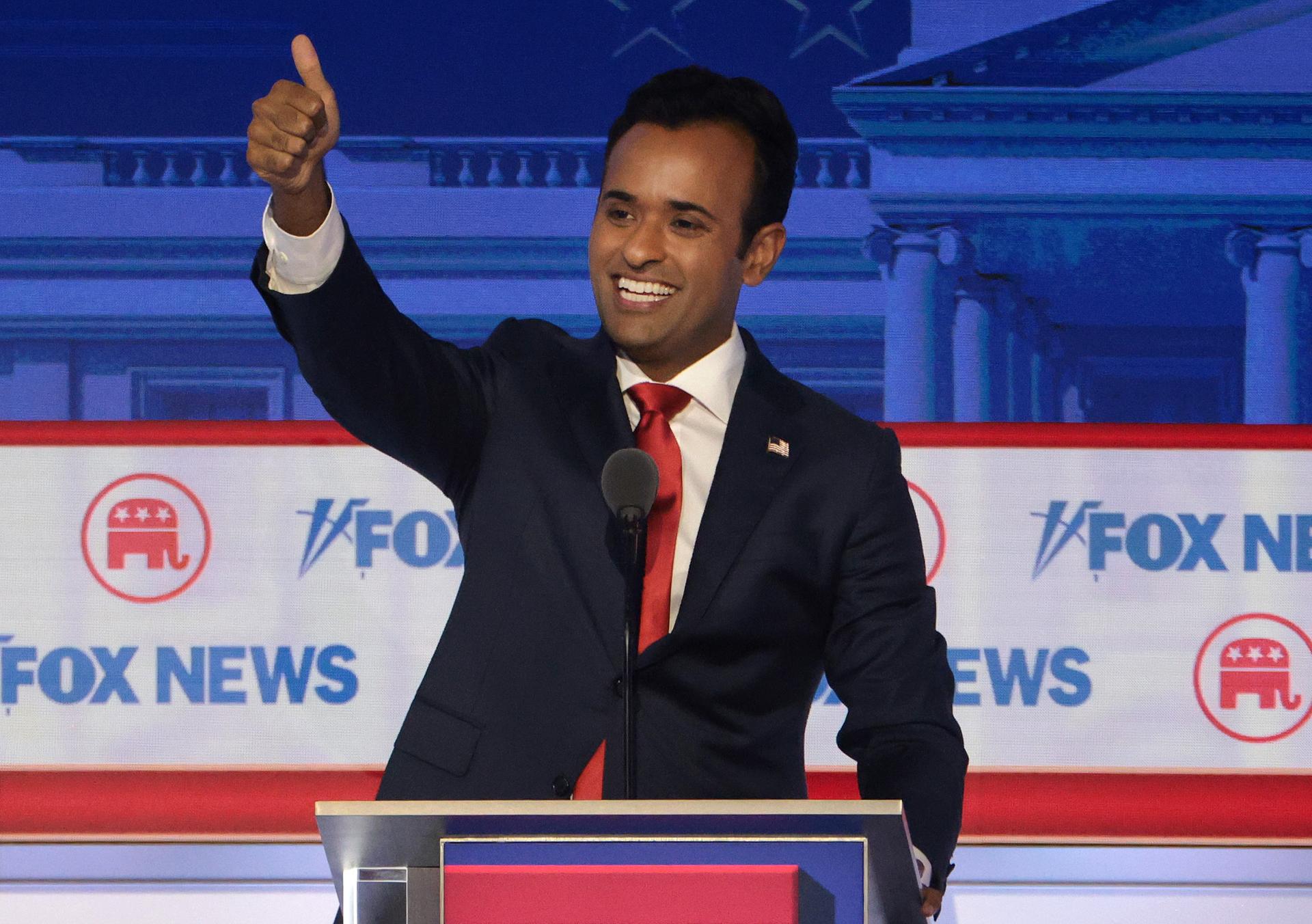
When Vivek Ramaswamy opened the first GOP presidential primary debate last month, he acknowledged that he does not fit the mold of a traditional Republican presidential candidate. "Let me just address the question that is on everybody's mind at home tonight," he said. In a line he lifted from Barack Obama, he continued: "Who the heck is this skinny guy with a funny last name, and what the heck is he doing in the middle of this debate stage?"
Ramaswamy, 38, is an outlier within the ranks of the GOP: He is the son of immigrants, Hindu, brown-skinned, and under 40. He belongs to a demographic that overwhelmingly skews Democratic and is often targeted by Republican policies. Even if Ramaswamy is unlikely to win the nomination, in a few weeks, he has made an impact: He briefly climbed ahead of prominent career politicians, including Mike Pence, Nikki Haley, Tim Scott, and Chris Christie, to third place in the Republican primary polls. He is a near-ubiquitous presence in the media, and, in the aftermath of the first debate, Google registered more than a million searches for "Vivek Ramaswamy" in 24 hours, while Donald Trump dubbed him the debate's winner. (Ramaswamy has called Trump "the best president of the 21st century.")
It would be a mistake to dismiss the curious rise of Ramaswamy as a fluke. The multimillionaire venture capitalist is a Trojan horse: He represents a younger, more racially diverse generation, yet espouses the same ultra-conservative, right-wing ideology of 77-year-old Donald Trump, and he embodies the ethos of the "self-made" business mogul that Trump's base loves. As conservative New York Times columnist Ross Douthat put it, "His two personae — as the son of immigrants defending capitalism and meritocracy and the policy entrepreneur promising that you can defeat wokeness by remaking the federal civil rights bureaucracy — indicate the ground where an important part of the right wants to fight its battles."
At the core of those personae and at the root of Ramaswamy's appeal is the pernicious "model minority" stereotype — a story about self-sufficiency and innate talent woven around the creation of an Asian American professional class in the 1960s — that has since been used to dismantle civil rights, divide communities of color, and perpetuate the myth of America as colorblind. (Vox sent an email to Ramaswamy's campaign seeking comment about the model minority myth; campaign spokesperson Tricia McLaughlin responded only, "What is the model minority myth?" and did not reply to a follow-up email.)