Hello Genius, It's Your Weekly Recs!TikTok Doom, Succession, John Sayles, Yaya Bey, Patricia Highsmith, and More ...
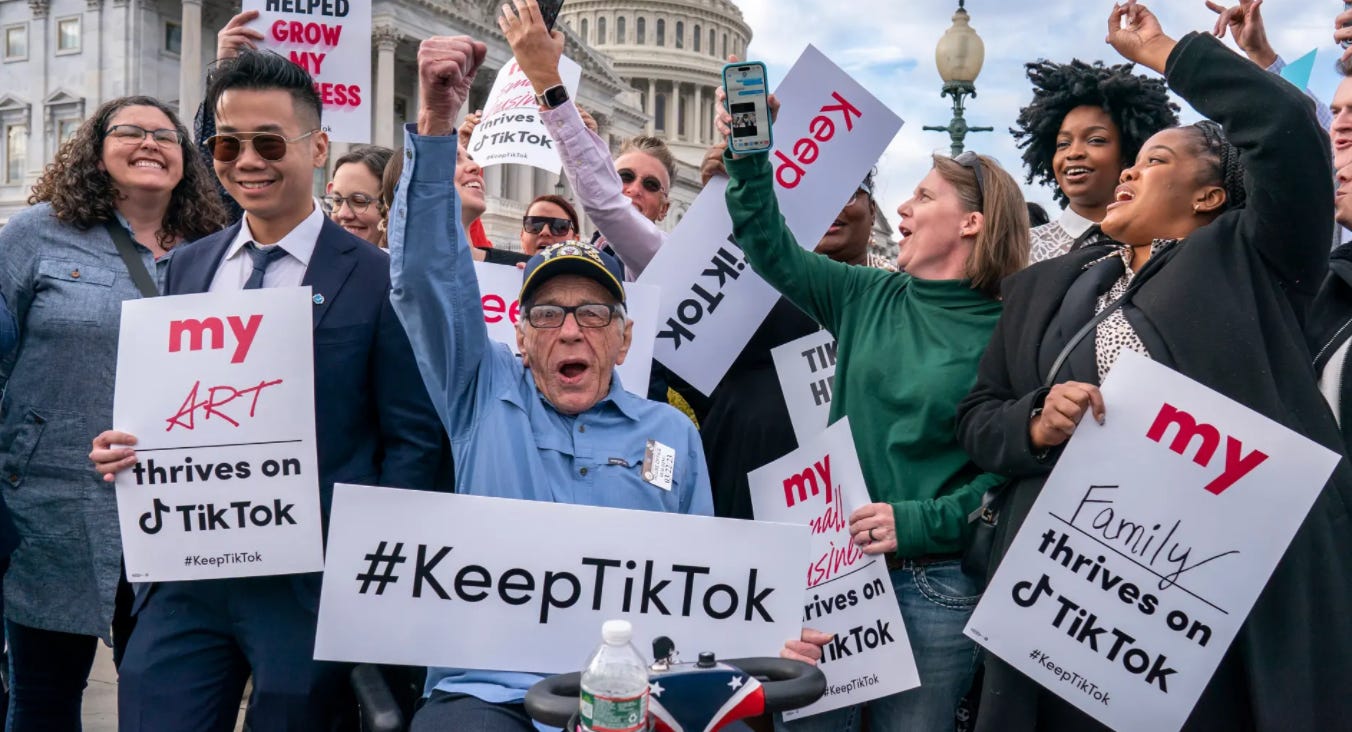
Dear Wags, A quirky delegation hit Congress this week. It was composed of TikTok stars, desperate to keep politicians from banning their favorite app. TikTok has 150 million U.S. users, who include bakers of “sexy” cookies, cobblers of vegan footwear and promoters of motorized scooters for the elderly. Many of these content creators believe their platform is more nurturing than other digital venues (TikTok has that techie quirk of framing itself as a worthy cause, as opposed to a rapacious corporation). Their pitch didn’t get many likes in the corridors of power. After TikTok CEO Shou Zi Chew’s ordeal before the House Energy and Commerce committee, the well-synchronized jig may be up. Congress is polarized, but there’s bipartisan loathing of the world’s fastest growing distraction (TikTok claims a global audience of more than 1 billion). Chew testified that his company, which is owned by Chinese tech behemoth ByteDance, is spending millions to protect Americans’ data. For his trouble, he got whacked like a piñata. Thus far, there’s scant evidence that TikTok has been used by Chinese intelligence for nefarious purposes. But there’s always the possibility of future skullduggery, and the reluctance of the Chinese to divest themselves of a wildly successful enterprise ratchets up suspicion. Xenophobia may play a part in TikTok bashing, but China, along with everybody else, already uses social media to conduct information warfare. TikTok is uniquely vulnerable because of its origins inside a totalitarian rival. Unburdened by free speech concerns, China heavily restricts Douyen, the local analog of the app, which is only available to teenagers for 40 minutes a day (!), between the hours of 6 a.m. and 10 p.m. Did we mention that they intersperse dance videos with astrophysics lessons? Members of the People’s Liberation Army are also prohibited from having it on their phones. Because, as anybody who has scrolled through TikTok knows, it is mind-numbing. The concerns of Western security agencies can’t be dismissed. Still, it is easier to go after a foreign corporation that has relatively few Washington lobbyists and whose users are mostly too young to be political players. The homegrown competition is only too happy to knock off TikTok’s ingenuities and let it twist in the wind. But something else is going on. As one representative after another lambasted Chew, it became obvious that TikTok, however diabolical, is the easiest target in a larger war. “You remind me a lot of Mark Zuckerberg,” said Democratic Rep. Tony Cardenas, giving the impression there was another mogul he’d prefer to skewer. "TikTok could be designed to minimize the harm to kids,” added fellow Democrat Kathy Castor. “But a decision was made to aggressively addict kids in the name of profits." Republican Neal Dunn branded the app “a cancer.” And this from the Honorable Chairperson: “TikTok has repeatedly chosen…more control, more surveillance and more manipulation,” said the GOP’s Cathy McMorris Rodgers. “Your platform should be banned.” This sturm und drang about harm to the vulnerable could easily apply to social media, writ large. Speaking of: Congressional hearings are now simply engines for viral YouTube clips, not venues for real inquiry (nobody was much interested in the carefully rehearsed answers of poor Mr. Chew). Yet up until now, Congress done almost nothing to reign in our domestically spawned, if entirely globalized, social media titans. These concerns, presently shedding employees like excess bots, have a long history of exploiting engagement models similar to those TikTok uses. If we are legitimately concerned about privacy and disinformation, we have long been possessed of something called the regulatory state. In another era, it was deployed to restrain media in all sorts of ways. In the digital age, we have been disinclined to use policy to hamper social media platforms, and they have become the largest, most profitable and lightly regulated entities in the world. There are (many) sound arguments for keeping the internet as loosey-goosey as possible, but we've all learned that it can be both a laboratory of innovation and a destructive force. The TikTok hearings are an indication that politicians across the ideological spectrum are being pressed by anxious constituents to do something. Whatever they do, there will be collateral damage. Government meddling in any form of media should worry us. Whether or not TikTok survives, Americans, more than any people on earth, have been too willing to trade dignity, privacy, and sanity for attention. This has made a few individuals extremely rich, and if CDC data is to believed, many millions of others miserable. The fury aimed at Chew is the rage of junkies who lash out at pushers. Addicts are not famous for coming with finely-tuned solutions to complex problems. But thoughtfulness is in order, because, this not being China, any restrictions on TikTok will meet First Amendment challenges. The Electronic Frontier Foundation opposes blanket restrictions on the app on those grounds, but it has pushed for privacy legislation which would affect how all social media platforms harvest and monetize your data. That information is already floating around cyberspace for crooks, spies, and overzealous officials to make mischief with. Personal location history stored by phone apps is available to data brokers, who can sell that information to the highest bidder, including espionage fronts. Algorithms that juice disinformation are seemingly inextricable from business models that drive enormous profits. These ponies trotted out of the barn long before TikTok arrived on the scene. Do we have the capacity and will to propose alternatives? Our current information ecosystem is incentivized by greed and bad habits. Among wealthy free nations, America lags far behind in laws protecting human beings mired in a dysfunctional metaverse. If we want platforms that sync up with liberal democracy, we will have to do more than indulge in occasional spasms of outrage. True media reform requires sustained attention and labor. Whether or not TikTok influencers end up schlepping to new locales to sell their wares, citizens of the real world all have a stake in a better future. Yours Ever,
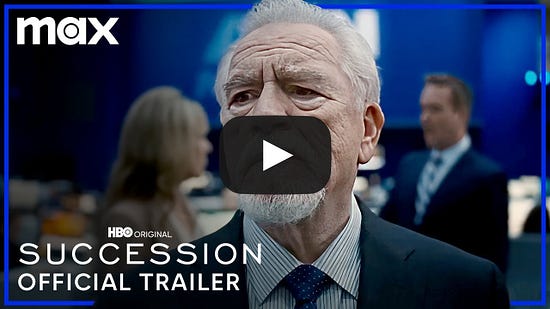 Dysfunctional FamilySuccession (HBO). The final season of Succession hits just as the Murdochs, real-world analogs of the horrendous Roy dynasty, face a $1.6 billion lawsuit brought by Dominion Voting Systems. The show’s fictional family empire, Waystar Royco, is also in a pickle. Watch as the back-stabby clan hurtles toward damnation. —Gregory Hirsch... Keep reading with a 7-day free trialSubscribe to CultureWag to keep reading this post and get 7 days of free access to the full post archives. A subscription gets you:
Read CultureWag in the app Listen to posts, join subscriber chats, and never miss an update from JD Heyman.
|