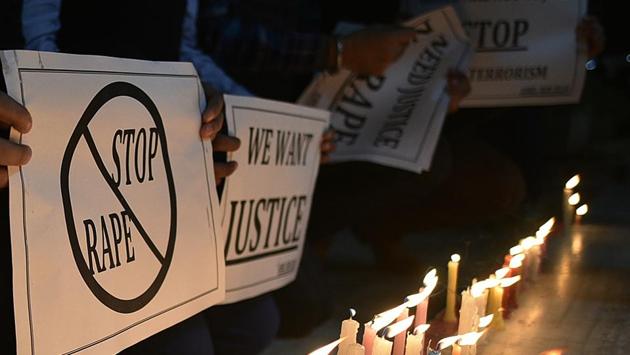
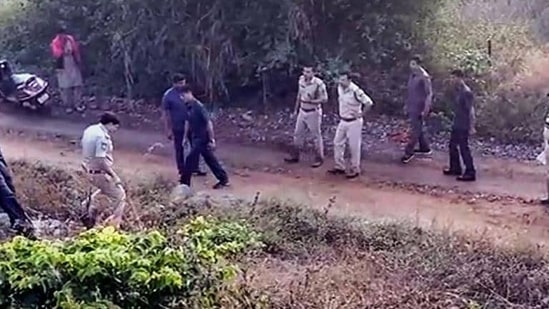
| Hello and welcome to Mind the Gap, a newsletter that adds perspective to the gender developments of the week. A Supreme Court-ordered inquiry into the 'encounter' killing by Telangana police of four men alleged to have raped and killed a 26-year-old in 2019 has found the encounter to be staged. What next for justice? Read on… THE BIG STORY: Anatomy of a fake encounter On the night of November 27, 2019, a 26-year-old veterinary assistant surgeon working at a state-run hospital was returning home in Shamshabad, Telangana when she called her sister at 9.22 pm to tell her that her two-wheeler scooter had a flat tyre. She was scared, she told her sister. That was the last time anyone ever heard from her. The next morning her charred body was found near the toll booth from where she had called. She had been raped and then murdered. The brutal crime caused a national uproar. It turned out that the police had not immediately responded to the veterinarian's parent's missing person report. Had they done so, they could have prevented the crime. The very next day, Telangana police arrested four men, Mohammed Arif, Chintakunta Chennakeshavulu, Jolu Shiva and Jolu Naveen and recorded their purported confessions. Late at night, or rather early in the morning of December 6 when it was still dark outside, the men were escorted by 10 police personnel to the spot where the doctor's body was found, ostensibly for 'evidence collection'. Then, claiming that the men had tried to run away after snatching two police weapons, all four were shot dead. All had bullet injuries on the front of their bodies. Cyberabad police commissioner V.C. Sajjanar held a press conference at the site of the killing clarifying that the police had fired at the men in self-defence. "See, law has done its duty," he said. Now nearly three years later, a Supreme Court appointed three-member commission headed by retired judge Justice V.S. Sirpurkar has concluded that the four "were deliberately fired upon with an intent to cause their death." Three of the four were minors, two of them 15-year-olds, and came from marginalised socio-economic backgrounds. The commission has recommended the policemen involved be tried for murder. National outrage The brutal rape and murder of the veterinarian, referred to as Disha (not her real name), led to outrage and a demand for swift and exemplary punishment. The then union minister of state for home affairs, G Kishan Reddy said he was 'distraught' and promised stringent action against those found guilty. The Telangana Mahila Congress also demanded justice and accused the state government of failing women. Protests were held across the country and the issue was raised in Parliament during which member of Parliament Jaya Bachchan said in the course of a heated debate that the rapists should be lynched. There can be no doubt that the Telangana police had been under enormous pressure to bring the rapists to justice. Asking questions Hours after the 'encounter' killings, a group of women's rights activists based in Hyderabad, wrote an urgent letter to the chief justice of the Telangana high court. They were disturbed and upset by the swift exoneration of the 10 policemen by their boss. They were also concerned that evidence connected with the killing would go missing or be tampered with. That same night, the chief justice asked a division bench to take up the matter. It was 8 pm. The judges ordered that the bodies be preserved and the post-mortem, when conducted, should be videographed. The video would then be kept with a district judge. On December 12, on the basis of a public interest litigation, the Supreme Court announced the setting up of the Sipurkar Commission to 'uncover the truth in the present case'. Unanswered questions "At that juncture senior police officers were applauding the killing," said senior advocate Vrinda Grover who represented one of the petitioners and deposed before the Commission. The impunity with which the men had been killed had the backing of the top police leadership. "This was cold-blooded murder by men in khaki who were usurping the role of the judiciary," she said. But women in this country have a "legitimate expectation that the law of the land will step in to hold the perpetrators to account and deliver justice," continued Grover. "Any action, whether by criminals or state agents, which pose a threat to the rule of law, creates a society that jeopardises the freedoms, rights and safety of women. Impunity and rule of law cannot co-exist." There were 655 encounter killings—extra-judicial killings by police, most often on grounds of 'self-defence'--over the past five years, minister of state for home Nityanand Rai told Parliament in February this year. Fake encounters have implications for rights of individuals, groups, law and public policy. The victim has a right to justice. The deceased victim and the victim's family have a right to know the truth. The people have a right to know whether the rule of law was followed or not, said Grover. But the encounter killing over the Disha rape and murder leaves one crucial question unanswered: Were the men who were shot dead the same men who had raped and killed her? We might never know. |