
Below is an important message from one of our highly valued sponsors. Please read it carefully as they have some special information to share with you.
Dear reader,
I recently sat down with the famous economist and best-selling author…
Who predicted the biggest stock market crashes of the last two decades…
And he’s now predicting this AI giant is about to go bust…
Trigging a full-blown AI meltdown that could wipe out 80% of the stock market.
The first time I heard about it…
I thought he was talking about Nvidia.
But it’s another company he says is far more important.
Look, the stakes here couldn’t be any higher…
Because this is the same man who predicted the 2008 meltdown…
Just three weeks before Lehman Brothers imploded and the stock market collapsed.
And the same man who predicted the Covid meltdown…
Again just three weeks before the stock market suffered the fastest drop in history.
And now he’s predicting that this coming AI meltdown will be 10 times bigger than Lehman Brothers...
….and it could send a ripple effect through the market that could crater the entire AI industry.
And he’s warning everyone to take five simple steps to prepare.
Click here to see the details.
Regards,
Aaron Gentzler
VP of Research, Paradigm Press
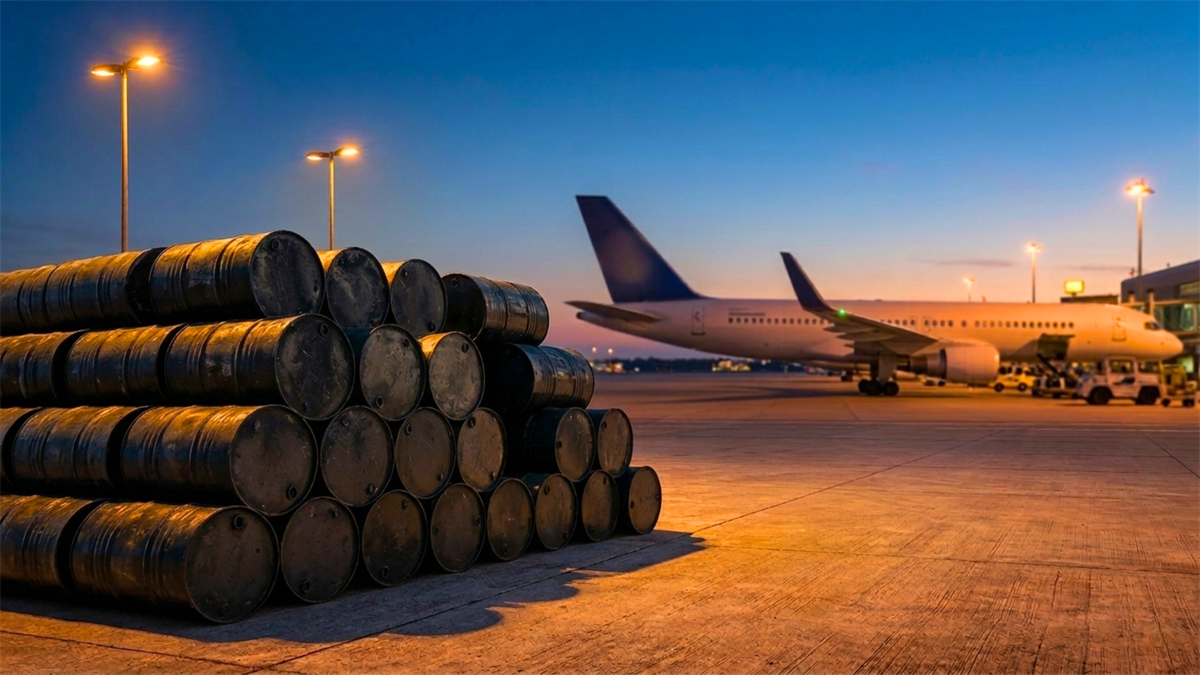
Is the Airline Stock Dip After the Iran Attacks Justified?
Submitted by Nathan Reiff. Published: 3/10/2026.
Key Points
- Many airline stocks have plummeted by 20% or more in the last month amid the start of war in Iran and related oil price volatility.
- Airline companies face numerous negative pressures related to the war, including canceled flights, the potential for suppressed demand, and more.
- Jet fuel prices and cracks have spiked, meaning that even airlines not doing business within the area of conflict will feel the repercussions.
- Special Report: [Sponsorship-Ad-6-Format3]
As the war in Iran appears likely to continue, it may be no surprise to investors that airline stocks have been among the first to feel a significant impact. These shares are closely tied to the cost of fuel, geopolitical stability, and consumer demand—all three of which are increasingly volatile as the conflict escalates and broadens geographically. Both major carriers and smaller domestic and regional names have seen their shares decline sharply: Delta Air Lines (NYSE: DAL) and American Airlines Group Inc. (NASDAQ: AAL) have dropped by about 22% and 27%, respectively, in the last month.
For investors, a price decline can present an opportunity to strengthen a position in the airline industry. But it will be important to weigh whether the initial shock of the conflict—and the associated oil-price concerns—justifies the selloff, given the recent resilience in domestic demand. If the war becomes protracted and drives further declines, waiting to enter or build a position may be prudent.
Major Air Carriers Face Multiple Negative Drivers
A windowless office at CIA headquarters. A 50-year career. One urgent warning. (Ad)
U.S. Investors Racing to Tap Massive U.S. Government Silver Hoard
Between 1932 and 1964, the government acquired thousands of tons of silver. 90% pure. Certified by the U.S. Treasury.
Today, this hoard has shrunk by 75%... as Americans have raced to secure their share. The crazy thing about this hoard is, you can tap into it and acquire real, hold-in-your-hand silver for as little as $6.
One former CIA analyst just exposed the whole thing - including how to get his research, how to acquire government silver and what to ask for.
Delta, American, and other major airlines have been hit particularly hard since the start of the conflict because several negative factors are converging.
First, thousands of commercial flights to and from locations across the Middle East have been canceled—creating operational and logistical costs while reducing revenue opportunities.
Second, and perhaps most consequential for the industry, jet fuel costs have risen sharply. The Argus US Jet Fuel Index climbed to $3.88 on March 6 from $2.50 just a week earlier. While crude oil has been volatile since the conflict began, refined products have been under even greater pressure. Jet fuel prices and cracks—the latter referring to the difference between crude oil and the refined jet fuel price—have surged.
Lastly, consumer demand is a less tangible but still important concern. In its most recent earnings report, Delta remained optimistic about demand—citing loyalty and cargo growth, and improvements in non-ticket revenue streams—despite headwinds from the government shutdown.
Fellow Big Four member United Airlines (NASDAQ: UAL) struck a similar tone in its Q4 2025 report, pointing to its highest-ever seat completion factor and a 12% year-over-year surge in premium revenue.
As consumers anticipate higher gasoline and other prices, leisure travel demand could weaken while households reallocate spending to essentials. That demand impact may lag and could persist even after fuel markets and inventories stabilize.
Can Regional Airlines Fare Any Better?
All this suggests that even carriers with little direct exposure to the Middle East are likely to be affected. Domestic-only operators and international carriers based elsewhere have not been immune, largely because fuel is a major input across the industry.
One relatively modest bright spot has been Air Canada (TSE: AC), whose shares have fallen by only about 13% in the last month. Still, that is hardly a win for the sector as a whole.
Some Wall Street analysts have already adjusted expectations—the start of the month saw, for example, Weiss downgrade DAL to Hold from Buy, and other firms have trimmed price targets. Some investors may wait for further price declines before entering positions.
It can also be useful to monitor short interest trends as a gauge of market sentiment. Companies like American were already facing rising short interest before the conflict, and that pressure may intensify.
Ultimately, depending on the duration and direction of the conflict, the start of 2026 may feel eerily similar to early 2020, when COVID-19 grounded the global airline industry. To reach those early-2020 lows, share prices would have to fall substantially farther than they already have. Bearish investors may wait to see how low airline stocks can fly.
3 Targeted Oil Plays as the Iran Crisis Lifts Crude
Submitted by Chris Markoch. Published: 3/4/2026.
Key Points
- Oil prices are spiking amid Iran's threat to disrupt traffic through the Strait of Hormuz, creating targeted opportunities in energy stocks.
- Halliburton and Baker Hughes could benefit from increased drilling activity and LNG supply disruptions.
- YPF offers higher-risk upside tied to Argentina’s Vaca Muerta shale expansion and pipeline growth.
- Special Report: [Sponsorship-Ad-6-Format3]
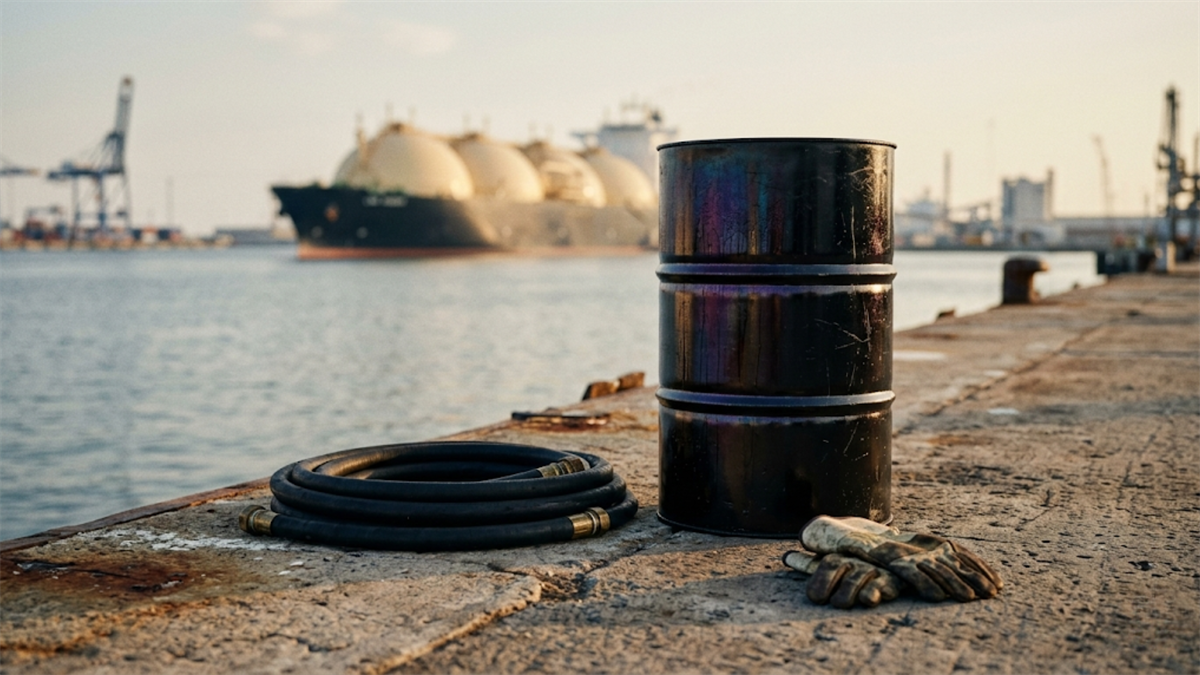
These are times when investors need a strong stomach. Oil prices are surging amid escalating conflict involving the United States, Israel and Iran. Initially, that pushed energy stocks tied to the oil and gas sector higher, but many of those gains have since faded as investors assess the wider implications.
The immediate concern driving the spike in oil is Iran's threat to halt traffic through the Strait of Hormuz, a critical transit point for roughly one-third of the world's seaborne crude exports.
A windowless office at CIA headquarters. A 50-year career. One urgent warning. (Ad)
U.S. Investors Racing to Tap Massive U.S. Government Silver Hoard
Between 1932 and 1964, the government acquired thousands of tons of silver. 90% pure. Certified by the U.S. Treasury.
Today, this hoard has shrunk by 75%... as Americans have raced to secure their share. The crazy thing about this hoard is, you can tap into it and acquire real, hold-in-your-hand silver for as little as $6.
One former CIA analyst just exposed the whole thing - including how to get his research, how to acquire government silver and what to ask for.
As the expected length and scope of any disruption becomes clearer, not all oil-related stocks are likely to benefit equally. Prior to the military strike against Iran, the oil market was already pricing in an oversupply. If, however, key production is shut in for an extended period, that could create a need for more supply — and that scenario would point investors toward upstream operators and oil services companies.
Many names in the sector have moved sharply since military action began, so investors may want to wait for a pullback. Still, here are three stocks worth adding to a watchlist.
Halliburton Positioned for an Upstream Rebound
Halliburton (NYSE: HAL) is a leading provider of drilling and completion services in the oil services sector. Oil service companies tend to benefit early in upcycles as producers increase activity.
Institutional buying in HAL stock has surged over the last two quarters on expectations that Halliburton would be a primary beneficiary of the Trump administration's push on domestic oil production.
It's uncertain how much U.S. production can be ramped up to offset potential Middle East supply disruptions. Still, Halliburton could play a key role if operations restart in Venezuela: the cancellation of a planned asset sale there has opened the door for the company to resume activity.
HAL stock is up roughly 40% over the past 12 months and more than 24% in 2026. Analysts had been raising price targets even before this latest catalyst, and the stock is approaching its consensus price target and its 52-week high.
Investors seeking additional comfort might note Halliburton's dividend, which has increased for four consecutive years after an aggressive cut in 2020. The quarterly payout is now within one cent of its 2019 level.
Baker Hughes Gains Leverage to LNG Disruption
Crude isn't the only commodity under pressure. Natural gas prices are also rising after QatarEnergy, the state-owned company, halted liquefied natural gas (LNG) production — removing roughly 20% of global LNG capacity from the market.
That dynamic supports a case for Baker Hughes (NASDAQ: BKR). In addition to its oil services business, Baker Hughes is involved in more than 60 LNG projects worldwide. While one of the company's recent growth drivers has been the data center buildout, prolonged supply disruptions would likely benefit its LNG-related businesses.
BKR stock is up nearly 45% in the last 12 months, which pushed the share price above consensus price targets and close to its 52-week high. Recent developments may change that calculus; for example, on March 3 BMO Capital Markets raised its price target to $70 from $65.
YPF Offers High-Risk, High-Reward Shale Growth
Investors with a higher risk tolerance may look to emerging-market opportunities such as YPF Sociedad Anónima (NYSE: YPF), an integrated oil and gas company based in Argentina.
YPF delivered record shale oil production from its Vaca Muerta formation in 2025, even as Brent crude prices fell about 15%. Vaca Muerta produces light, sweet crude that is in demand globally.
The company is on track later this year to begin operations on the VMOS pipeline, which should allow it to boost shale production from its current level of about 170,000 barrels to roughly 290,000 barrels by 2027.
That growth could unlock further gains for the stock. YPF has climbed more than 775% over the past five years, although it has been essentially flat over the last 12 months. The consensus price target of $41.67 implies roughly 18% upside from current levels.
This email communication is a sponsored message from Paradigm Press, a third-party advertiser of The Early Bird and MarketBeat.
If you need help with your account, please email MarketBeat's South Dakota based support team at contact@marketbeat.com.
If you no longer wish to receive email from The Early Bird, you can unsubscribe.
© 2006-2026 MarketBeat Media, LLC.
345 N Reid Pl. #620, Sioux Falls, SD 57103-7078. U.S.A..