
“Top Gun” Energy Is Entering the Space Economy

In Top Gun, Maverick’s need for speed wasn’t about thrills — it was about survival.
That same dynamic is emerging in the space economy.
As satellites and hypersonic systems move from research into real-world use, speed is starting to determine who stays relevant.
Testing delays, launch bottlenecks, and crowded schedules are slowing everything down.
The next advantage isn’t just bigger rockets. It’s faster access and faster validation.
A small, operational aerospace company is positioning right at that pressure point — where speed, testing, and access come together.
See who’s built for speed in the new space economy.
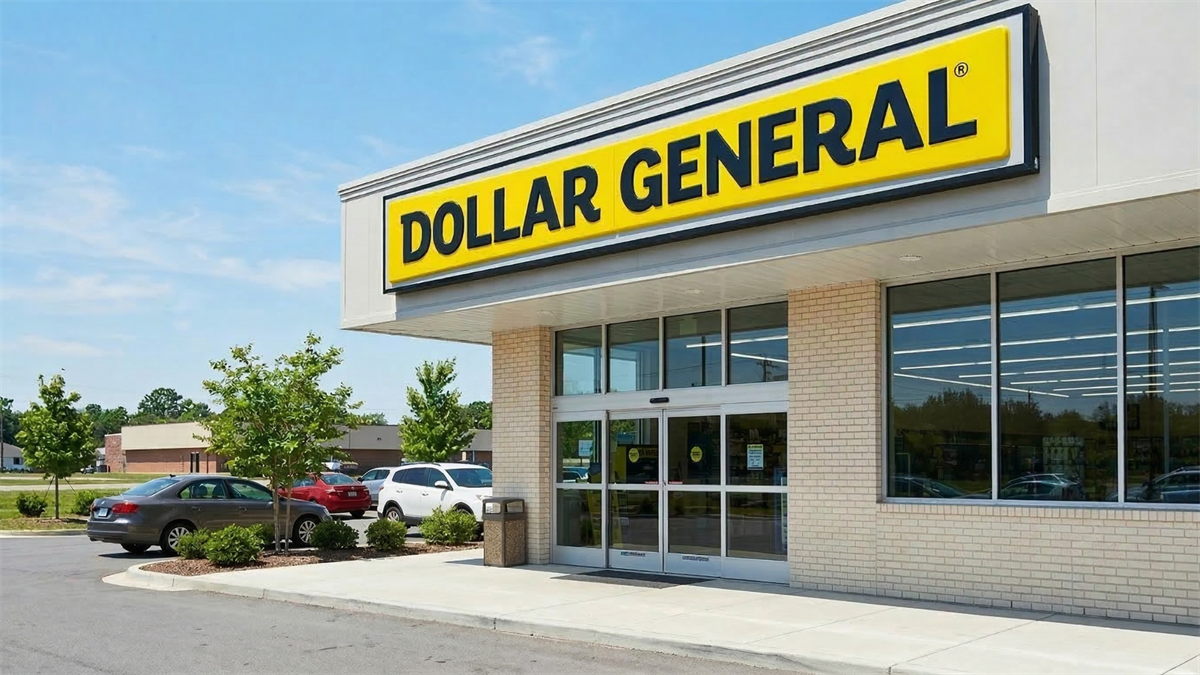
Dollar General Holds Its Ground at Critical Level, Signals Buy
Reported by Thomas Hughes. Article Published: 3/13/2026.
Key Points
- Dollar General is well-positioned to execute its Back-to-Basics strategy, sustain growth and cash flow.
- Analysts and institutions support the stock, indicating a value, but upside may be limited until later in the year.
- Cautious guidance sent shares plunging, setting the stage for future outperformance and a potential price recovery.
- Special Report: Elon's "Hidden" Company
Dollar General (NYSE: DG) issued a weak 2026 forecast on March 12, sending its shares down about 10% at the open. As damaging as a 10% decline can be—and as risky as a deeper drop might have been—what happened next mattered most. The pullback aligned the DG price with a significant support level that matched a prior breakout and reversal pattern, and the market began buying.
The stock quickly recovered roughly half its losses, confirming support at this critical level and at a pair of long-term exponential moving averages (EMAs). That confirmation, together with a Golden Crossover in the EMAs, signaled a potential long-term bullish shift and prompted renewed accumulation. If the market follows through on this signal, any move below $128 would likely be brief.
Elon Musk: This Could Turn $100 into $100,000 (Ad)
What if you could shrink your entire wealth journey from decades down to just 24 hours?
Sounds impossible…
But I'll show you how Elon Musk is about to make it a reality.
This could be the best investment opportunity of the decade.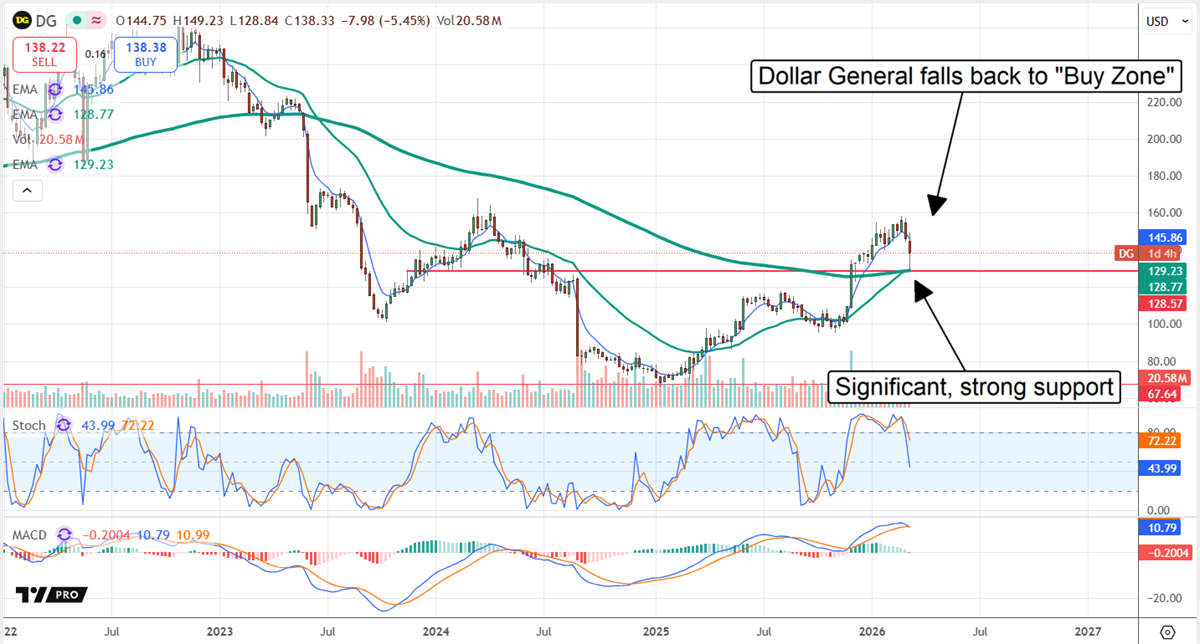
Institutions Buy Dollar General Aggressively in 2026
The institutional data reported by MarketBeat indicates institutions are buying the dip in Dollar General shares. The data show a bullish posture on a trailing-12-month basis: four consecutive quarters of net buying (including the first two months of Q1 2026), a rising pace of buying relative to selling, and a multiyear high in early Q1.
Given that institutions own nearly 92% of the stock, this level of ownership provides strong support and a tailwind for any rebound.
Analysts also offer some support, though upside may be limited until later in the year. Post-release updates included cautionary notes about slowing comparable-store sales and conservative guidance, but most ratings and price targets were left unchanged.
The current analyst outlook aggregates 30 analysts and a consensus Hold rating, with roughly 46% of analysts on the Buy side. That bias is moderate, and the median price target implied the stock was fairly valued as of the close before the earnings report.
One potential trigger for a stronger rebound would be upgrades to analysts' forecasts, which could be driven by upcoming operational updates or the next earnings release.
Dollar General Falls After Strong Report; Guides for Growth
Dollar General reported a solid quarter, with revenue up 5.9% year-over-year to nearly $11 billion. Growth was driven by new stores and positive comps: same-store sales rose 4.3%, reflecting a 2.6% increase in traffic and a 1.7% increase in average transaction value. Revenue and EPS both beat MarketBeat's consensus—revenue by roughly 75 basis points—and improved margins reflected the company's focus on rationalization, store improvements, and cost controls.
GAAP earnings were $1.93 per share, a nearly 15% gain from the prior year, and management expects margins to remain healthy. Guidance was a concern, however: management forecast revenue growth slowing to about 3.95%, below the 4.25% consensus. That caution likely reflects the company's conservative posture heading into the year.
There is also potential for consumer tailwinds in 2026. Tax refund season is underway, and larger refunds this year could inject additional spending power across Dollar General's customer base.
Balance sheet highlights reinforce the case for ownership. Total assets declined slightly over the year, while liabilities fell by a larger amount, producing a roughly 15% increase in shareholders' equity and preserving the company's ability to return capital. Dollar General paused buybacks to preserve cash while it rationalized inventory and invested in remodels, but it continues to pay a dividend—about 1.7% as of March 2026. Investors can reasonably expect modest annual dividend increases, and buybacks may resume later in the fiscal year.
Dollar General Catalysts in 2026: Better Stores
A key catalyst this year is Dollar General's Back to Basics strategy. The company is remodeling and updating stores, reducing excess inventory and improving product quality, and addressing supply-chain issues. Those efforts could produce better-than-expected comps and margin expansion. New concepts such as DG Wellness and pOpshelf are also helping attract and retain customers.
Is the Airline Stock Dip After the Iran Attacks Justified?
Reported by Nathan Reiff. Article Published: 3/10/2026.

Key Points
- Many airline stocks have plummeted by 20% or more in the last month amid the start of war in Iran and related oil price volatility.
- Airline companies face numerous negative pressures related to the war, including canceled flights, the potential for suppressed demand, and more.
- Jet fuel prices and cracks have spiked, meaning that even airlines not doing business within the area of conflict will feel the repercussions.
- Special Report: Elon's "Hidden" Company
As the conflict in and around Iran appears likely to continue, it is no surprise that airline stocks have been among the first to feel a significant impact. These shares are closely tied to fuel costs, geopolitical stability and consumer demand—all three of which have become more volatile as the situation escalates and spreads. Both major carriers and smaller domestic and regional names have seen sharp declines: shares of Delta Air Lines (NYSE: DAL) and American Airlines Group Inc. (NASDAQ: AAL) have fallen roughly 22% and 27%, respectively, over the past month.
For investors, a price decline can present an opportunity to strengthen a position in the airline industry. But it will be important to evaluate whether the initial shock of the conflict—and the resulting oil-price concerns—justify the selloff despite a generally strong recent track record for domestic travel. If the conflict proves prolonged and leads to further downside, waiting to enter or add to positions could be a prudent choice.
Major Air Carriers Face Multiple Negative Drivers
Elon Musk: This Could Turn $100 into $100,000 (Ad)
What if you could shrink your entire wealth journey from decades down to just 24 hours?
Sounds impossible…
But I'll show you how Elon Musk is about to make it a reality.
This could be the best investment opportunity of the decade.Delta, American and other major carriers have been hit hardest by the combination of several negative factors.
First, thousands of commercial flights to and from the Middle East have been canceled. Airlines incur operational and logistical costs in these instances while losing potential revenue.
Second, and perhaps most consequential for carriers broadly, jet-fuel costs have climbed. The Argus US Jet Fuel Index rose to $3.88 on March 6 from $2.50 just a week earlier. While crude oil has been volatile since the conflict began, refined petroleum products have experienced even greater stress: jet fuel prices and the associated cracks—the spread between crude oil and the jet fuel derived from it—have surged.
Finally, consumer demand is a more diffuse but still meaningful risk. In its most recent earnings report, Delta expressed optimism about demand despite headwinds such as the government shutdown, pointing to loyalty and cargo growth, and improvements in non-ticket revenue streams.
Fellow Big Four member United Airlines (NASDAQ: UAL) reported similar strength in its Q4 2025 report, citing its highest-ever seat completion factor and a 12% year-over-year increase in premium revenue, for example.
As consumers brace for higher gasoline prices and potential cost increases for many goods, leisure travel demand could weaken as households redirect spending toward essentials. The impact on airlines may not be immediate, but it could persist even after oil markets and inventories stabilize.
Can Regional Airlines Fare Any Better?
That said, carriers that operate primarily domestically or are based outside the region are unlikely to escape the fallout. Much of the pain stems from higher fuel costs and broader market sentiment, which affect most airlines regardless of route geography.
One modest bright spot is Air Canada (TSE: AC), whose shares have fallen by about 13% in the past month—less severe than many peers but still a notable decline.
Some Wall Street analysts have already adjusted their outlooks: since the start of the month, for example, Weiss downgraded DAL to Hold from Buy, and other firms have lowered price targets. Some investors may prefer to wait for additional downside before initiating new positions.
Watching short-interest trends can also provide insight into market expectations for future share-price moves. Companies like American were already facing rising short interest before the conflict began, and that pressure could intensify.
Ultimately, depending on the duration and scope of the conflict, the start of 2026 may feel eerily similar to early 2020 when COVID-19 grounded global air travel. To reach those extremes, share prices would need to fall substantially further than they already have. For now, bearish investors may wait to see how low airline stocks can fly.
This message is a paid sponsorship sent on behalf of i2i Marketing Group, LLC, a third-party advertiser of Earnings360 and MarketBeat.
We are not securities dealers or brokers, investment advisers or financial advisers, and you should not rely on the information herein as investment advice. Any investment should be made only after consulting a professional investment advisor and only after reviewing the financial statements and other pertinent corporate information. Further, readers are advised to read and carefully consider the Risk Factors identified and discussed in the profiled company's SEC and/or other government filings. Investing in securities, particularly microcap securities, is speculative and carries a high degree of risk.
If you have questions or concerns about your newsletter, please feel free to email MarketBeat's U.S. based support team at contact@marketbeat.com.
If you no longer wish to receive email from Earnings360, you can unsubscribe.
© 2006-2026 MarketBeat Media, LLC. All rights reserved.
345 N Reid Pl., Suite 620, Sioux Falls, S.D. 57103-7078. U.S.A..