More than ‘just’ a housewifeThe Delhi high court’s recognition of the worth and dignity of household work is sweet music.
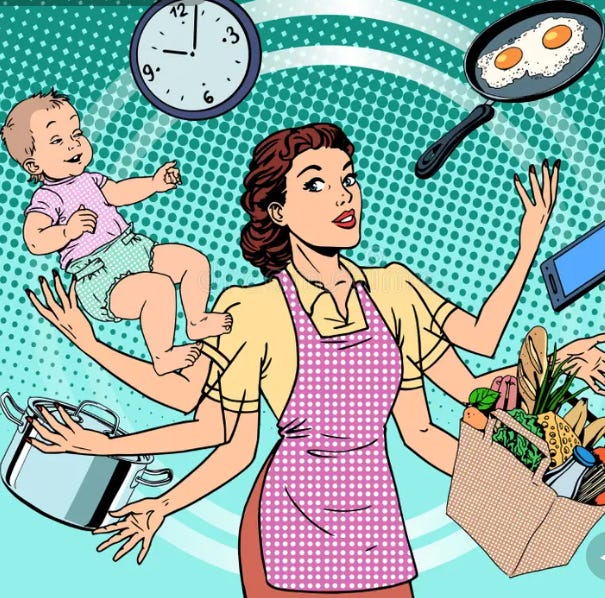
Even if a wife doesn’t earn, she contributes to the household. The Delhi high court’s recognition of the role of homemakers, can only be welcomed. Hearing a case of maintenance by an estranged wife, justice Swarana Kanta Sharma said just because the wife wasn’t employed didn’t mean she was idle. “Running a household, taking care of children, supporting the family, and adjusting one’s life around the career and transfers of the earning spouse are all forms of work,” justice Sharma noted. “These tasks are unpaid and often unrecognized…yet they form the invisible framework that keeps many families going.” Justice Sharma’s words would be sweet music to the ears of feminists who have for years insisted that the activities listed by the Delhi high court do, in fact, constitute ‘work’. Feminist economists point out that the business of unpaid care work—cooking, cleaning, caring for children, the elderly, the sick—disproportionately falls on women, whether they are employed or not.
We have the data that tells us just how much. In 2024, the government’s Time Use Survey found, women spent 289 minutes a day providing unpaid household services plus another 137 minutes a day on caregiving activities. For men it was 88 minutes for housework plus 75 minutes for caregiving. It’s this massive time gap that explains the discrepancy in paid employment. Put simply, the more time a woman spends on unpaid work inside the house, the less time she has for paid work outside it. Time use for 2024 shows that 75% of men aged between 15 and 59 were in paid employment whereas only 25% of women in the same age group participated in paid work. Glorifying labour
Unpaid care work is not only seen as a woman’s responsibility, it is often glorified in the popular culture—“maa ke haath ka khana” (a meal cooked by a mother’s hand) and the like. B remembers when her mother-in-law was diagnosed with cancer. Right until her death, she personally cared for her even though the family could afford a nurse. But her husband didn’t want a stranger handling his mother. He wanted his wife to do that job. S went on maternity leave after the birth of her first daughter. But when the time came to return to work, she wavered. Sure, her husband chipped in. And she had reliable help at home, but somehow she couldn’t just go back to the long hours in the office. She quit. Does she have regrets? Sometimes, she shrugs. But takes satisfaction in the fact that her daughter is doing well in her career. The motherhood penalty comes at a cost. Globally, mothers of children below the age of five have at 47.6%, the lowest employment rate, compared with 87.9% for fathers and 54.4% for women with no children, found a 2018 study of 90 countries by the International Labour Organisation. Does care work have an economic value? A 2024 report by Nikore Associates puts it at 15%-17% of India’s GDP. In 2015, the McKinsey Global Institute looked at a “full potential” scenario where the world’s GDP could increase by $28 trillion in a decade if women’s participation in the economy was equal to that of men. The Covid pandemic with people working from home during lockdowns focused renewed and urgent attention on care work. For a brief while, noted economist Ashwini Deshpande, the men stepped up to help their wives. Then it was back to usual. Legal precedent
Beyond the number of hours spent on various activities, there is the question of placing a monetary value to the work of a homemaker. In 2001, the Supreme Court determined that the monthly monetary value of a housewife’s work should be Rs 3,000, “taking into consideration the multifarious services rendered” (Lata Wadhwa v State of Bihar). Also in 2001, a three-judge Supreme Court bench, hearing a case against an insurance company (Kirti & anr v Oriental Insurance Company) where both husband and wife were killed in a road accident leaving behind two daughters who were toddlers, clarified that a homemaker’s work had economic value to her family and also the nation and deserved just compensation. From then to now, the courts have continued to look at assumptions on housework, increasing its value progressively. Significantly, recent court judgments are also notable for speaking in the language of dignity and rights rather than charity. In January this year, the Punjab and Haryana high court doubled the compensation paid to a woman motor accident victim from Rs 58.22 lakh to Rs 1.18 crore. The original compensation was simply not enough, justice Sudeepti Sharma said since the “services of a homemaker, if procured in the open market, would command substantial remuneration, underscoring the integral role played by a homemaker in family stability.” A wife who is not employed still has to manage the household while the husband has a steady and substantial income, justice Swaran Kanta Sharma noted in the maintenance matter she was hearing. The case had been filed by an estranged wife who was appealing against a lower court order that refused to grant her and the child maintenance on the grounds that she was able-bodied and well-educated but had chosen not to seek employment. Ordering mediation for the couple, justice Sharma said: “The grant of maintenance is rooted in the principle of equity between the parties. Maintenance, in such cases, is meant to place both parties at reasonably comparable levels so that each is able to sustain a dignified life.” Going places
With an impeccable CV as a senior advocate—Rhodes scholar, National Law School, Oxford University and Harvard Law alum, visiting faculty at Yale, New York University and the University of Toronto, B.R. Ambedkar research scholar and lecturer at Columbia Law—Menaka Guruswamy will soon be adding member of Parliament to her long list of achievements. The 51-year-old has been nominated to the Rajya Sabha by Mamata Banerjee’s Trinamool Congress, that would, when elected, make her the first openly gay MP in the House. One of the many lawyers who fought for marriage equality in the Supreme Court, Guruswamy had earlier represented petitioners in the landmark constitutional challenge that led to the decriminalisation of homosexuality in 2018. Menaka will, hopefully, continue to battle for gender rights and equality, now as a legislator. In other storiesIn a powerful affirmation for single mothers, justices Vibha Kankanwadi and Hiten Venegavkar of the Aurangabad division of the Bombay high court ruled, “Recognition of a single mother as a complete parent for purposes of a child’s civic identity is not an act of charity; it is constitutional fidelity.” In response to a petition filed by a now 12-year-old girl who has been brought up solely by her mother, the court ordered a change in her school records by removing the father’s name and correcting her caste identification to align with that of her mother.
Two ice hockey teams won Olympic gold medals for their country. The US men’s team warranted a phone call from president Donald Trump, an invitation to the White House and his State of the Union address and some uncle-level locker room humour disparaging the exact same win by the women’s team. Some of the men laughed (shame on you) while others remained silent (shame on you too). The women’s team that completed a 7-0 run through the winter Olympics politely declined the invitation. Between the men and the women, it was clear who won. A young woman has taken Meta and YouTube to court for her social media addiction that began as a six-year-old child. Testifying in court on Thursday, she spoke of how early use of social media exacerbated depression, self-harm and suicidal thoughts. It is her contention that social media companies deliberately create addictive products and are aware of the mental health risks they pose. More here.
On the ongoing Epstein Files fall-out, Hillary Clinton said (again) she never met the paedophile financier, Bill Clinton said (again) he did nothing wrong and there was a new conspiracy theory that Donald Trump’s attack on Iran was to distract attention from his relationship with Epstein. Elsewhere, Peter Mandelson was (briefly) arrested, and the latest round of resignations include World Economic Forum head Borge Brende, former Harvard University president Lawrence Summers, and Columbia University neuroscience institute co-director Richard Axel. And the good news… India has launched a free-of-cost, nationwide HPV vaccination drive targeting 14-year-old girls to protect them from cervical cancer, the second-most common cause of cancer deaths in Indian women. The special vaccination programme will use a single-shot Gardasil. That’s it for now. I welcome feedback at namita.bhandare@gmail.com. See you again next week. Produced by Shad Hasnain.
|