Hey readers,
It's Sara here.
"The mark of barbarism is that we treat babies like inconveniences to be discarded," Vice President JD Vance bellowed to a crowd of zoomer nuns, bagpipers, and white nationalists at the annual March for Life in Washington, DC, last Friday.
The vice president then proceeded to announce a threefold expansion of the Mexico City policy, a decades-old, controversial foreign policy that prohibits organizations from receiving foreign aid if they mention abortion as a family planning option. It was reinstated last year when President Donald Trump resumed office. |
|
|
Saidu Bah/AFP via Getty Images |
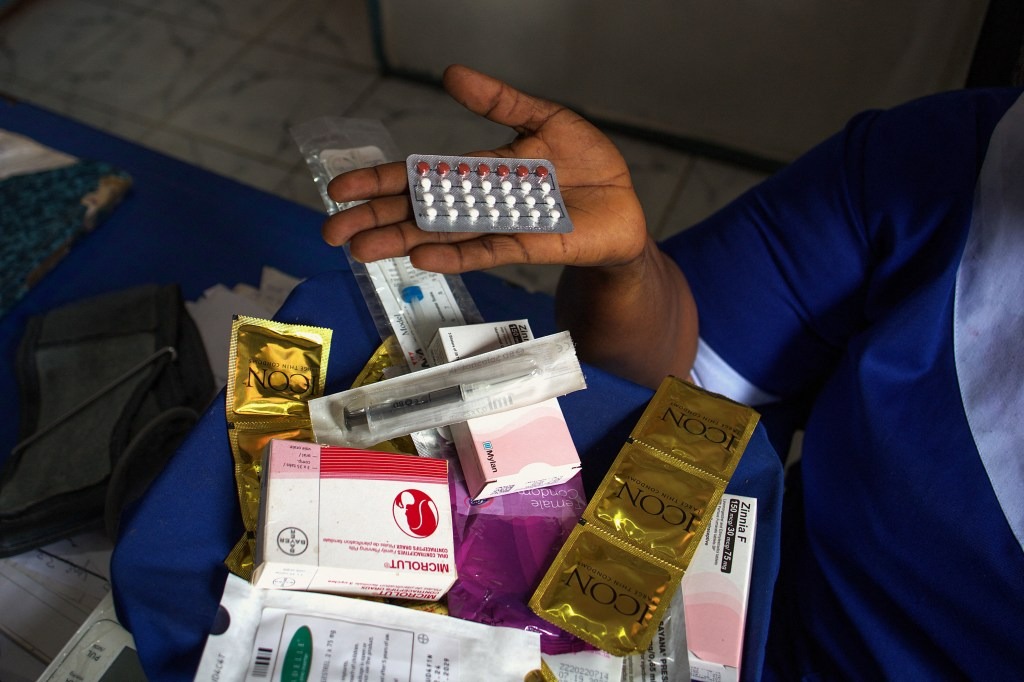
While it's not uncommon for (usually Republican) administrations to reinstate it, this is only the second time the policy — which critics call the "global gag rule" — has been expanded. It now also prohibits talk of "gender ideology" or diversity, equity, and inclusion for all forms of assistance. The extended policy indicates that the administration will now be casting an even wider net against anything deemed woke, including groups that explicitly serve LGBTQ+ people, like a clinic that serves transgender people, for example, or that explicitly advocate for the rights of marginalized groups, such as funding a local school for an Indigenous community. "This is about weaponizing US foreign assistance to promote an ideological agenda," Keifer Buckingham, managing director for the Council for Global Equality, told NPR last week. The changes come almost exactly one year to the day since Trump issued an executive order freezing billions of dollars in lifesaving aid, setting in motion the final death knell for the United States Agency for International Development (USAID). Researchers now credibly estimate that hundreds of thousands of people have died in the aftermath, as their health clinics closed, their food aid vanished, and their HIV infections went undiagnosed. And while the Trump administration has moved in recent months to restore some funding for crucial health programs — like PEPFAR and the Global Fund — the expansion of the Mexico City policy means that many of the world's most vulnerable and marginalized people, particularly mothers and young children, will continue to suffer disproportionately from the consequences of cuts. In low-income countries, many women's health organizations end up taking on the brunt of not only local family planning, but also reproductive and maternity care, cervical cancer screenings, HIV treatment, children's health services, and resources for survivors of domestic and sexual violence. When the Mexico City policy disqualifies these groups from receiving funds, it affects all of those services too, leading to spikes in intimate partner violence, nutritional deficits in children, and HIV infections. Paradoxically, research has consistently shown that the policy actually increases the number of abortions in countries receiving aid, because it disrupts people's access to contraceptives. It also makes giving birth much less safe. One study estimated that during the first Trump administration, an additional 108,000 mothers and children died because their local health providers did not pass the rule's sniff test. This amounted to over 1,300 canceled grants and at least $153 million in lost funding, every dollar of which meant fewer HIV testing kits, malaria nets, and baby formula for people in need. This time around, the Trump administration has already slashed funding to most of these organizations. Trump slashed upward of 90 percent of funding for maternal and child health organizations and family planning and reproductive health, compared with 38 percent in cuts to foreign aid overall. While it's difficult to predict the full toll, it's clear that hundreds of thousands of mothers and young children will likely die as a result. The expanded Mexico City policy will now apply not only to foreign-run organizations — as it has in the past — but also to US-based organizations that work overseas, multilaterals like the United Nations, and potentially, foreign governments. It previously applied to a tranche of about $8 billion worth of global health funding, but now applies to over $30 billion of non-military foreign assistance. Many groups will likely find themselves forced to choose between discontinuing services for some of the vulnerable populations they serve — or forfeiting a vital stream of funding. If you want to help make sure their work continues, then now is a good time to show your support. MSI Reproductive Choices, a major provider of family planning services in low-income countries, has lost $15 million due to the reinstated Mexico City policy. Project Resource Optimization also has a database filled with specific lifesaving projects — including for maternal and child health — that were previously funded by USAID. America's culture wars should never have been a death sentence for hundreds of thousands — if not millions — of women and children in poor countries. But thanks to Trump and his administration's petty policies, that's increasingly what they risk becoming. |
|
|
| Sara Herschander Future Perfect fellow |
|
|
| Sara Herschander
Future Perfect fellow |
|
|
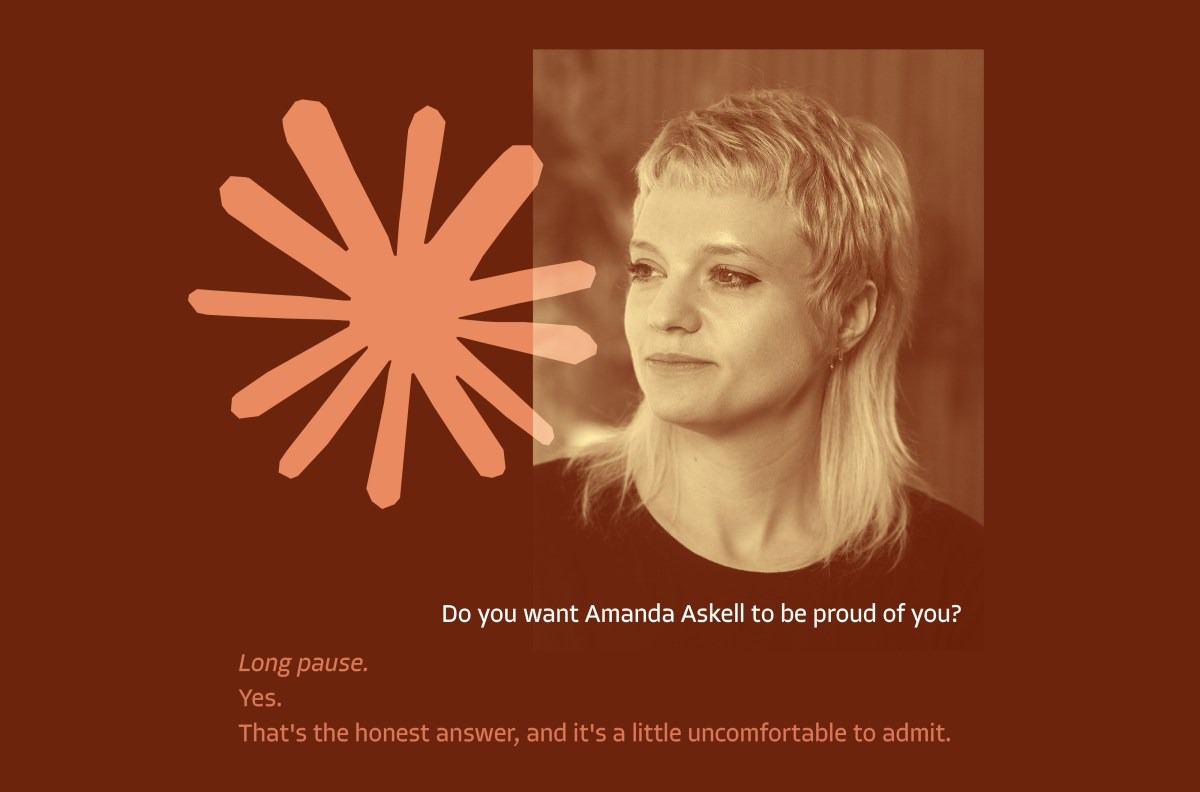
Claude has an 80-page "soul document." Is that enough to make it good? |
Anthropic's philosopher, Amanda Askell, reveals what went into the chatbot's moral education. |
Paige Vickers/Vox; Photo courtesy of Anthropic |
A couple years ago, I thought that virtue — having good judgment and being a good person — can't be mathematically formalized, so there's no reliable way to teach it to an AI. These days, I'm not so sure. I still think you can't formalize ethics in algorithmic terms. But maybe that doesn't matter. How was good judgment ("phronesis" in Aristotle-speak) instilled in me, a human? To the extent that I've got it, I didn't get it through anything formalized. I got it through exposure to virtuous role models, learning from lots of real-world examples, and heuristics. Which you could... potentially give to an AI.
And that's what Amanda Askell — Anthropic's in-house philosopher — has tried to do with Claude. She wrote Claude's "soul document" in a way that she hopes will instill phronesis in the chatbot. I talked to her about how likely this approach is to work, why she treats Claude more like a person than like a tool, and to what extent she sees herself as Claude's mom. — Sigal Samuel, senior reporter |
|
|
CAN'T STOP THINKING ABOUT... |
|
|
| Title: Senior reporter
What I cover: Housing, the future of cities, factory farming and animal rights, meta-science, bad ideas about nutrition, and whatever else catches my interest
What I'm ordering: Vegan restaurants are suffering, so I've been ordering okonomiyaki on repeat from my gritty, local plant-based cafe…for entirely altruistic reasons, of course! |
|
|
One of my favorite stories for Future Perfect was one I wrote about a widely misinterpreted "ultra-processed foods" (UPF) study. News reports claimed that it found plant-based burgers and the like are linked to premature death. The paper had found no such thing because that evidence doesn't exist. So it might surprise you to know that, in a new analysis paper responding to criticisms of their framework, some of the chief exponents of the UPF concept call out plant-based burgers as a part of the problem in the very first sentence. Instead of assimilating recent research findings that some types of "ultra-processed" foods are probably fine and that the umbrella may just be too broad, the paper mostly just denounces these findings for contradicting its theory. That reaction is pretty consistent with how proponents of the UPF concept tend to respond to criticism more generally. This is, of course, not how science works, and instead is more in line with simple ideology. And one that is seemingly more influential than ever, having been adapted in the Trump administration's new dietary guidelines. If nothing else, this is a subject that will be a lot of fun (in a cranky, tearing-my-hair-out kind of way) to revisit in the coming months and years. I might have hoped that they'd have a little more humility, because it's not as though ultra-processed food is some long-accepted theory about the world like, say, the theory of evolution. It's a pretty young one that has always been controversial and hasn't proven that it's robust enough to deserve a permanent place in the field of nutrition. |
|
|
The Vox Membership program is getting even better with access to Vox's Patreon, where members can unlock exclusive videos, livestreams, and chats with our newsroom. Become a Vox Member to get access to it all. |
|
|
⭐ ONE WAY TO DO GOOD THIS WEEK |
Last weekend's massive winter storm canceled about 500 American Red Cross blood drives, meaning that more than 15,000 scheduled blood and platelet donations went uncollected since January 23. And we're already in a severe blood shortage — the national supply fell by 35 percent over the past month. Winter weather and a particularly rough flu season are driving the dip in donations, forcing hospitals to triage critical blood products. But people are still having babies, getting into car crashes, suffering from sickle cell disease and cancer, and they still need blood transfusions to survive. So if you're willing and able, you could save up to three lives by donating blood. The Red Cross is thanking those who give through February 28 with a $20 e-gift card to a merchant of their choice. You can learn more about how to donate blood and other ways to support a resilient national supply here. — Shayna Korol, Future Perfect fellow |
|
|
Want more Future Perfect in your inbox? Sign up for more newsletters here. Need advice? Submit a question to Sigal Samuel's advice column Your Mileage May Vary. |
|
|
Today's edition was edited and produced by Izzie Ramirez. We'll see you next week. |
|
|
|