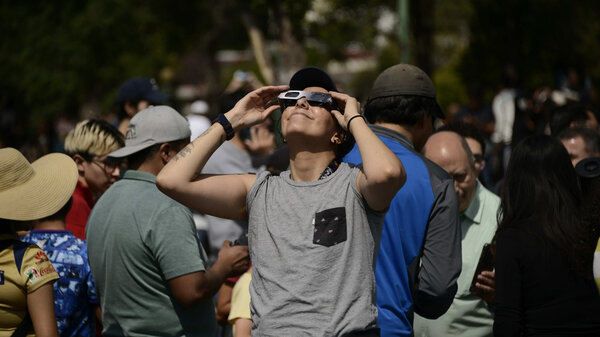
On April 8, millions of Americans will get the chance to see a solar eclipse sweep across the nation. This celestial event is a stunning — but dangerous — sight. Looking directly at the sun without the proper eyewear before it's completely covered by the moon can permanently damage your eyesight. Here's what to know and how to protect your eyes: ☀️ You won't feel the sun burning your retina. The damage only becomes apparent hours after it occurs. ☀️ Make sure your eclipse glasses have the right filters. You can reuse glasses from the 2017 solar eclipse if they're still in good condition. The American Astronomical Society has a list of vetted suppliers. ☀️ You can view the eclipse indirectly by creating a pinhole projector using household supplies like a colander. ☀️ If you're in the eclipse's path of totality, it is safe to remove your glasses once the sun is 100% obscured. The sky will darken, and the sun will become a dark circle surrounded by a ghostly white ring called the corona. |