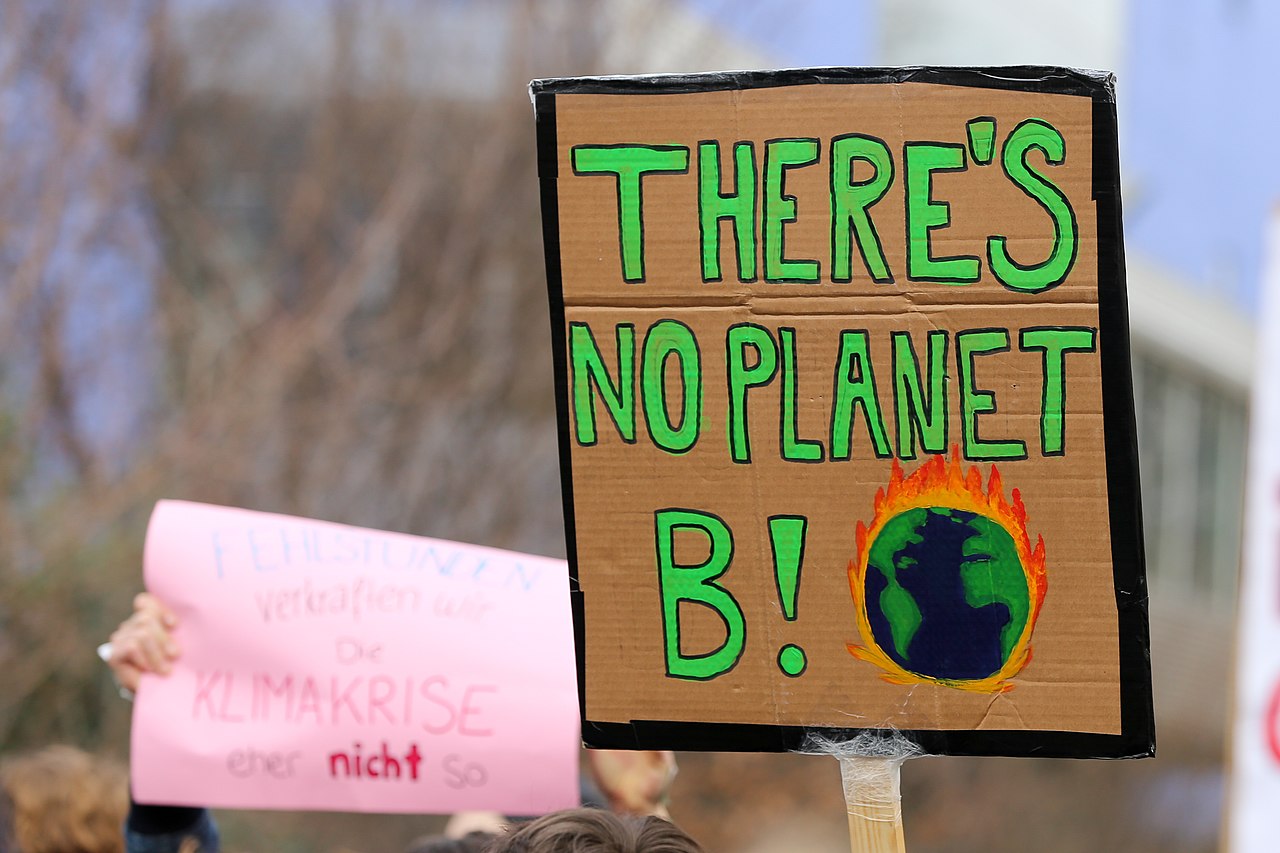
 At a 'Fridays for Future' demonstration | Wikimedia The TIF Reader is a monthly newsletter that curates articles and podcasts from The India Forum archive that address contemporary concerns. This summer, parts of India and Pakistan grappled with record-breaking heat waves. For a short while, attention once again turned to the immediacy of the climate crisis and its human cost. Like most climate-related headlines, however, this edition too was overshadowed rather quickly without any deeper probe into the mitigation and adaptation efforts required to deal with such extreme weather. Rather than an aberration, such freak weather is soon likely to be the norm in South Asia. The climate scientists Roxy Koll and Chirag Dhara point out that the Indian ocean has warmed more rapidly than before, upsetting the dynamics of the monsoon. This rapid acceleration could cause extreme rainfall, higher temperatures, more frequent and intense cyclones, and rising sea levels in the coming decades. Some of these effects are already visible. For instance, scientists suspect the warming of the Arabian sea to be behind the increasingly common phenomena in Kerala of pre-monsoon heavy rains and monsoon cloudbursts. These events, Madhav Gadgil writes, have wreaked much destruction in an already fragile and abused landscape. As Koll and Dhara write, the rapidity of climate change "will place increasing stress on the country's natural ecosystems, agricultural output, and freshwater resources, while also causing escalating damage to infrastructure. These portend serious consequences for the country's biodiversity, food, water and energy security, and public health." Events this summer show us a glimpse. <<>> Extreme hot weather in the subcontinent has been more common since the 1950s, having far-reaching consequences. This year's scorching summer pushed record sales of air conditioners in India, especially in tier 2 and tier 3 cities. Richer households in cities experienced the knockdown effects of climate change in the form of ballooning energy bills to run air conditioners. By late April, India's energy demand hit a record 201 gigawatts, a surge that outpaced coal supply. A power crisis ensued. The government's solution has been to push for greater coal imports to meet the gap. But efforts to keep boosting coal supplies to meet demand also threaten to increase carbon emissions. They inhibit India's transition to clean energy and make future heat waves and extreme temperatures more likely. This cooling paradox is a global problem as extreme temperatures have led to a steep increase in the use of air conditioners across the world — not only for cooling habitations but also for producing and storing food and medicines. It is not merely household budgets or personal discomfort due to heat or rain that is at stake here. Extreme weather disturbs crop cycles and adversely impacts harvests. While the extent of crop loss due to the severe heat wave throughout north India is not known yet, the agriculture ministry estimates that around a fifth of the wheat crop was damaged. The shortfall in production has led to everything from soaring atta prices to a ban on wheat exports precisely when the global wheat market is tight. Unseasonal rains, or an uneven monsoon, would have similar effects on crops — either hampering stages of cultivation or ruining the harvest — and in turn, on commodity prices, farm incomes, and rural demand for consumer goods. Monocropping, a consequence of increasing corporatisation of agriculture and policy, compounds the impact of climate change. As Richa Kumar points out in a podcast, monocultures in the time of uncertain weather put farmers' livelihoods in jeopardy, with rising debt one of its manifestations. The Indian economy may no longer be a gamble on the monsoon, but climate change can yet make growth volatile, as the rating agency Moody's said in its latest commentary. The Reserve Bank of India too warned of long-term economic losses from climate change. <<>> This urgency of timely climate action was the theme of last year's COP 26 in Glasgow. However, as Nitin Desai notes, the COP remained unsatisfactory, highlighting again the glaring gap between what is promised and what is desirable in international climate action discussions. India's own climate change policy is riven by fault lines. As Navroz Dubash highlights, this reflects the contradictions in our domestic approach to climate action: underprepared institutions, lack of a consistent climate narrative, and a domestic strategy inadequate in its accounting of different sectors. There is also the tug of war between climate action and development. India's infrastructural push, especially in its fragile Himalayan borderlands, highlights this divide. The Char Dham Pariyojana highways in Uttarakhand have been fast-tracked to improve connectivity to a sacred and securitised region. Mallika Bhanot warns that the project could potentially push up local emission levels and accelerate the melting of glaciers — the source of north India's many rivers. This leaves the question of what next. How can India create and sustain mitigation and adaptation efforts that are both impactful and timely? For one, climate efforts need to be varied and decentralised, going beyond technical fixes. Like Richa Kumar and Ajay Vir Jakhar argue in two separate podcasts on the impact of environmental change on agriculture, climate action must become an essential point of departure when formulating policy. Aditya Ramesh's historical overview of flooding in Chennai also shows how initiatives for climate change are often reductive, isolating disasters from their social realities. The floods are embedded deep within inequities, yet proposed technological fixes often overlook this aspect. The instance of Chennai illustrates why including local voices should be integral to international discussions on climate action. Subramanian and Dore narrate a story of how such knowledge leads to gains: that of Godavari Dange, who developed an innovative farming model in water-scarce Marathwada. Dange's initiative relied on an intimate knowledge of farming and the region and allowed women farmers to stay food secure through droughts and the Covid-19 lockdown. However, a decentralised approach towards climate change cannot be achieved without robust climate institutions. As Aditya Pillai reiterates in a podcast, an effective and sustainable climate institution must be sensitive to the varying histories and complexities of states and cities. The solutions are plenty and fairly straightforward. Pillai's recounting of the history of climate institutions in India makes one thing clear: a strong political will to organise and helm climate action policy remains the most crucial next step. Read and listen more here: Coming of age of India's youth climate movement by Nagraj Adve Extreme events in nature: An ecological history of the present by Ramprasad Sengupta A disaster foretold: Aesthetics and ecological crises in Delhi by Sushmita Pati Band-Aid Solutions Won't Staunch India's Power Crisis by Ashwini K Swain and Rohit Chandra | 


